Quick Rundown
The best turn based strategy games in 2026 sit across a wider range of platforms, subgenres, and visual styles than the genre has seen in a decade. Civilization VII made the boldest design call in the series’ history. Old World kept quietly earning its reputation as the most underplayed strategy game of the last five years. Songs of Conquest proved the Heroes of Might and Magic formula still works when someone puts the real work in. The TBS pipeline is genuinely healthy right now, and the options at every experience level are better than they’ve been in a long time.
This ranking covers PC and console standouts with a clean scope: pure turn-based strategy. For a deeper look at how TBS fits into the broader strategy landscape, our turn-based strategy breakdown maps the subgenres and explains what separates good design from bad.
What Counts (and What Doesn’t)
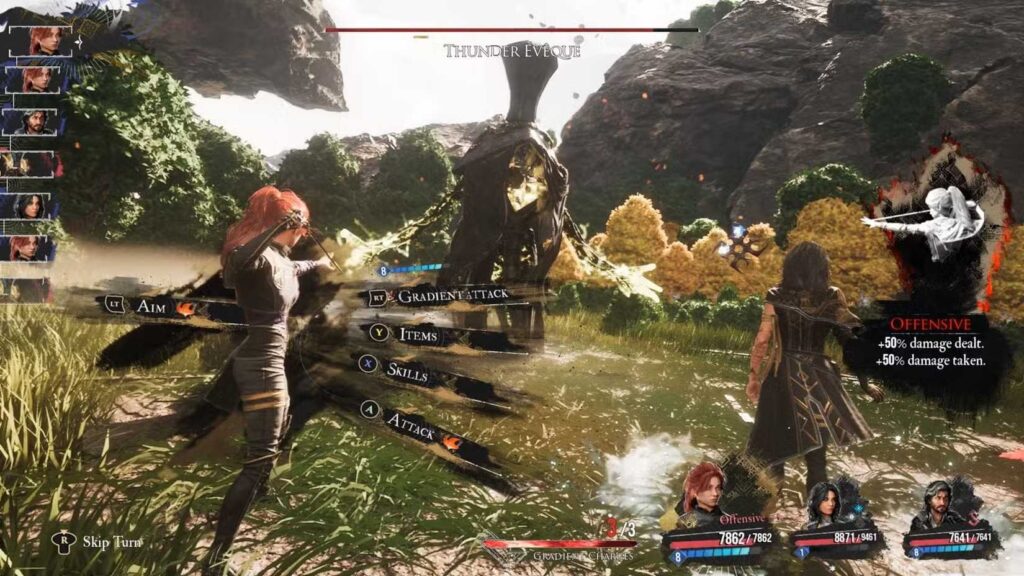
Turn-based strategy runs on discrete turns, meaningful unit decisions, and map-level positioning. The core requirement is that your choices matter on a per-turn basis — not just in aggregate over dozens of sessions. A tech tree is optional. A loot system is optional. Clear turn structure and consequential positioning are not.
Two genres sit just outside this list by deliberate design. Grand strategy titles — Crusader Kings III, Europa Universalis IV, the Paradox catalog — operate at the nation level over hundreds of in-game years and are covered in our grand strategy guide. And 4X games — Stellaris, Master of Orion, that family — are primarily about exploration, expansion, exploitation, and extermination at a continental or galactic scale and are covered in our 4X strategy game guide. Both genres share TBS DNA. Neither belongs on a list scoped this tightly, and conflating them wastes your time when you’re trying to find your next game.
The Best Turn-Based Strategy Games Right Now
Civilization VII
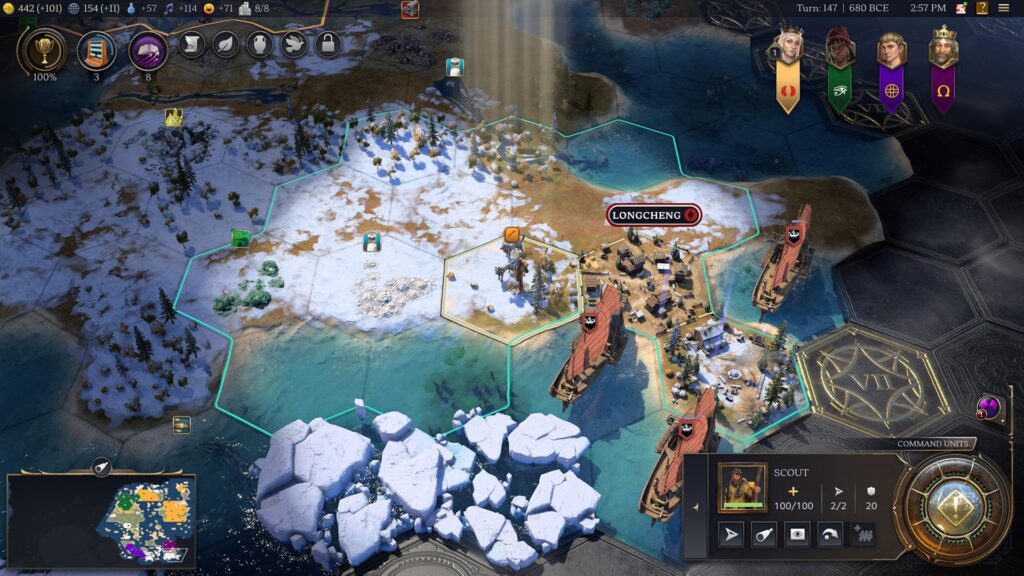
Civilization VII made the boldest structural call in the franchise’s history: divide the full campaign into distinct historical Ages, each with its own civilization choice, unit set, and win conditions. The Age of Antiquity, the Age of Exploration, and the Modern Age all play differently, and the transition moments force players to make strategic pivots that earlier Civ games never required. Long-time fans split sharply on whether this improves the experience — losing a continuous civilization arc is a real trade-off — but the design forces clarity and intentionality that Civ VI often lacked. Civilization VII’s official site has a detailed feature comparison for players deciding between this and earlier entries.
The AI difficulty at lower settings remains the franchise’s persistent weak point. Players who’ve exhausted previous entries will find the genuine challenge at higher difficulty levels, where the mechanics are tested properly. For new players arriving at top turn based strategy games for the first time, Civ VII is still the clearest entry point on this list.
OldWorld
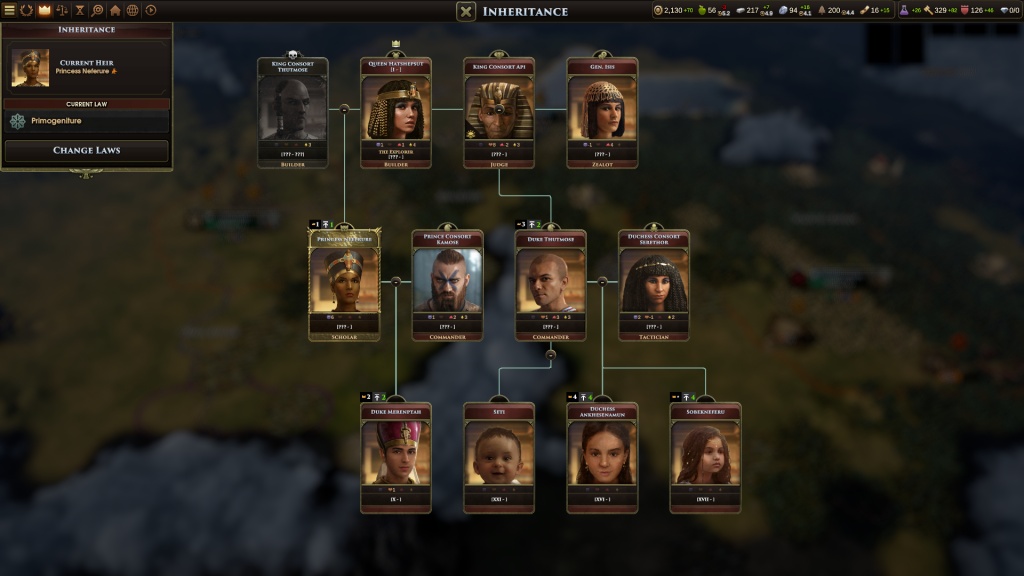
OldWorld was the game that looked like it would catch on with a narrow historical strategy audience and instead quietly became one of the most respected TBS releases of the decade. Developed by Mohawk Games and designed by Soren Johnson — the lead designer of Civilization IV — it covers the ancient Mediterranean through a character-driven structure where your leader’s family, personal ambitions, and relationships affect the strategic layer directly. No other game on this list makes macro-level decisions feel as personal. Players who want to understand how it fits into the format can start with our turn-based strategy guides, which cover Old World alongside the broader TBS field.
The Orders mechanic — each turn grants a limited pool of action points to spend across your entire civilization — punishes unfocused play in ways Civilization never quite manages. Old World via Mohawk Games has one of the best depth-to-cost ratios on this list. It’s the pick for players who want the feel of a historical strategy game without the grand strategy scope or the 4X bloat.
Songs of Conquest
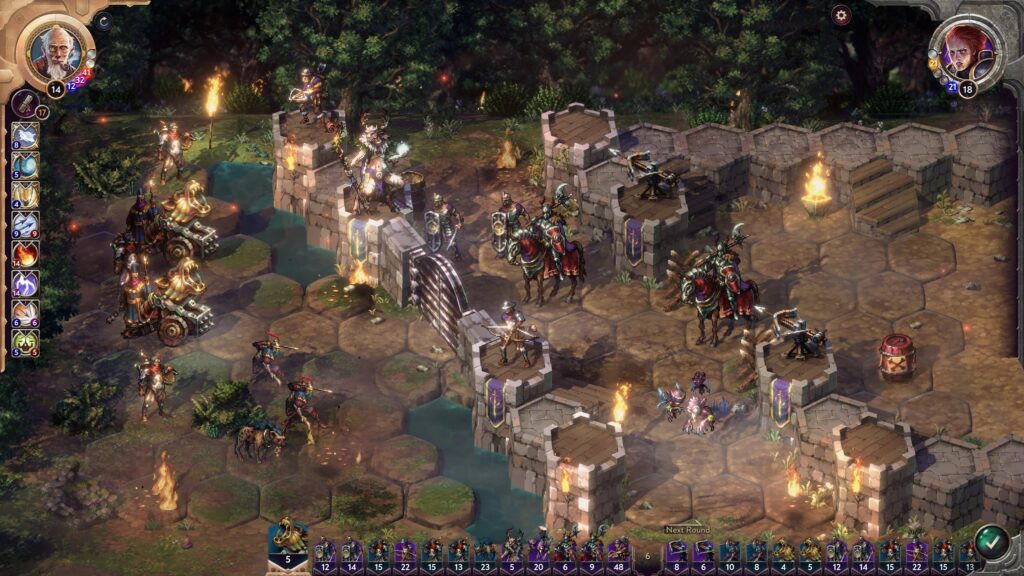
Songs of Conquest is the most faithful spiritual successor to Heroes of Might and Magic III released since the original series faded. You command Wielders — hero-type units who collect essence to cast spells — across a hex-based overworld, managing the town-building layer that city-building strategy games do well, while also running overworld exploration and turn-based army battles when forces meet. The spell-casting economy and the army stacking system both reward the deliberate resource planning that made HoMM III a landmark.
The pixel-art visual style is genuinely beautiful, and the campaign has real difficulty curves and meaningful faction variety. Songs of Conquest on Steam launched out of Early Access with a polished, feature-complete product — a standard that most crowdfunded strategy games don’t hit. If you grew up on Heroes of Might and Magic and stopped expecting that gap to be filled, this is the game that fills it.
Triangle Strategy
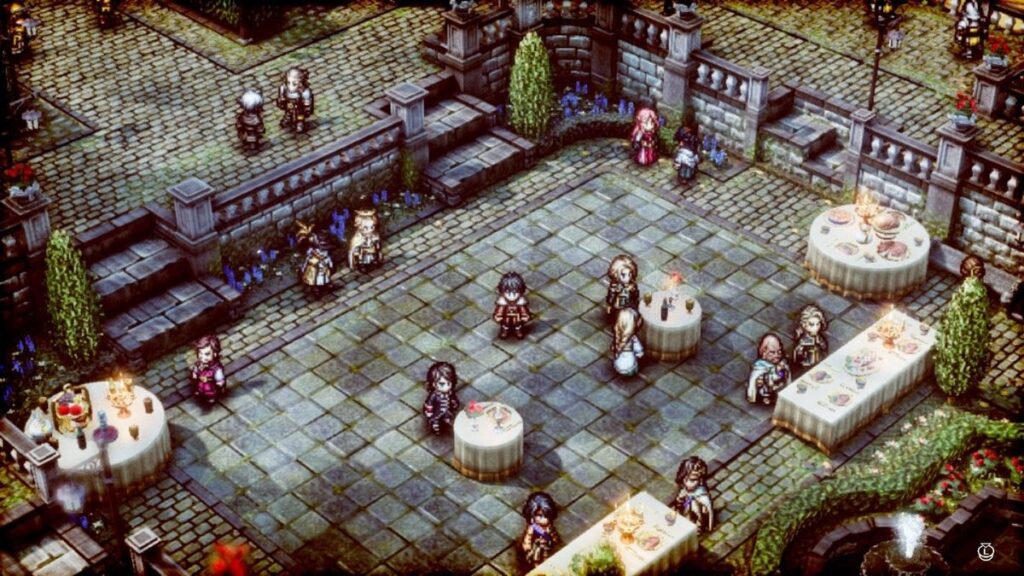
Triangle Strategy earns its place on a new turn based strategy list because its tactical combat is excellent independent of the SRPG framing. Grid-based battles with meaningful elevation, flanking bonuses, and terrain interaction make each map a problem worth solving rather than a stat check. The story’s branching political choices affect which characters join your army, which directly changes your tactical options in future battles — so narrative decisions and strategic decisions are genuinely connected rather than running on separate tracks.
Triangle Strategy on Steam includes the full PC version with all post-launch patches. The story investment is substantial — this isn’t a game for quick sessions — but players who commit to it get one of the most complete tactical experiences in the genre.
Into the Breach
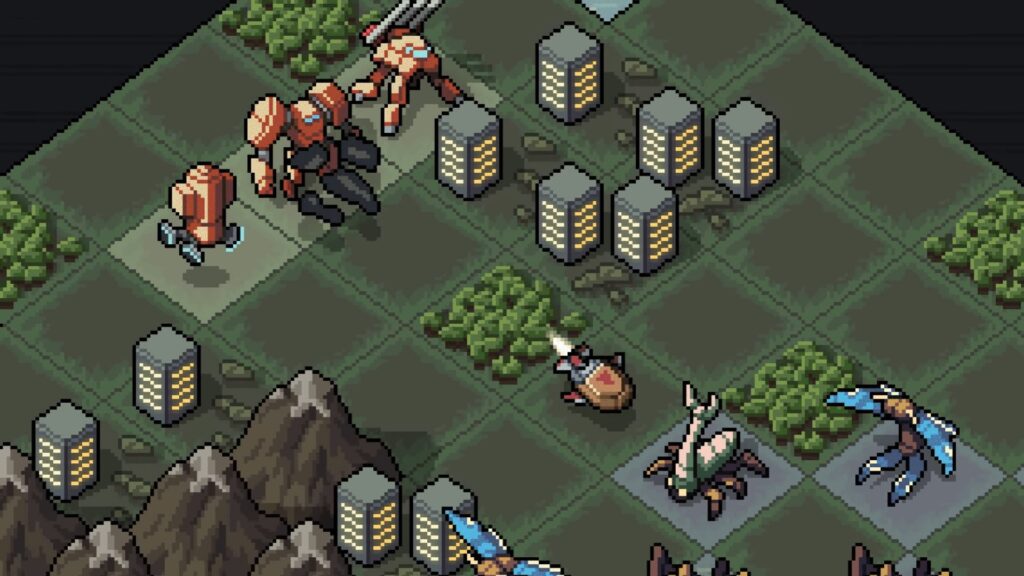
Into the Breach is older than everything else on this list and still the most precisely designed turn-based puzzle-strategy game available. Each battle plays out on an 8×8 grid. Every enemy telegraphs its next attack in advance. Every pilot death is permanent across runs. The design philosophy is radical transparency: you always have all the information you need to find the optimal decision; the challenge is working out what that decision is. No other game on this list teaches positional thinking as efficiently. It’s also free-to-play via Netflix Games, which makes it the most frictionless recommendation here.
Tactical Turn-Based Picks Where Every Move Counts
Squad-scale tactics, where a single bad move costs a run rather than a turn.
XCOM 2
XCOM 2 is the high-water mark of squad-based tactical strategy. The sequel’s central shift puts you in the underdog role from the start. Earth is already occupied. You’re building a resistance, not defending an established order. Missions run on time pressure in ways the first XCOM rarely attempted, which changes how you handle risk and positioning at every difficulty level. Cover placement that felt optional before becomes non-negotiable here.
The War of the Chosen expansion is essentially a second, better game layered on top of the base. Three new faction leaders can appear at any point in a campaign. Soldier bonds, fatigue systems, and new mission types across three allied factions make the strategic layer feel genuinely alive. If you’re buying XCOM 2, buy the expansion at the same time. There’s no version of playing this game where you won’t want War of the Chosen within the first ten hours. XCOM 2 on Steam.
BattleTech
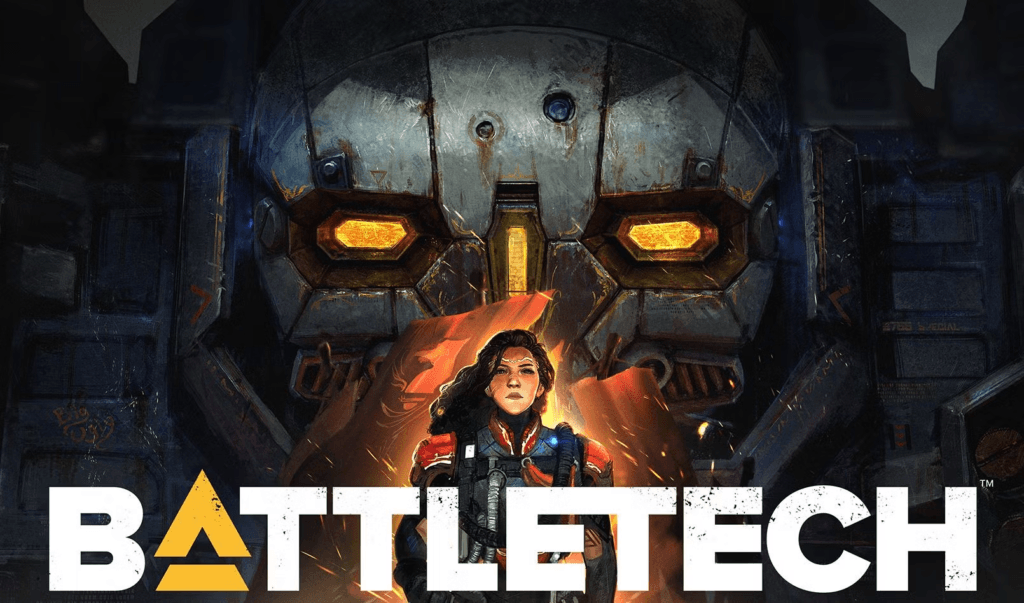
BattleTech runs on a completely different scale. Instead of infantry squads, you command a lance of four Mechs in a mercenary campaign set in the classic BattleTech universe. Combat is deliberate: heat management, weapon ranges, and a targeting system that lets you aim for specific body parts on enemy Mechs. Destroy the arm and you disable that weapon system. Hit the leg and the Mech is slowed. Hit the cockpit and it goes down immediately but is harder to salvage intact.
That targeting granularity adds a decision layer most tactical games skip entirely. Every engagement involves a tradeoff between efficiency and salvage value, which feeds directly into your mercenary finances. The campaign wraps all of this in a crew management layer: paying salaries, repairing Mechs, choosing contracts based on your current financial position. It runs longer than most players expect. That’s either a selling point or a warning depending on your schedule. BattleTech on Steam includes all DLC in the Flashpoint collection.
Phantom Brigade
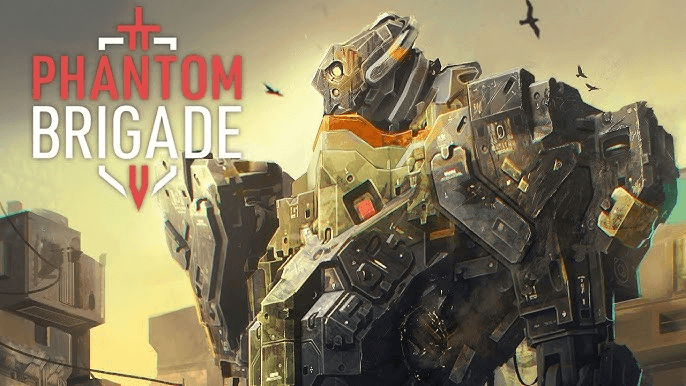
Phantom Brigade is the most mechanically distinctive game on this list. Brace Yourself Games built a predictive timeline system: before each turn executes, you can see exactly where enemies plan to move and fire over the next five seconds. You scrub through a visual timeline, choreographing your units’ actions to dodge incoming fire, position behind cover, and fire during specific exposure windows. Then you confirm and watch the physics-based result play out in real time.
It’s turn-based planning with simultaneous real-time resolution. Nothing else in the tactical genre works quite like it. The procedurally generated campaign runs across a strategic map, and Mech customization lets you mix salvaged limbs from defeated enemies into hybrid builds. The narrative layer is thinner than XCOM 2, but the combat system alone carries the experience. If you’re tired of everything playing the same, this is the answer. Phantom Brigade on Steam.
Wartales
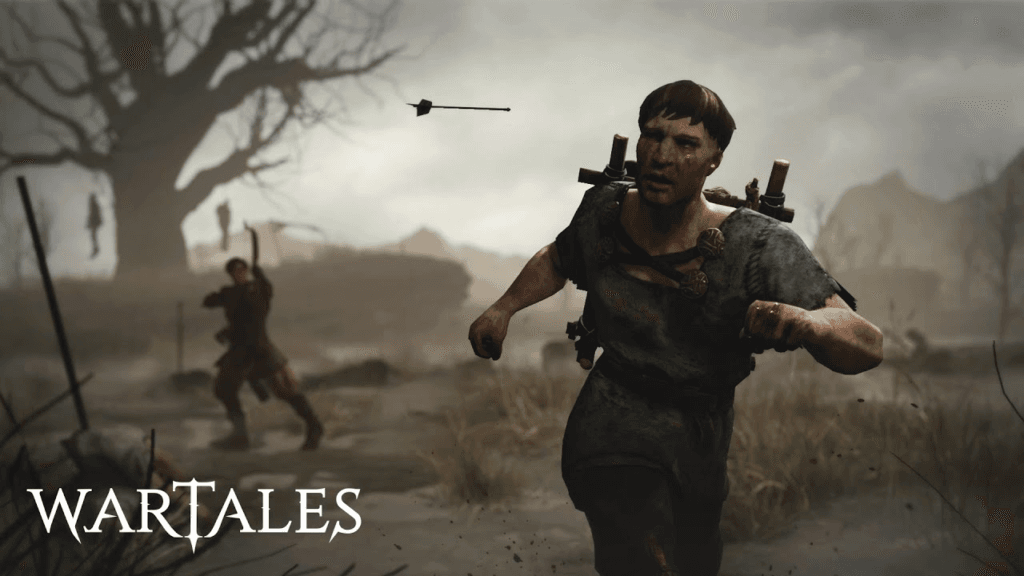
Wartales takes the tactical RPG format in an open-world mercenary direction. There’s no fixed campaign. You explore a handcrafted world, take contracts, manage a growing roster of mercenaries with individual relationships, classes, and skills, and fight tactical battles that escalate in complexity as your company develops. The tone is grounded: no chosen heroes, no prophecy. Just a company of people trying to work in a world that doesn’t need saving, only navigating.
Combat uses positioning, flanking bonuses, and status effects in ways that reward deliberate setup over brute force. Higher difficulty settings are where the game earns its reputation; on easier settings the tension softens considerably. The mobile strategy space hasn’t produced anything close to Wartales in scope, though the best mobile strategy games cover what that platform does well in adjacent territory. Wartales on Steam.
Symphony of War: The Nephilim Saga
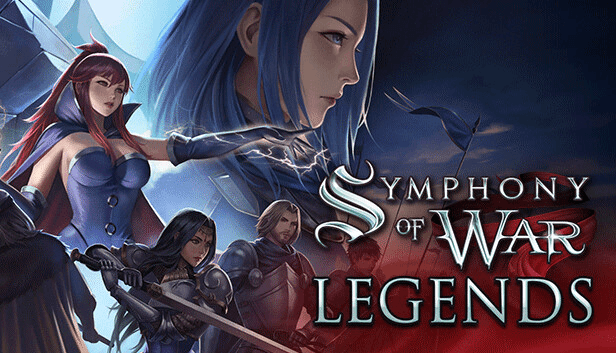
Symphony of War operates at a larger scale than the others on this list. You command entire squads as single units on a tactical map, with each squad containing individual soldiers that have classes, equipment, and morale stats. Positioning still matters; flanks and elevation provide bonuses. But the overall feel is closer to Fire Emblem or classic JRPG strategy than XCOM. That’s a specific niche, and it serves players who want tactical engagement without individual-soldier permadeath pressure.
It’s unusually polished for its budget level. The class system goes deeper than the early hours suggest, and the equipment tradeoffs remain interesting through a surprisingly long campaign. Symphony of War doesn’t get mentioned alongside the bigger XCOM-alikes, but it deserves the conversation. The best strategy games of all time list skews toward bigger-budget releases, but quality is quality regardless of marketing spend.
New Turn-Based Releases Worth Watching
Recent arrivals that are not yet proven enough for the main ranking.
Menace
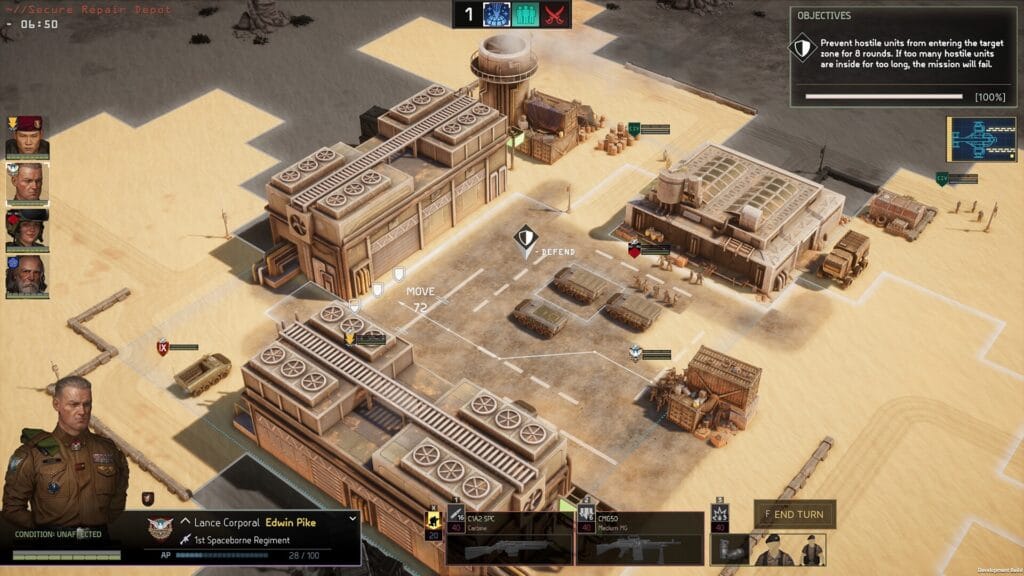
Menace is Overhype Studios’ follow-up to Battle Brothers, and it inherits that game’s refusal to soften the edges. The setting shifts to science fiction: you command a squad of soldiers on planetary campaigns with a persistent mobile headquarters that carries consequences between missions. Fatigue, ammo, and squad leader progression all carry forward. Interconnected mission design means early mistakes can surface several operations later, which is either the best feature in the game or the most punishing one depending on how you feel about being held accountable for decisions made three hours ago. It’s a narrow game by design, but within that lane it commits completely. For fans of strategy RPGs with real tactical depth, it warrants a serious look.
Finished or early access: Released with post-launch patches ongoing.
Play this if you liked: Battle Brothers, XCOM 2, Jagged Alliance.
Xenonauts 2
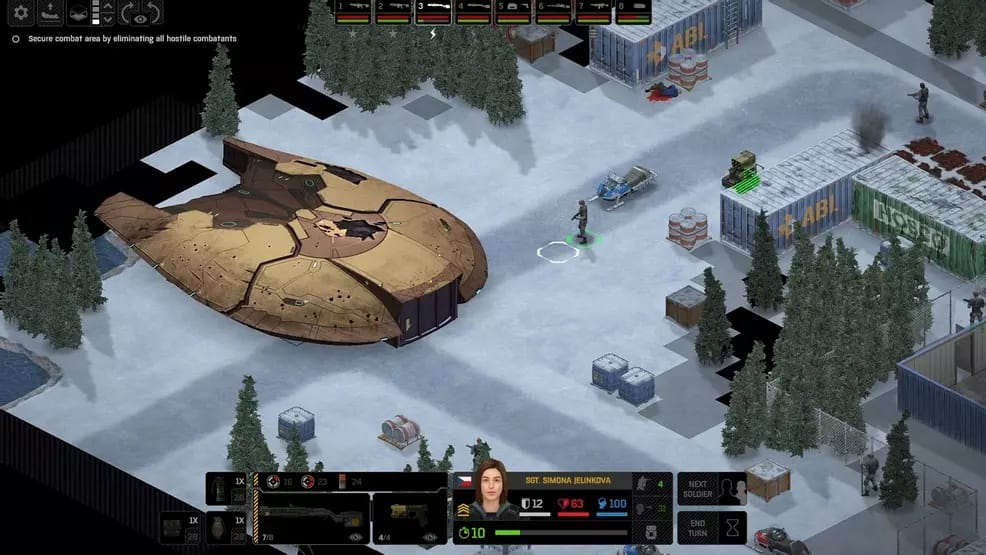
Xenonauts 2 left early access in April 2026 as the most faithful heir to the 1994 X-COM: UFO Defense. Goldhawk Interactive built it as a deliberate counterpoint to the Firaxis XCOM series: longer campaigns, no cover-based combat, line-of-sight mechanics that reward careful positioning, and a strategic layer that models alien infiltration across multiple continents at once. It demands more than XCOM 2, but it also gives more to players willing to learn its systems. If you loved the original X-COM and found the Firaxis reboots too streamlined, this is the game built for you specifically. Our turn-based strategy guide covers the full genre context for where Xenonauts 2 fits in the broader landscape.
Finished or early access: Fully released from early access, April 2026.
Play this if you liked: X-COM: UFO Defense, Phoenix Point.
How to Choose Your Next Game
The right pick depends on what experience you’re looking for:
- Broadest appeal, most content: Civilization VII
- Historical strategy with a character layer: Old World
- Overworld exploration plus army battles: Songs of Conquest
- Story-driven tactical combat: Triangle Strategy
- Pure positional puzzle challenge: Into the Breach
One comparison worth making for players crossing over from a different strategy format: TBS games and real-time strategy games share vocabulary but not feel. RTS rewards fast execution under pressure. TBS rewards careful planning without a clock. The mental modes are genuinely different, and it’s worth knowing which one suits you before committing to a 40-hour campaign.
What’s Worth Watching in 2026
The release pipeline for new turn based strategy this year is active. Kriegsfront Tactics blends classic TBS mechanics with mech customization in a World War II-adjacent setting. Mars Tactics, which entered Early Access in May 2026, layers a physics-driven destruction system over its turn-based combat that could meaningfully change how players think about cover and terrain. The Final Fantasy Tactics remaster — The Ivalice Chronicles — also delivered in 2025 and is the best version of one of the most influential tactical games ever made.
The genre also has a growing presence on mobile. Our mobile strategy games guide covers which TBS titles translate well to touchscreen and which ones are better kept on PC or console — useful if you want the same genre across devices.
For the full picture across the strategy genre — rankings, reviews, and guides — Strategygame.org covers everything from turn-based to real-time to tabletop. The strategy game rankings section is a good starting point if you want to compare across subgenres rather than just within TBS.
