Quick Rundown
Real-time strategy games are the genre that taught a generation how to think under pressure. You and your opponent move at the same time — no waiting for turns, no pause to deliberate. You collect resources, build structures, recruit units, and fight battles simultaneously, while someone else across the map is doing the exact same thing. The player who manages all of it better wins.
This guide covers what real-time strategy games actually are, how the genre’s core mechanics work, where it came from historically, and where to start if you’re picking up an RTS for the first time — or returning after years away. It’s a good moment to be doing either.
What Is a Real-Time Strategy Game?
The label is more literal than most genre names. Both players act in real time: there’s no turn structure, and every second you spend deliberating is a second your opponent is spending building. Speed matters, but so does the quality of your decisions under that speed.
Most real-time strategy games share three interlocking systems. Economy handles resource collection — workers gather gold, minerals, wood, or oil from the map and feed that income into production. Base-building covers the structures that let you recruit units, research upgrades, and expand your productive capacity. Army management is the direct control of units in combat: where they move, what they target, and when to pull them back before they die.
Running all three simultaneously without letting any of them slip is what separates competitive RTS from casual play. A player focused entirely on combat will run out of units because their economy sits idle. A player focused entirely on building will find themselves out-positioned when the attack comes. The genre rewards players who can hold all three threads at once.
Where RTS Games Came From
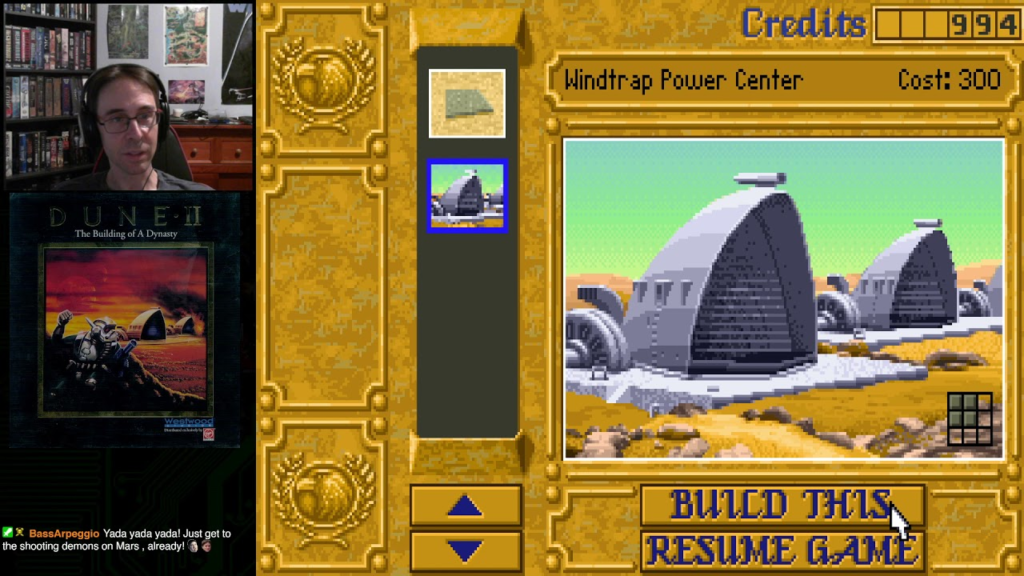
The genre traces directly to Westwood Studios’ Dune II, released in 1992. It established the mechanical template that the rest of the genre built from: mouse-click unit control, resource harvesting via a dedicated harvester vehicle, distinct factions with different units, and a map divided into contested territory. Nearly every design choice that defines modern RTS games has a root in Dune II.
Westwood followed it with Command & Conquer in 1995, which brought the formula to a mass audience and introduced the dual-campaign structure — playing the same conflict from both sides. Blizzard’s Warcraft II refined the experience further. Then came StarCraft in 1998: three factions with genuinely distinct mechanics (Terran, Zerg, and Protoss don’t just look different — they play fundamentally differently), tight competitive balance, and an online multiplayer ecosystem that turned the game into a professional sport in South Korea.
Age of Empires II (1999) approached the genre from a historical direction: civilization-based asymmetry, a deep economic model, and campaigns that taught players actual medieval history alongside the game’s mechanics. The late 1990s through the mid-2000s were the genre’s golden age. In 2006, EA Los Angeles released The Lord of the Rings: The Battle for Middle-earth II — a title that still represents some of the RTS genre’s most celebrated and unchallenged design work, 20 years on and counting.
The Mechanics That Define the Genre
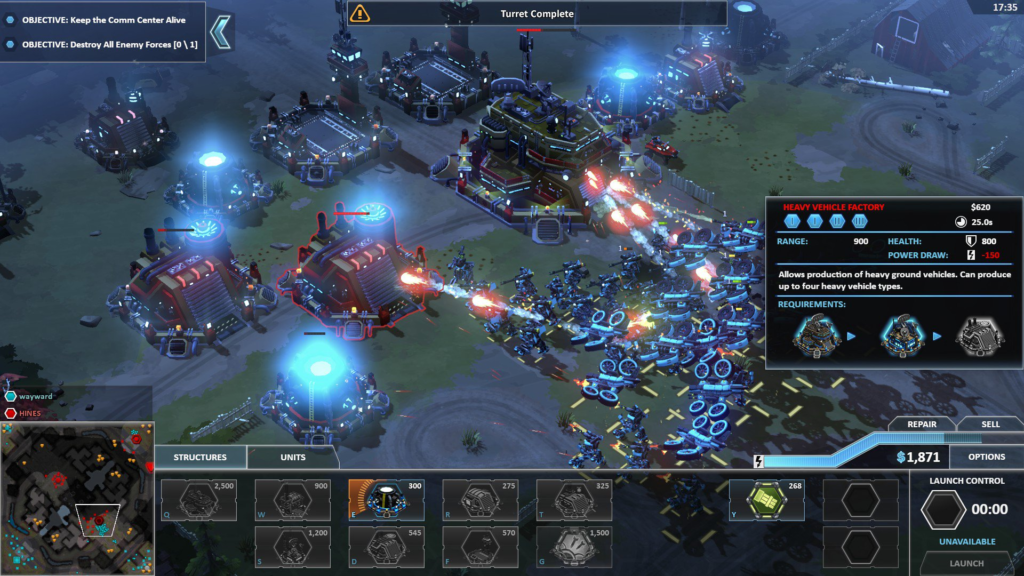
A few specific concepts make RTS games click much faster than playing blind.
Build Orders
In competitive RTS play, the early game is almost entirely structured. A build order is the specific sequence of buildings, units, and upgrades you construct in the opening minutes. There are “safe” builds that prioritize economy and “rush” builds that try to pressure the opponent before they stabilize. You don’t need to memorize pro-level build orders to enjoy RTS games, but understanding the principle — that the first few minutes have a logic to them — removes a lot of the “what do I even build first?” confusion that trips up new players.
Micro and Macro
Micro is short for micromanagement: direct control of individual units during combat. Pulling wounded units out of the fight before they die, focusing fire on one target to eliminate it quickly, timing a spell to land on a cluster of enemies. Macro is the counterpart: keeping your production pipeline running while you fight. Workers should always be working. Production buildings should never sit idle. The economy and base management layer in RTS games shares a core principle with economic simulation games — the difference is that in an RTS, your opponent is actively disrupting your production at the same time.
Fog of War and Scouting
You can’t see the full map. Scouting — sending a unit into enemy territory early — tells you what your opponent is building and where their base is positioned. Is that expansion coming early or are they massing units? Are they going fast air or tech units? The player with better information consistently makes better decisions. Information isn’t just useful in RTS — it’s a weapon.
How Real-Time Strategy Fits Into the Strategy Landscape
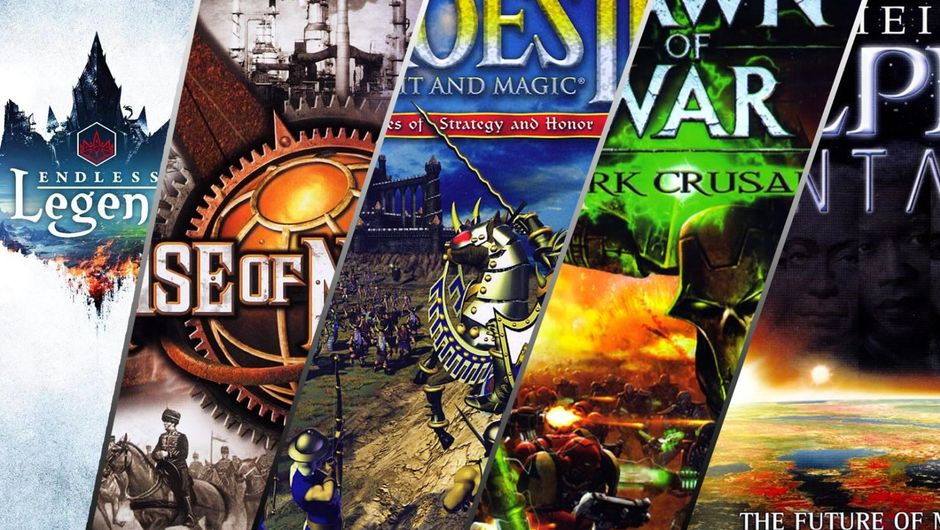
The genre sits in a specific position among strategy subgenres, and knowing where the lines fall prevents a lot of confusion.
4X strategy games — Civilization, Stellaris, Age of Wonders — are almost always turn-based. They simulate entire civilizations over centuries, and “battles” are typically resolved through stat comparisons rather than direct unit control. RTS strips all of that away. The scope is a single conflict, and the tempo is immediate.
Grand strategy games go even further in the macro direction — you’re managing political entities, dynasty succession, and trade networks across decades or centuries. Wars play out through supply lines and attrition rather than real-time unit control. If RTS is about winning the battle, grand strategy is about whether you were in a position to fight it at all.
Turn-based tactics games — XCOM, BattleTech — share the small-unit focus and tactical combat of RTS but remove the time pressure entirely. Every decision is deliberate. No clock. RTS sits at the intersection of real-time tension and direct unit control, and no other format combines both simultaneously at that scale.
The Near-Death, and Why the Genre Is Back
By the mid-2010s, real-time strategy was in genuine trouble. League of Legends launched in 2009, Dota 2 in 2013, and the audience that used to buy RTS titles migrated toward MOBAs — which retained tactical positioning and fast-paced decision-making but replaced economic and base-building complexity with a more accessible session format. Publishers followed the audience.
EA shut down its Westwood-era RTS teams. Blizzard shifted resources toward Overwatch and Hearthstone. Microsoft let Age of Empires go dormant for nearly a decade. StarCraft II kept competitive RTS alive — going free-to-play in 2017 helped significantly — but new releases from major studios dried up.
The revival has been real. Age of Empires IV (2021) proved there was still a mainstream audience for a well-made historical RTS. Beyond All Reason, a free open-source title built on the Spring engine, built a dedicated community around large-scale battles with a different pace than StarCraft-style play. And Tempest Rising arrived as the clearest attempt yet to recapture the Command & Conquer formula: base-building with real personality, dual campaigns, and two distinct factions that reward different approaches. That release sits alongside a broader strategy genre revival that has the space in one of its healthiest stretches since the early 2000s.
Modern Offshoots Worth Knowing
Real-time strategy’s influence spread into formats that don’t always announce the connection.
Tower defense stripped the genre down to pure defense: you place defensive structures on a map, enemies march in set waves, and you win or lose based on placement and upgrade decisions. It keeps RTS’s spatial thinking and economy management while removing the opponent-vs.-opponent pressure — a cleaner on-ramp for players who want to think about positioning without the chaos of a live opponent.
Autobattlers took a different cut: remove the real-time stress and the base-building, keep unit positioning and composition decisions. You draft units, place them on a board, and watch combat resolve automatically. Teamfight Tactics and Dota Underlords are the mainstream examples. They grew directly from RTS’s tactical-positioning DNA, filtered for shorter session times and a lower mechanical ceiling.
MOBA games — League of Legends, Dota 2, Smite 2 — trace their lineage back to Warcraft III custom maps and retain RTS-style lane control and objective-based decision-making. The economic model is packaged differently, but the tactical thinking — when to push, when to rotate, how to read enemy positioning — transfers almost directly from competitive RTS.
Where to Start With Real-Time Strategy Games in 2026
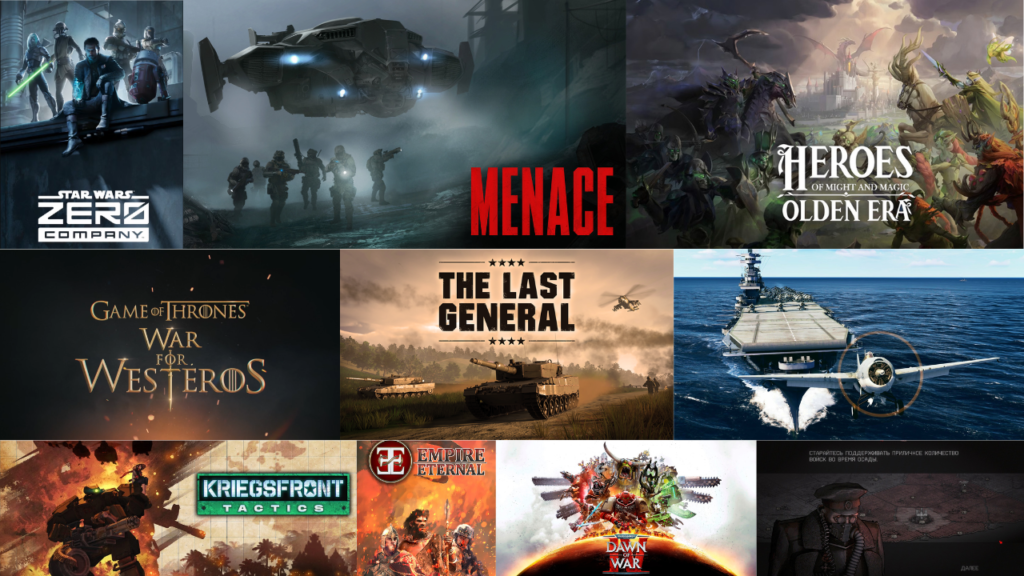
The genre’s depth can look like a wall from outside. The right starting point depends on what you’re after.
Age of Empires IV is the most accessible legitimate entry point right now. The tutorial is thorough, the civilizations are meaningfully different from each other, and the multiplayer has stayed active since launch. Microsoft has kept it well-supported. It’s on PC via Steam and included with Xbox Game Pass.
StarCraft II is the genre’s skill ceiling, and it’s free. Play the campaign first — it’s genuinely good as a single-player experience — before touching multiplayer. The competitive ladder is demanding, but that ceiling is also why the game is still worth playing more than 15 years after release.
Tempest Rising is the pick for players who grew up on Command & Conquer and want that exact flavor back: two factions with distinct personalities, a base-building model that rewards fast thinking, and dual campaigns that each tell the war from a different side. It does exactly what it promises.
Beyond All Reason is free, open-source, and built for large-scale battles across big maps. It’s slower to develop than StarCraft-style RTS but rewards players who prefer positioning and economy over split-second micro. The community is active for a free game, and the game is actively maintained.
For mobile, the best mobile strategy games in the genre tend toward tower defense and auto-battle formats rather than traditional RTS — real-time unit micro and touch controls are an uncomfortable match. Iron Marines and Bad North are the closest to traditional RTS thinking on a phone, without demanding the kind of precision that only works with a mouse.
A Genre Worth Understanding
The RTS genre spent about a decade being written off. The audience for it never disappeared — it scattered into MOBAs, turn-based games, and auto-battle formats that borrowed RTS ideas and repackaged them. What’s available in 2026 is a genre with its competitive roots intact (StarCraft II‘s pro scene is still running), its classics updated and playable, and a real wave of new releases proving the format works on its own terms without needing to borrow an audience from somewhere else.
Whether you’re coming in for the first time or returning after years away, there’s a build order waiting for you. For deeper real-time strategy guides and strategy game rankings across every subgenre, Strategygame.org covers the landscape from retro foundations to current releases. The latest strategy game news tracks what’s new and what’s worth watching.