Quick Rundown
Games Workshop has been licensing the Warhammer 40K strategy game format to developers for decades, and the results range from genre-defining to forgettable. The digital side has produced a few genuine standouts, a longer list of competent mid-tier games, and one high-profile failure. The tabletop side — which is where the IP actually originated — is more consistent but costs significantly more to get into. This guide covers both, ranks what’s worth your time, and is honest about what isn’t.
The Dawn of War Series: Highs, One Solid Middle, and a Stumble
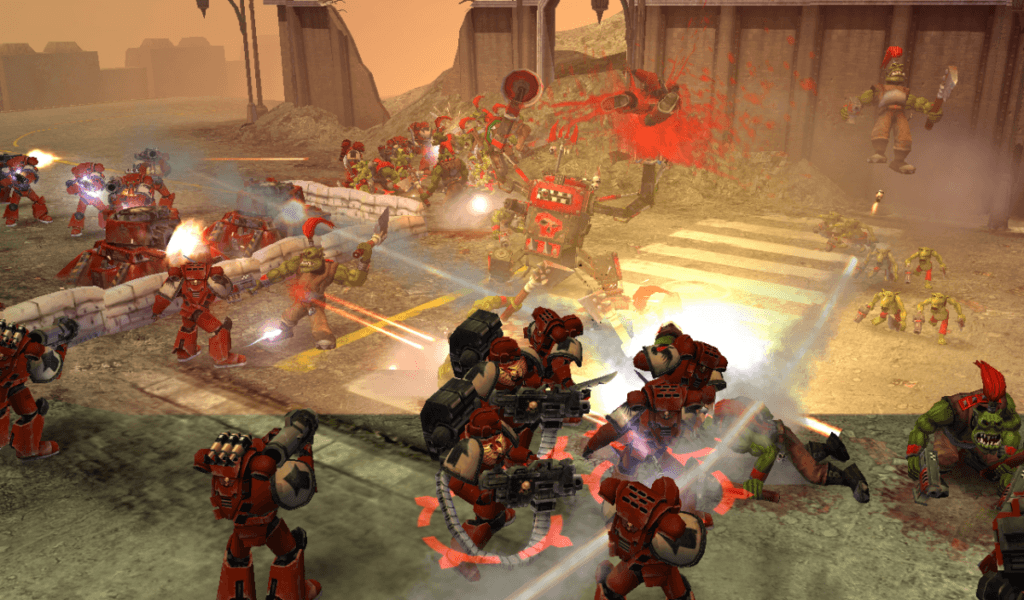
Dawn of War (2004) is still the standard against which every 40K video game gets measured. Relic Entertainment built a squad-based RTS that captured the feel of 40K’s unit-level combat better than anything before or since. You’re not managing an economy so much as managing momentum: reinforcing squads under fire, taking territory with suppression, timing your hero abilities. The Dark Crusade expansion is where the game peaked, adding a non-linear campaign map that tied the skirmishes together into something worth playing for a full weekend.
Dawn of War 2 (2009) went smaller. The base-building was stripped out in favor of a four-hero RPG campaign with persistent squads across missions. It’s more polarizing than the first game, but the combat system is genuinely excellent. Retribution, its standalone expansion, is the best starting point for new players — standalone, cheaper, and includes all the major factions.
Dawn of War 3 (2017) tried to split the difference between both predecessors and landed in an uncomfortable middle. It added large hero units that dominated matches and restructured the economy around waiting for ability timers. The player base dropped fast after launch. As a historical curiosity about how a beloved franchise can misread its own audience, it’s fascinating. As a game to play today, it’s firmly in the skip column. The good news is that Dawn of War 4 has been publicly shown with gameplay footage targeting the original game’s large-army RTS style, which suggests Relic learned the lesson. If you’re interested in the best real-time strategy games the genre currently offers, the original Dawn of War series still makes that list despite its age.
Battlefleet Gothic: Armada 2 — The Digital Gold Standard
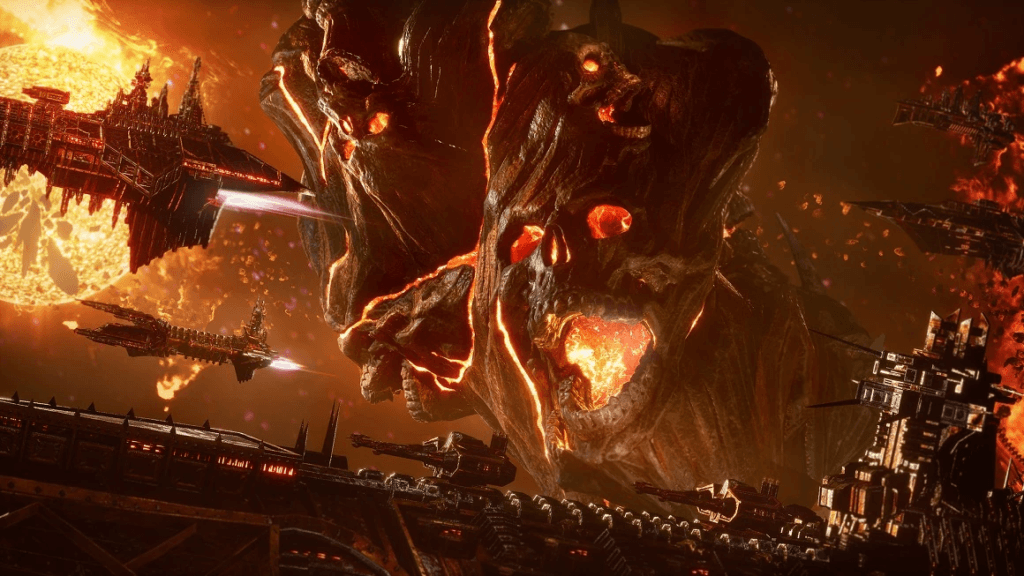
Battlefleet Gothic: Armada 2 (2019) adapts the Battlefleet Gothic tabletop rules into a real-time space naval game where every faction in the 40K universe has a fleet. Imperial Navy, Chaos, Necrons, Tyranids, Orks — all of them, all playable, all with distinct tactical profiles. The game plays more like a slow naval engagement than a conventional RTS. Ships maneuver, board each other, deal with boarding parties, and fire broadsides while managing shield arcs. It takes time to click, but once it does, nothing else in the 40K catalog matches it for strategic depth.
The broader 40K game catalog has dozens of entries, but Armada 2 consistently ranks above them for a reason: it commits fully to one well-designed idea instead of trying to be everything. The campaign structure is three separate storylines, each playable as a different faction, each with different pacing. For players drawn to space strategy games generally, Armada 2 is one of the better licensed examples in the genre.
Total War: Warhammer III — Not 40K, But Relevant
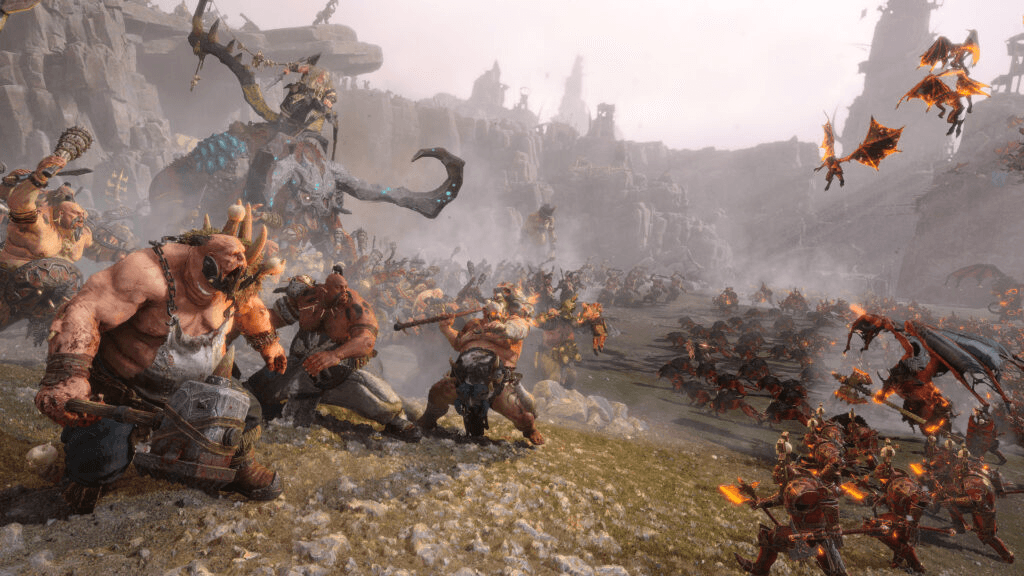
Total War: Warhammer III covers Warhammer Fantasy Battles, not Warhammer 40,000. These are different Games Workshop settings. The fantasy version has ogres, vampires, and Chaos dwarfs; the 40K version has Space Marines, Orks in space, and Tyranid hive fleets. If you know that and want the Total War formula applied to a Warhammer setting, Warhammer III with the Immortal Empires DLC is probably the best strategy-management hybrid currently in this franchise space. The campaign map is enormous, the faction variety is genuine, and Creative Assembly has had years of patches to improve the base experience.
It’s included here because it’s one of the stronger entry points for players new to either franchise, and it gives context for what a full-budget treatment of Games Workshop IP can look like when it works. For players curious about the war strategy games category broadly, Warhammer III fits that niche well. Just don’t confuse it with the 40K setting, or you’ll spend three hours wondering where all the bolters went.
Kill Team: The Best Way Into the Tabletop Side
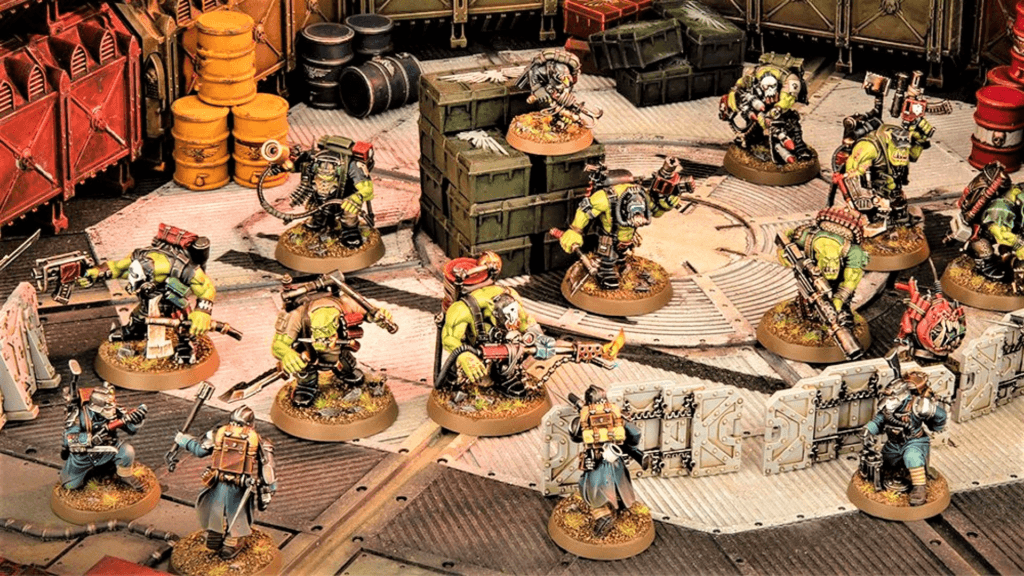
Kill Team is Games Workshop’s skirmish game for Warhammer 40,000. Instead of building a full army, you field a small squad — typically 8 to 14 models — and fight in tight, objective-driven missions. The rules are streamlined compared to the main 40K game, the financial buy-in is manageable, and a single starter box gives you everything needed to learn the system. The tabletop 40K game family is large, but Kill Team is consistently recommended as the first stop for people who want to paint models and flip dice without committing to a full army.
The 4th edition of Kill Team shipped in 2024 and simplified the activation system significantly. If you’re already comfortable with tabletop strategy games, Kill Team sits in the same mechanical neighborhood as skirmish-focused miniatures games like Star Wars: Legion or Infinity, but with a cleaner entry point than either.
The Full 40K Game and Apocalypse
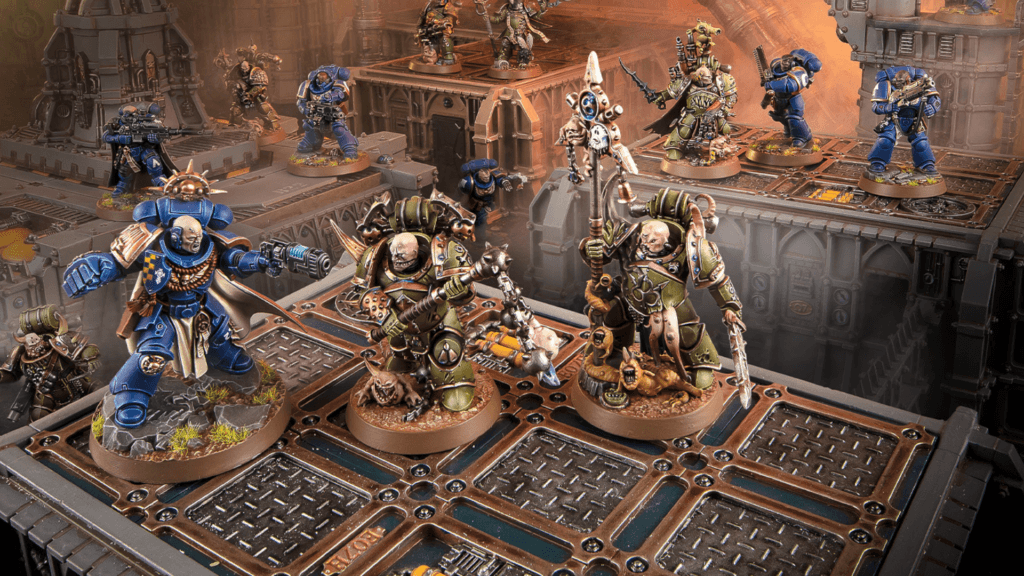
The core Warhammer 40,000 game is where the hobby eventually pulls everyone. Tenth edition (2023) simplified the rules considerably versus its predecessor and made the core rules free to download, which removed one long-standing barrier to entry. Building a playable, competitive list still costs several hundred dollars and takes a meaningful amount of hobby time to assemble and paint, but the game itself has been better received mechanically than most previous editions.
Apocalypse is the large-scale supplement for enormous multi-player games with hundreds of models per side. It’s closer to a spectacle event than a regular game night, and the 40K strategy landscape in 2026 has enough momentum on both the digital and tabletop sides that the game is worth tracking even if you haven’t played since earlier editions. For players who want a tactical layer that rewards more careful positioning, the tactical turn-based strategy end of the video game catalog offers some 40K coverage through games like Warhammer 40,000: Mechanicus — worth knowing about if the tabletop side is too expensive but you want the setting’s feel.
Where to Go Next
Strategygame.org covers the full strategy game landscape from tabletop to PC. For everything on the digital strategy side worth playing right now, the rankings section has the full breakdown by genre.
If you’re new to the Warhammer side specifically, start with Battlefleet Gothic: Armada 2 on PC or Kill Team on the tabletop. Both have genuine depth without demanding you read a codex first. Strategy games on Steam worth tracking in the 40K space include Armada 2, both Dawn of War entries worth recommending, and Mechanicus, which remains one of the better licensed turn-based 40K titles for players who prefer the slower pace.
