
Quick Rundown
Space strategy games have a scope problem most other genres don’t. A ground-level strategy game gives you a map and some units. A space strategy game gives you an entire galaxy and asks you to manage civilizations, fleets, economies, and alien diplomacy at the same time. The best space strategy games solve that scope problem differently depending on their format. The grand strategy approach, the turn-based 4X approach, and the real-time approach each answer the question of how you make commanding a star-spanning empire feel manageable. This list covers the strongest current options across all three, including spaceship strategy games built for pure RTS players and titles designed for the long-haul campaign.
The Grand Strategy Side: Stellaris and Distant Worlds 2
Stellaris
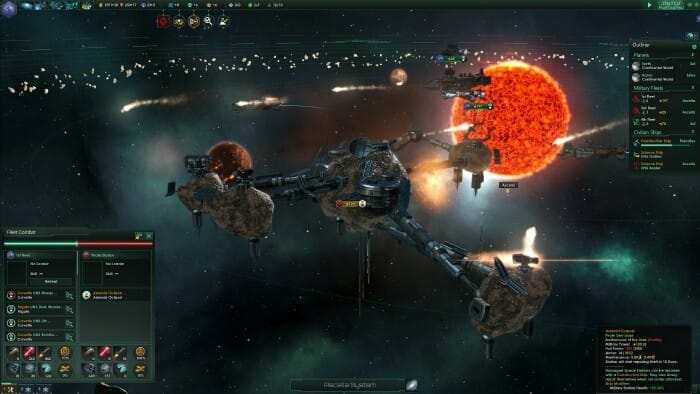
Stellaris, developed by Paradox Development Studio and released in 2016, is the most polished grand strategy game set in space. It generates a procedural galaxy at the start of each run: different star systems, anomalies, pre-FTL civilizations, and alien empires with their own personalities and goals. Your job is to guide your civilization from early exploration to late-game dominance, managing diplomacy, military, internal politics, and economic output across the centuries.
The depth comes from faction customization and event-driven storytelling. You can play as a militaristic hive mind, a pacifist federation of democracies, or a corporate empire that buys star systems instead of conquering them. The late-game crisis events, threats that force every surviving civilization to either cooperate or collapse, are some of the best-designed large-scale challenges in the genre.
A decade of DLC has made the base game denser than it once was. New players should start with the base content, add expansions selectively, and expect the first campaign to involve some learning by mistake. Our grand strategy beginner’s guide covers the core concepts that carry across Paradox titles if you want context before jumping in.
Distant Worlds 2
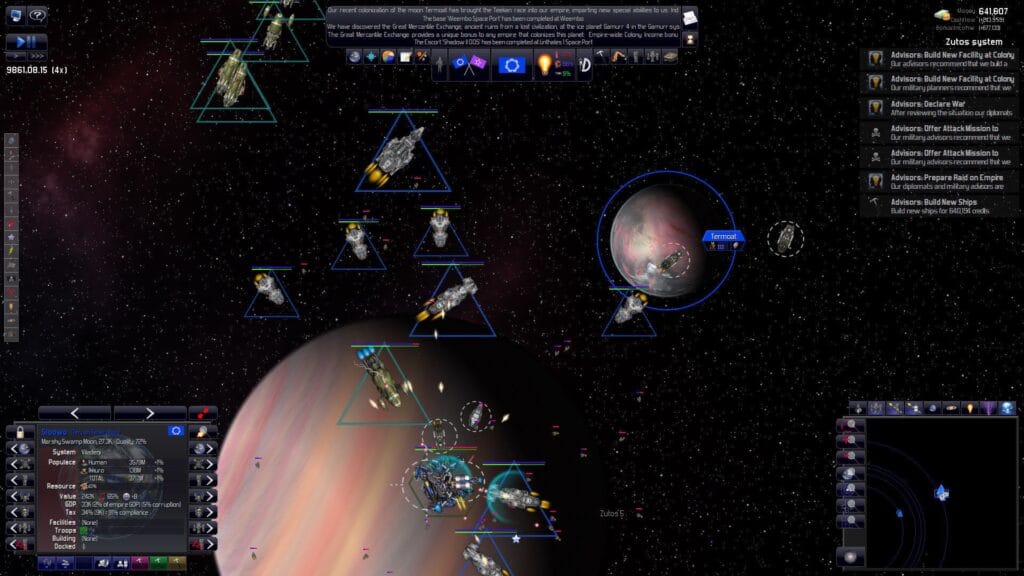
Code Force’s Distant Worlds 2, released in March 2022, goes places Stellaris doesn’t. The economic simulation is deeper, and the game scales to galaxies with thousands of star systems and hundreds of independent species. An automation system lets you delegate logistics and fleet management to the AI, letting you focus on high-level decisions without tracking every cargo freighter in a network that spans half the galaxy.
Players coming from traditional 4X strategy who want something larger in scope and more granular in economic modeling will find Distant Worlds 2 rewarding but demanding. The interface presents a lot of information at once and the learning curve is steeper than Stellaris. Once it clicks, nothing else in the space strategy genre operates at comparable scale.
The 4X Pick: Galactic Civilizations IV
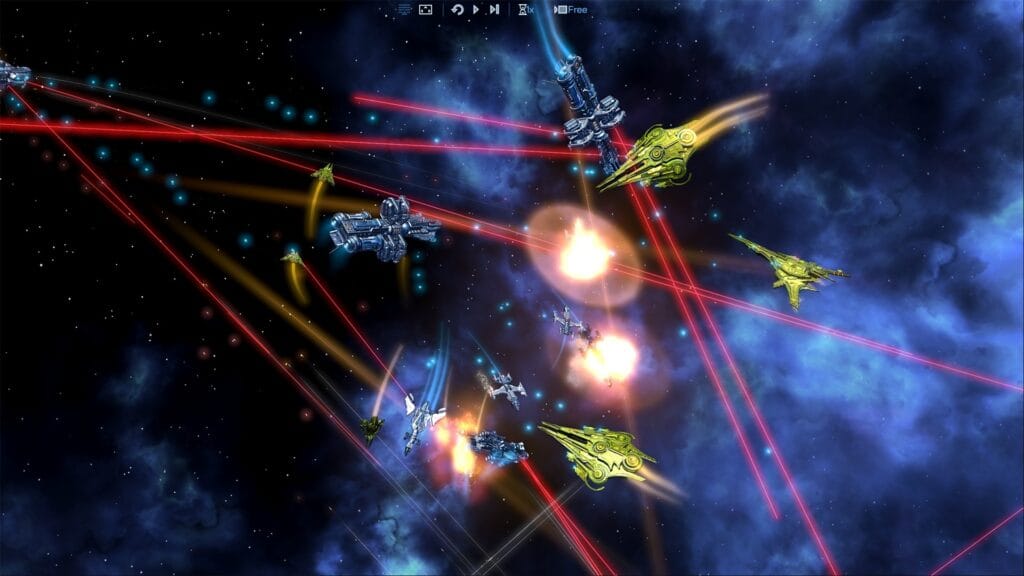
Galactic Civilizations IV by Stardock Entertainment is the most traditional entry on this list. Released in April 2022, it’s a turn-based 4X in which humanity and dozens of alien races compete for the galaxy through colonization, technology, diplomacy, and military force.
The strength here is clarity. The mechanics are easier to parse than either Stellaris or Distant Worlds 2, the AI opponents are competitive and meaningfully varied in their behavior, and the tech tree offers real divergence in how your civilization develops. Stardock released consistent updates through 2024 that added factions, scenarios, and balance refinements. The current version is the best the game has been.
For players who want the classic loop in space without the additional complexity layers of grand strategy, Galactic Civilizations IV is the cleanest pick among current turn-based strategy games in the genre.
The RTS Side: Homeworld 3 and Sins of a Solar Empire II
Homeworld 3
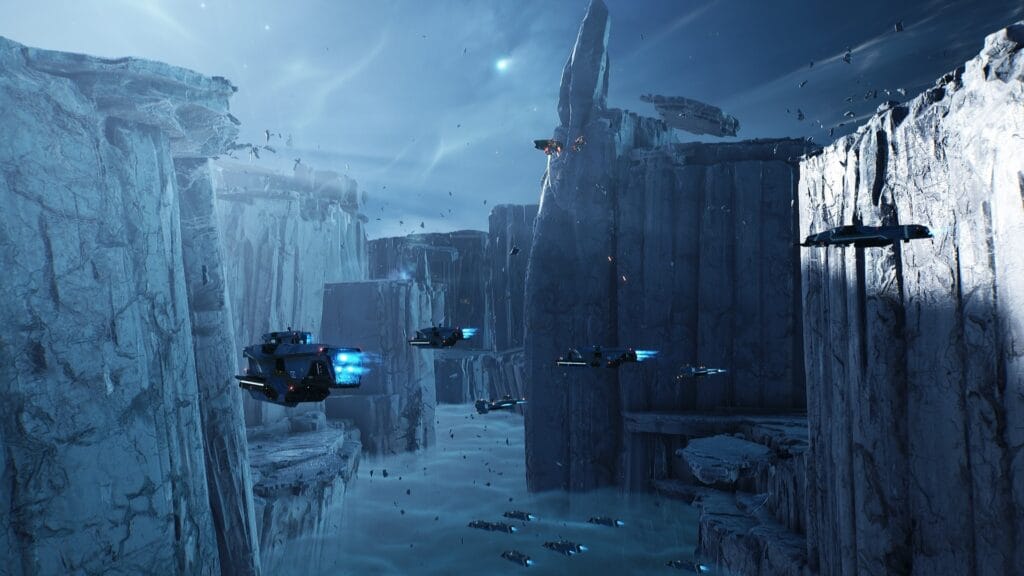
Homeworld 3, released in May 2024 by Blackbird Interactive, is a pure real-time space combat game with genuine tactical depth. It’s the third mainline entry in a series that began in 1999 and defined what cinematic RTS design could look like.
Combat takes place in full 3D space, which changes how you think about positioning and fleet geometry. Attack vectors, formation cohesion, and the orientation of your fleet relative to the enemy matter in ways ground-based real-time strategy games don’t have to account for. Homeworld 3 rewards players who think about composition and approach rather than players who can produce units faster than the opponent.
The campaign received mixed reviews for its pacing and story choices. The core mechanics and the skirmish and multiplayer modes are where the game earns its place. For rts space strategy games built around tactical fleet command, Homeworld 3 is the current high point.
Sins of a Solar Empire II
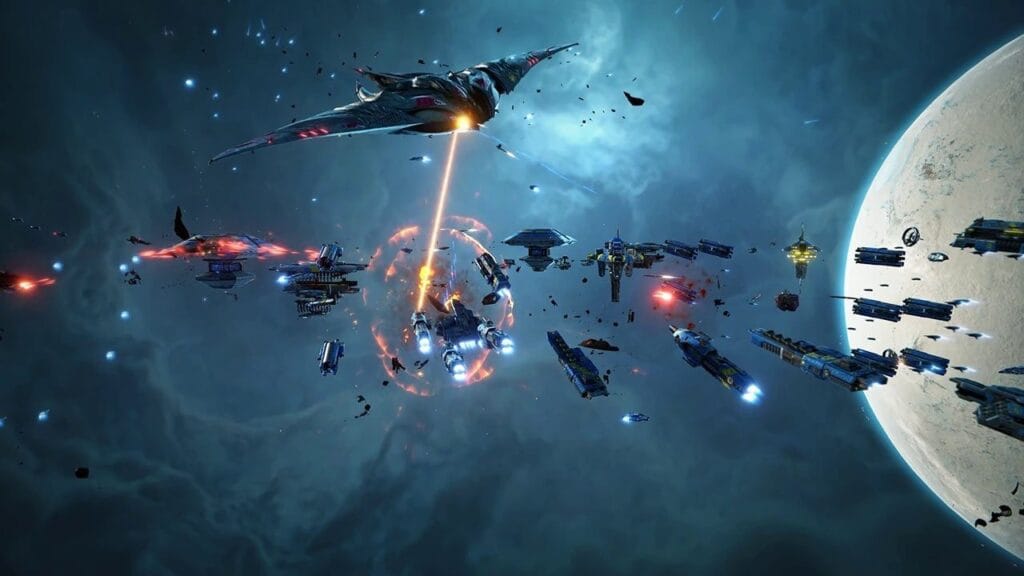
Ironclad Games released Sins of a Solar Empire II in August 2024, following up on the original’s 2008 release. The game blends 4X-style empire building with real-time battles: you develop planets, research technologies, manage a galactic economy, and fight fleet engagements all in real time, with no turn structure separating the management layer from the combat.
The result sits in a category of its own. It plays differently from a grand strategy title and differently from a pure RTS. Sins of a Solar Empire II is for players who want to grow an empire and command its military simultaneously, in the same unbroken session, without stopping to plan. The 2024 version brought graphical upgrades, reworked factions, and better multiplayer stability over the original.
How to Pick Your Space Strategy Game
Format is the deciding factor here more than any individual feature list.
If you want a game that runs like a long campaign and generates a different galaxy narrative every playthrough, Stellaris is the more accessible starting point and Distant Worlds 2 is the deeper simulation. Both reward patience and benefit from long sessions.
If you prefer turn-based strategy mechanics and a structured 4X framework without the event-driven complexity of grand strategy, Galactic Civilizations IV is built for exactly that.
If you want real-time combat and don’t need empire management on the side, Homeworld 3 delivers the best pure-RTS space experience currently available. If you want both empire management and real-time combat running simultaneously without switching modes, Sins of a Solar Empire II is the only game that handles both at once.
Where to Start
If you’re new to space strategy, Galactic Civilizations IV and Stellaris are the most accessible entry points. Both have active communities, solid documentation, and enough onboarding that getting oriented doesn’t take a full week.
For a wider view of what’s competitive in strategy right now across every format, our strategy game rankings cover the full landscape. The strategy game guides section breaks each subgenre down in depth, from ground-based tactics to interstellar empires. Strategygame.org tracks the whole genre, including everything new dropping in space strategy in 2026.
