Quick Rundown
Most war strategy games get the aesthetics right and the rest wrong. They’ll give you tanks and artillery and call signs, then let you build a base twenty meters behind enemy lines without consequence. The games on this list work differently. They model the parts of modern warfare that actually determine outcomes: unit capabilities, supply lines, pace of advance, and the cost of overextending. None of them play like arcade games wearing a uniform.
This list splits picks by pace and complexity, so you can find the right entry point whether you want a 30-minute tactical engagement or a hundred-hour campaign. For background on what separates serious military titles from the broader category, Military Strategy Games That Make You Think Like a General covers the design distinctions in detail.
Wargame: Red Dragon
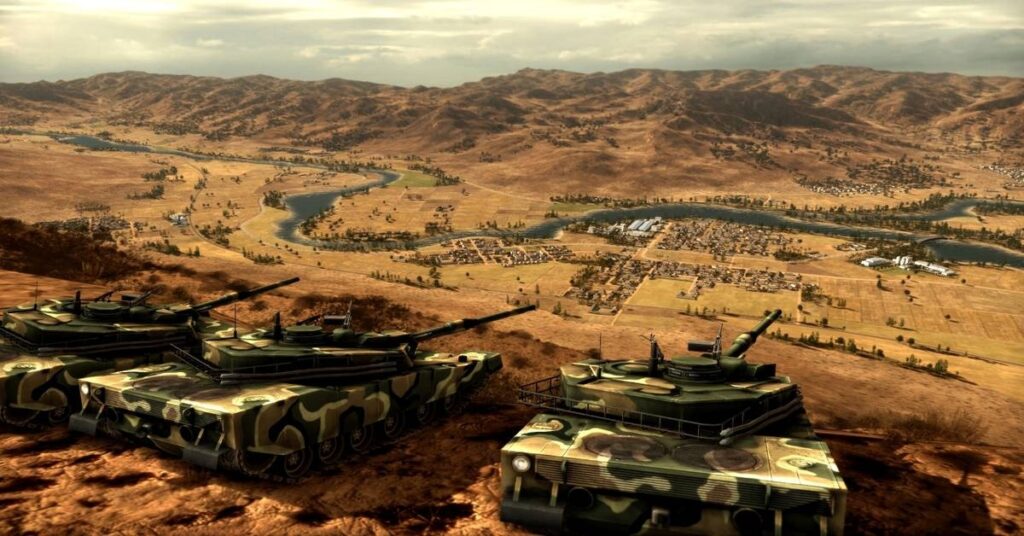
Wargame: Red Dragon is set in the Cold War period from 1975 to 1991 and covers potential NATO versus Warsaw Pact conflict across Western Europe and East Asia. Eugen Systems built it around a deck-construction system: before each game, you build a force from hundreds of historically modeled units — vehicles, infantry, aircraft, and naval assets — each with accurate stats for armor, firepower, speed, and sensor range.
The depth here is exceptional and the barrier is equally exceptional. Units die fast, positioning is everything, and new players will get demolished by opponents who understand the unit interaction trees. Suppression, flanking, and fuel logistics are all live mechanical concerns, not abstractions. Wargame: Red Dragon’s Wikipedia entry has a useful breakdown of the unit database and how the deck system evolved from the earlier Wargame titles.
This is one of the best war strategy games for players who want real Cold War military modeling. It is not a game you pick up casually. Expect 20 to 30 hours before the mechanics feel natural. The competitive multiplayer scene has thinned since 2014, but it still exists, and the skirmish AI gives enough resistance for solo play.
Pace: Fast real-time tactical | Complexity: Very High | Period: Cold War 1975–1991
Steel Division 2
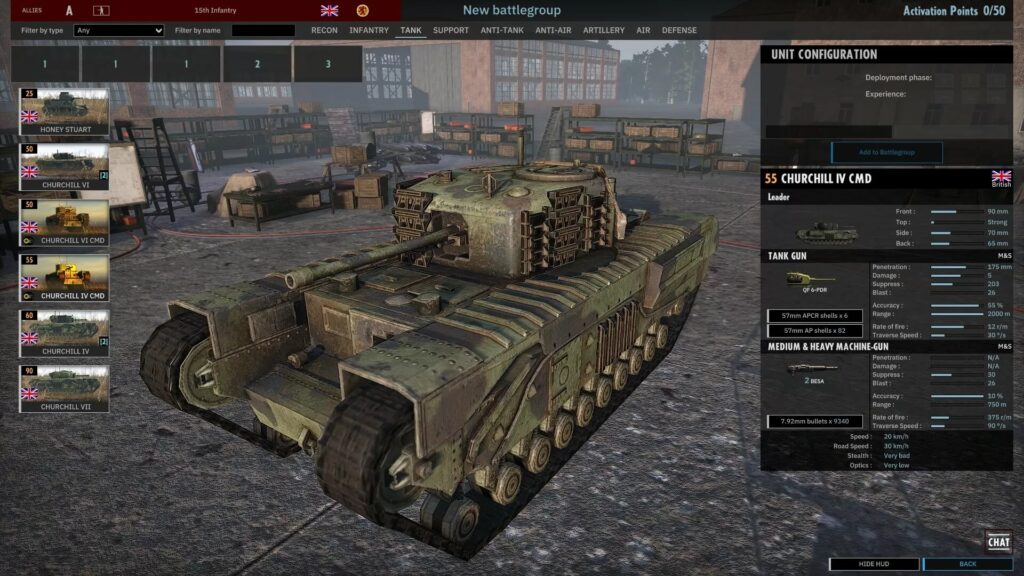
Steel Division 2 covers the summer of 1944 on the Eastern Front, specifically Operation Bagration and the Soviet advance through Byelorussia. Eugen Systems used the same engine as Wargame but shifted the design toward operational depth. Battles play out on a larger front-line map with a phase system — each match progresses through three phases where different unit classes unlock, simulating the rhythm of a real engagement.
The operational layer on top of the tactical game is what distinguishes Steel Division 2 from most WWII RTS titles. You’re not just winning individual fights; you’re managing unit availability, reinforcement timing, and holding ground across an extended front. Steel Division 2’s Wikipedia page covers the dynamic campaign system that Eugen added post-launch, which is the most ambitious version of this operational concept.
For players who want to understand where Steel Division 2 fits in the RTS genre, the best real-time strategy games puts it in context alongside the genre’s wider catalog.
Pace: Deliberate real-time tactical | Complexity: High | Period: WWII Eastern Front 1944
Hearts of Iron IV
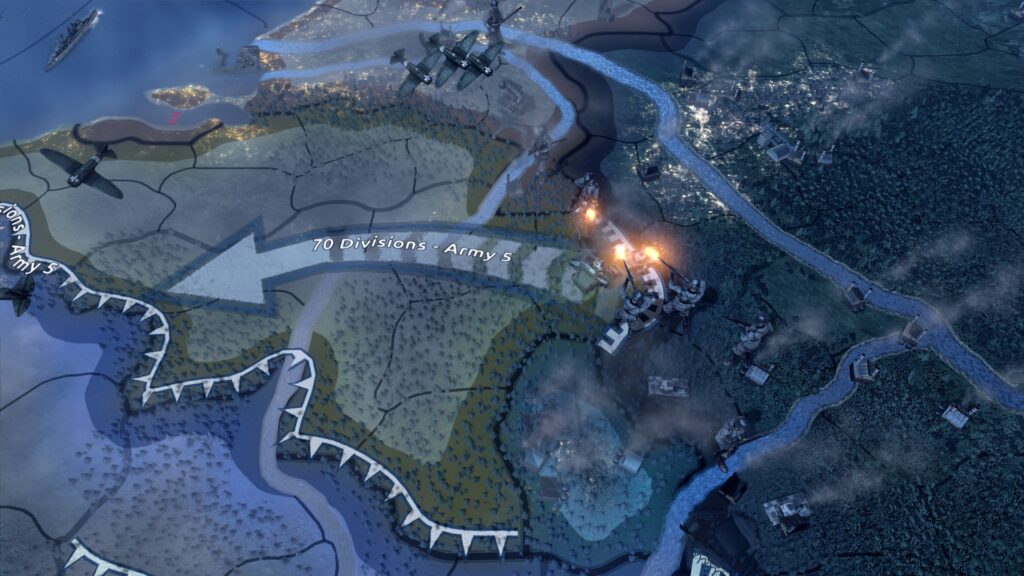
Hearts of Iron IV operates at a completely different scale from the other games on this list. Where Wargame and Steel Division zoom in to the platoon and battalion level, HoI4 zooms out to the entire theater — or the entire planet. You manage national production, logistics networks, research priorities, diplomatic alignment, and strategic deployments simultaneously. Individual battles resolve through division statistics rather than unit control.
What HoI4 gets right about war is the strategic layer that most action-focused titles ignore entirely. Logistics genuinely matter. Supply lines break. Industrial capacity limits what you can field. The manpower pool drains when you overcommit. It’s the only game on this list where losing a naval campaign can cost you the war on land, because that’s how modern industrial warfare actually worked. Hearts of Iron IV on Wikipedia covers its development history and the design changes across its major expansions.
If you’re new to grand strategy and considering HoI4 as an entry point, the Beginner’s Guide to Grand Strategy Games is worth reading first — the learning curve is real. For experienced players already in the genre, Grand Strategy Games for Players Who Already Know the Genre covers what HoI4 does best relative to its Paradox catalog peers.
Pace: Grand strategy, real-time with pause | Complexity: Very High | Period: 1936–1948
World in Conflict
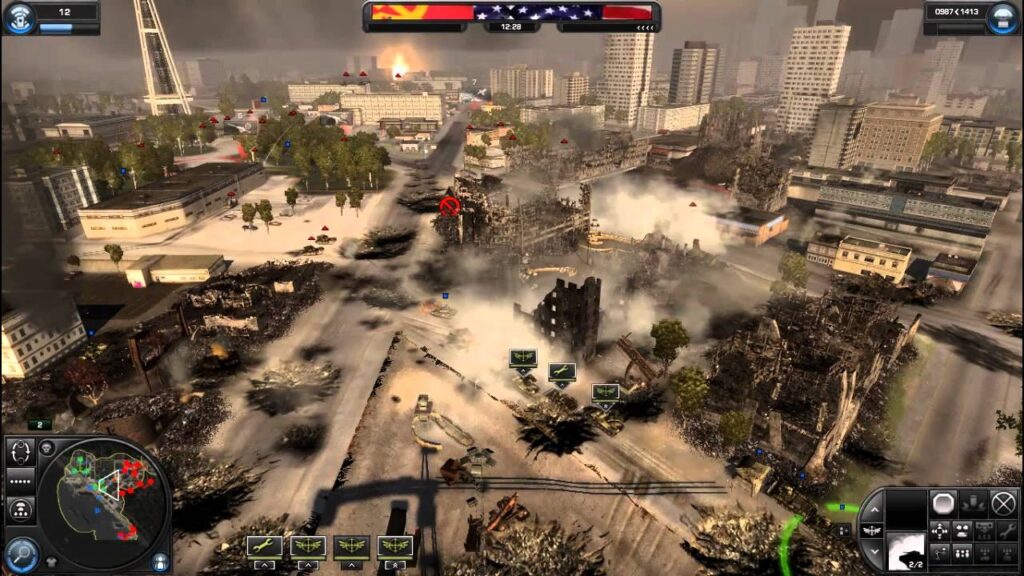
World in Conflict is the most accessible entry on this list, and it’s worth understanding why deliberately. Massive Entertainment removed base building entirely. You call in units from off-screen command, spend tactical aid points for artillery and air support, and focus entirely on the fight in front of you. The setting is a Cold War-turned-hot scenario in 1989: the Soviet Union invades Western Europe and the continental United States.
The game doesn’t pretend to be a serious simulation. It’s cinematic, fast, and designed for players who want the intensity of modern combined-arms warfare without the 40-hour onboarding that Wargame demands. World in Conflict on Wikipedia covers the original multiplayer design and its legacy as an influential non-base-building RTS.
The multiplayer servers have been offline since 2012, which is the main limitation for new players. The single-player campaign holds up as a self-contained experience — scripted but well-executed.
Pace: Fast real-time tactical | Complexity: Low-Medium | Period: Cold War 1989 (fictional)
Picking Your Entry Point by Pace and Complexity
The four games on this list cover a wide range of war strategy games by design intent. Here’s the honest breakdown:
| Game | Pace | Complexity | Best For |
|---|---|---|---|
| World in Conflict | Fast | Low | First-time war RTS players |
| Steel Division 2 | Medium | High | WWII tactical depth |
| Wargame: Red Dragon | Fast | Very High | Cold War simulation enthusiasts |
| Hearts of Iron IV | Slow | Very High | Grand strategic scope |
If you’re coming from general strategy gaming and want to understand the turn-based versus real-time distinction before committing to Wargame or Steel Division, Turn-Based Strategy Games Explained covers the mechanics trade-offs clearly. The real-time games on this list are more demanding in the moment; turn-based alternatives give you more time to think.
For players who want context on how these titles fit into the long history of military strategy games, the best strategy games of all time traces where war-themed titles fit across the genre’s decades of development.
What Getting Combat Right Actually Looks Like
The common thread across all four games is consequence. Units don’t respawn. Mistakes don’t reset. Flanking a position costs you on the other flank. Overextending your supply line makes your strongest division combat-ineffective at the worst possible moment. If a war strategy game doesn’t make those costs visible and felt, it’s not really modeling warfare — it’s using military aesthetics to dress up a conventional RTS.
Wargame and Steel Division enforce these consequences at the unit level. HoI4 enforces them at the national level. World in Conflict enforces them through tactical aid scarcity and objective control. They reach the same design goal from different angles, which is part of why the genre supports all four rather than collapsing into one dominant approach.
Our real-time strategy guides go deeper on the mechanical specifics for the RTS-side picks. And for ongoing coverage of new releases and updates in the broader category, Strategygame.org tracks the full strategy game landscape.
