Quick Rundown
If you’ve worked through Antony Beevor’s Stalingrad, can explain the German supply situation on the Eastern Front in 1944, or just find the operational history of the war more interesting than the result, this list was built for you. The second world war strategy games here don’t put you in charge of a nation and say “figure it out.” They make you reckon with production bottlenecks, coalition politics, logistical constraints, and the doctrine choices that actually decided the conflict’s outcome. These are games for players who find the context as interesting as the gameplay.
This is a different scope than our roundup of the best WW2 strategy games worth replaying, which covers a wider range of styles and scales. The focus here is on grand-scope simulation and operational depth. Four games. All historically serious.
Hearts of Iron IV
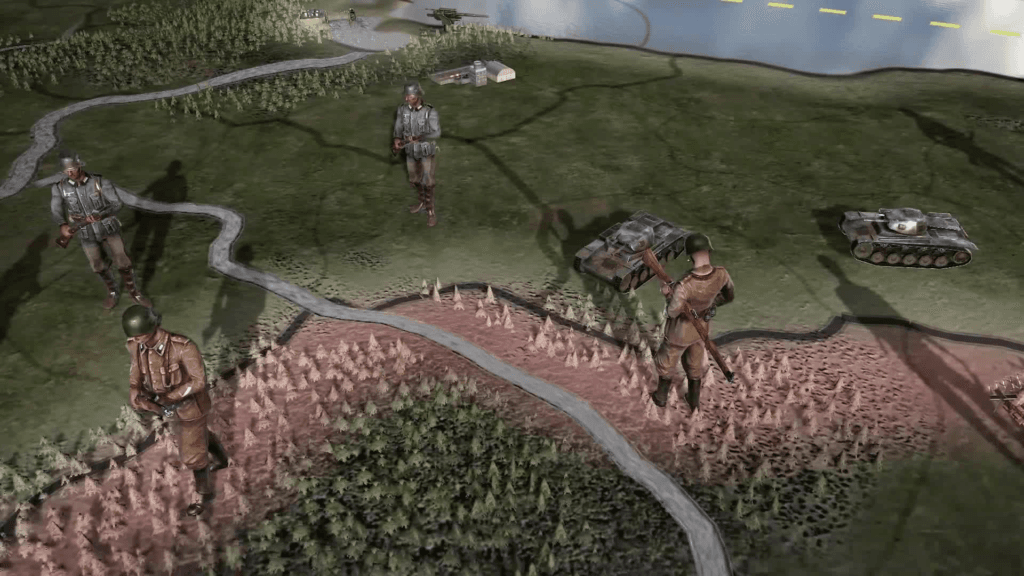
No coverage of second world war strategy games skips Hearts of Iron IV, because nothing else does what it does at its price point. Paradox released it on June 6, 2016, a date their marketing team picked deliberately, and has expanded it consistently ever since. The base game models the war’s full scope: production queues, naval doctrine trees, air wing assignments, division template design, and the diplomatic maneuvering that determines when neutrals enter the conflict and on which side.
The research and production system is what sets it apart from lighter WW2 titles. Every nation starts with different technological baselines and industrial capacity. Relocating Soviet industry behind the Urals before the German advance reaches it requires planning several game-months in advance. Building the right division templates to match your chosen military doctrine changes how your front lines perform against enemy formations. These aren’t optional layers. They’re the game.
The modding community extends its life considerably. The Great War mod converts the entire game to WW1 with period-accurate events and faction structures. Kaiserreich builds out an alternate 1936 with research depth that makes most published alt-history fiction look underworked. For players willing to put 40 to 60 hours into learning it, Hearts of Iron IV delivers more second world war strategy depth than any other game on this list. Our coverage of grand strategy games for experienced players covers it alongside its Paradox contemporaries.
Developer: Paradox Interactive. Platform: PC. Verdict: The benchmark for WW2 grand strategy and the natural starting point for most players.
Strategic Command WWII: World at War
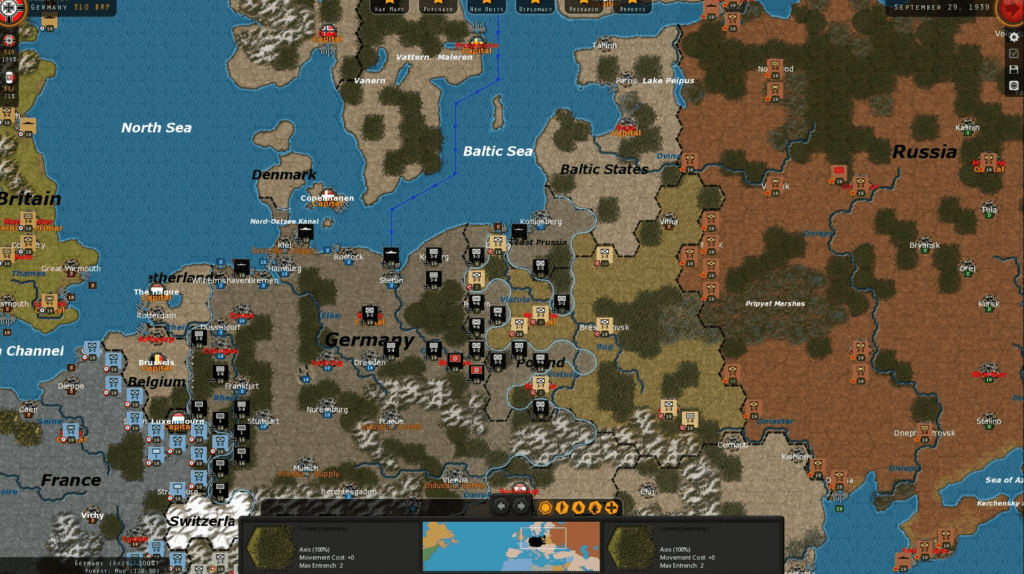
If Hearts of Iron IV is the learn-it-for-two-months option, Strategic Command WWII is the one you can actually finish. Fury Software’s series keeps the grand-strategic scope: you’re managing diplomacy, research, and theater-level operations across every front. But it removes the administrative complexity that drives new players away from Paradox titles.
The hex-based turn structure makes it feel closer to classic wargaming than to modern grand strategy. Decisions are clean. The AI plays competently. You can complete a full campaign without consulting a wiki to understand why your naval doctrine bonuses aren’t applying correctly. That accessibility matters because the underlying historical model is solid. The timing of Lend-Lease, the conditions for US entry, and the Axis over-extension in North Africa hit in roughly the right years for the right reasons.
Cultured Vultures’ WW2 strategy comparison notes that Strategic Command holds up well for players who want historical accuracy without the steep learning curve of the Paradox ecosystem. Players who want to understand the broader historical strategy genre context should explore our historical strategy games guide.
Developer: Fury Software / Slitherine. Platform: PC. Verdict: The most accessible grand-strategic WW2 game that doesn’t sacrifice historical grounding.
Unity of Command II
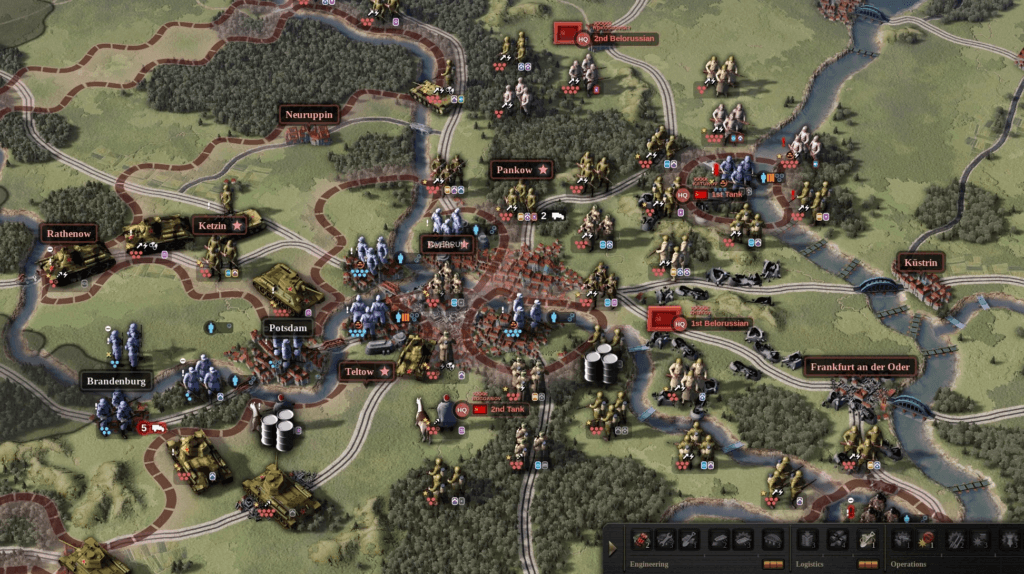
Most WW2 strategy games handle the operational level poorly. Unity of Command II handles it better than anything else in the genre. 2×2 Games released it in 2019 with a deliberately narrow focus: Allied ground operations from North Africa through the liberation of Western Europe, with an Eastern Front expansion adding the Soviet campaigns.
The supply system is the game’s defining mechanic. Cutting an enemy formation off from its supply lines doesn’t just reduce its effectiveness. It collapses the unit, which mirrors how WW2 operational campaigns actually worked. The Falaise Pocket, the Allied logistics crisis after Normandy’s breakout, the challenge of sustaining armored spearheads during rapid advances across France: Unity of Command II models these constraints in ways that are accessible without reducing them to abstraction.
The Schwerpunkt doctrine is a mechanical reality here. Concentrating force at a decisive point, exploiting the gap, protecting the flanks of your advance: the things that made German operational commanders effective in 1941 are the same things that win campaigns in this game. GameWatcher’s WW2 strategy overview identifies the supply model as one of the most historically coherent in the genre. It sits comfortably within our coverage of war strategy games across historical settings.
A full campaign runs 20 to 30 hours, which puts it well ahead of most serious wargames for players who want historical depth without an open-ended time commitment.
Developer: 2×2 Games. Platform: PC (Steam). Verdict: The best operational-level WW2 game for players who want to finish what they start.
Gary Grigsby’s War in the East 2
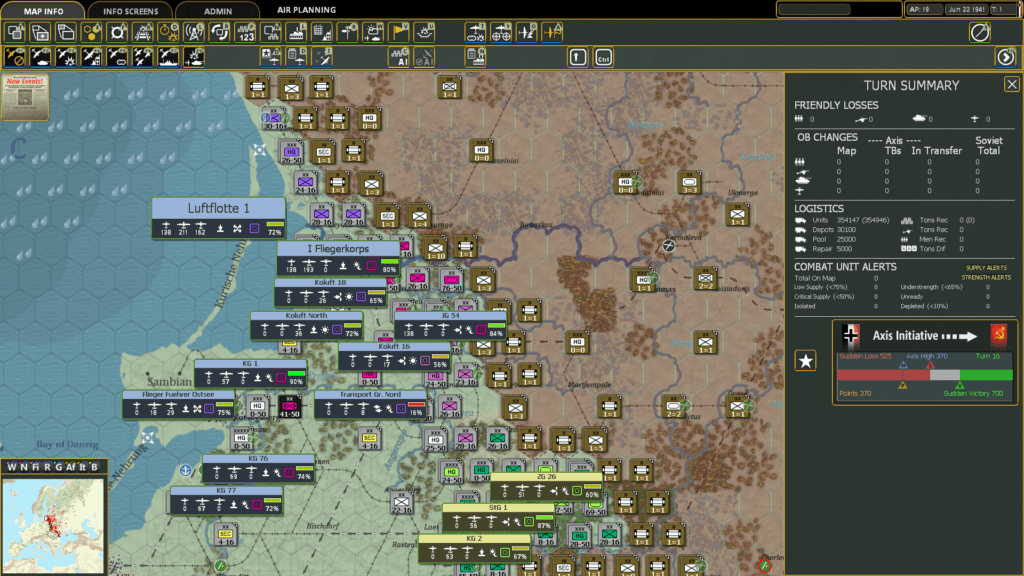
This section requires a disclosure. Gary Grigsby’s War in the East 2 is not a casual pickup. It is a 2021 operational and strategic simulation of the Eastern Front, from Barbarossa to the Soviet advance on Berlin, that models the war at a level no other PC title approaches. The manual exceeds 300 pages. Community veteran guides run longer. Budget 30 hours before you understand the interface well enough to make meaningful strategic decisions.
The unit scale covers divisions and corps. The supply model tracks fuel, ammunition, and replacement personnel on separate tracks. The air war runs on an independent layer that interacts with ground operations directly. Weather affects movement rates and air operations by season and region. The historical research behind it is visible in the mechanics: German operational tempo in 1941 and 1942, the Soviet transition from catastrophic encirclements to mastery of deep battle doctrine by 1943 and 1944, and the Wehrmacht logistical collapse in the war’s final year are all present in how the game plays, not just in scenario flavor text.
Strategy and Wargaming’s look at the decade’s top wargames places it at the peak of the simulation tier, and that assessment is accurate. For players at the deep end of the spectrum, our military strategy games coverage surfaces additional titles worth exploring once you’ve worked through the Eastern Front campaigns.
It is actively hostile to newcomers. For the player who’s ready for it, nothing in the genre competes.
Developer: 2by3 Games / Slitherine. Platform: PC. Verdict: The most historically rigorous WW2 simulation available, and the most demanding.
How to Pick Your Entry Point
The four second world war strategy games here cover the same conflict at different scales and complexity levels. A quick guide:
- Political and industrial depth across all fronts: Hearts of Iron IV.
- Grand-strategic scope without the steep learning curve: Strategic Command WWII.
- Operational-level play with a finishable campaign: Unity of Command II.
- The most historically rigorous simulation available: Gary Grigsby’s War in the East 2.
Most players start with Hearts of Iron IV. Unity of Command II is the strongest bridge between accessibility and historical depth. War in the East 2 is the destination for players who’ve worked through everything else. Strategy and Wargaming’s WW2 roundup surfaces several additional titles worth adding to the list. The best strategy games of all time puts these WW2 titles in context against the broader genre.
Strategygame.org covers the full spectrum of strategy games across all platforms and subgenres. Browse the strategy game rankings for a full comparison of WW2 and historical strategy titles. Players who want to go deeper on simulation-adjacent titles can explore the grand strategy guides section.