
So what is a tower defense game, beyond the answer your phone’s App Store gives you? In its strict form, a tower defense game (TD) is a strategy subgenre where waves of enemies travel along a path toward your base, and you stop them by placing stationary defenses along that path.
You don’t control units in the field. You control where damage comes from, what kind of damage it deals, and when you spend the money to upgrade it. Everything else (the art style, the wave structure, the upgrade tree, the meta-progression) gets layered on top of that core loop. The genre has been around for 35 years and the formula has barely changed, which is the first clue that it’s better designed than it looks.
The Strategygame.org short version: if you’ve been bouncing off Roblox tower defense knockoffs and want the real version, the genre has roots in arcades, an explosion through RTS custom maps, and a current scene that’s healthier than most people realize.
Where Tower Defense Came From
The proto-answer to what was the first tower defense game is Atari’s Rampart, an arcade cabinet released in 1990. Players defended castle walls from ships by placing cannons and rebuilding rampart structures between waves. It was not strictly tower defense (you also aimed and fired the cannons), but the loop of “build between waves, defend during waves” became the template.
The first tower defense game in the modern sense came out of the StarCraft: Brood War custom map scene at the turn of the millennium. Turret Defense in May 2000 and Sunken Defense in November 2001 used the StarCraft engine to create maps where players spent minerals on stationary defenses to stop predetermined enemy waves. Warcraft III: The Frozen Throne (2003) included an official tower defense scenario in its campaign and shipped a map editor accessible enough that fan-made TD maps like Element TD and Gem Tower Defense became some of the most-played custom content on Battle.net.
The browser era brought the format to everyone. Master of Defence (2005), Flash Element TD (January 2007), and Desktop Tower Defense (March 2007) ran in browsers without an install, and Desktop TD specifically won an Independent Games Festival award and pushed the genre fully into commercial territory. Bloons and Plants vs. Zombies followed shortly after.
The Core Mechanics of a Tower Defense Game
Three mechanics define almost every TD on the market.
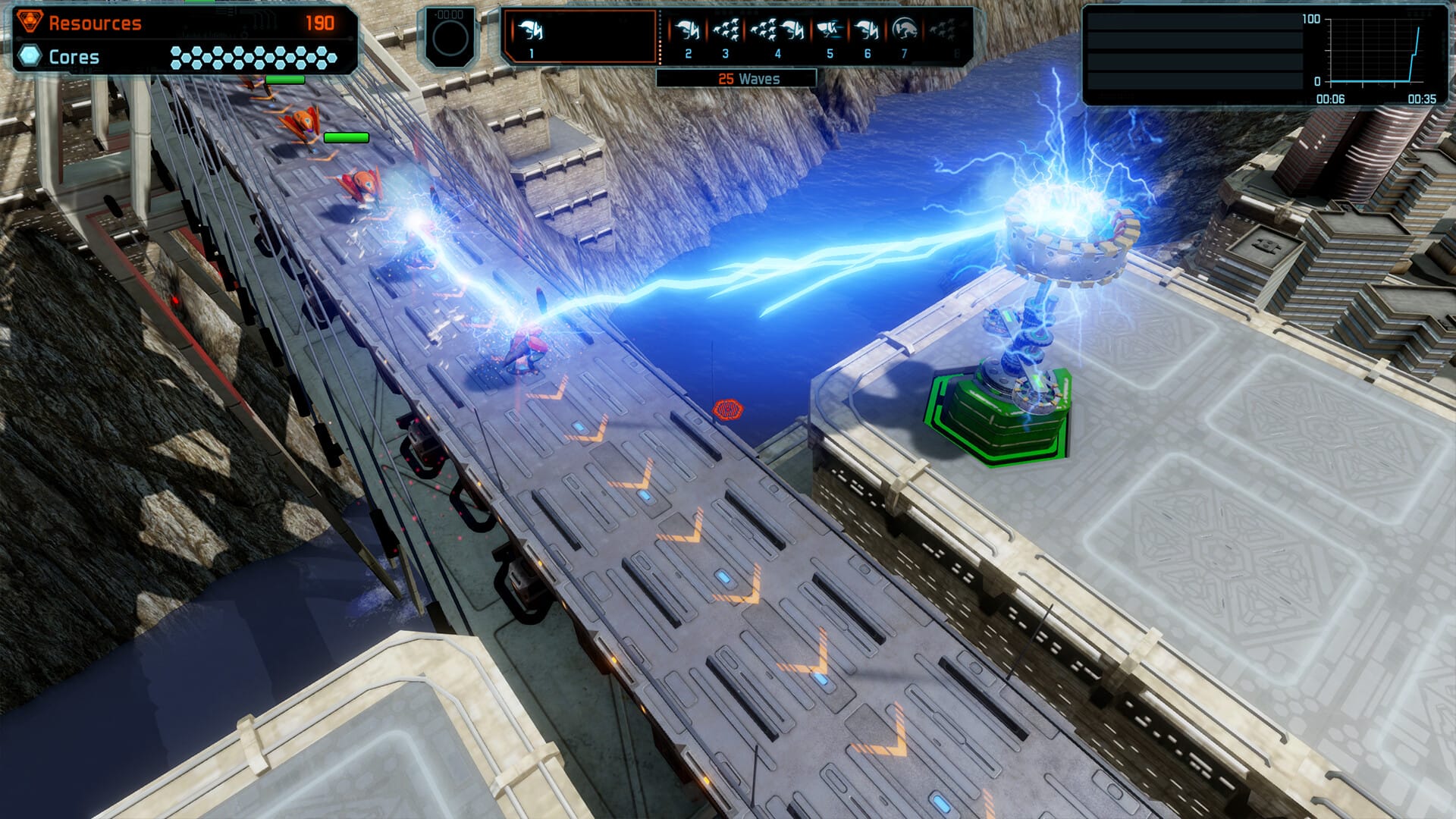
Path control comes first. The enemy travels from a spawn to a goal, and the path is either fixed (Bloons, Kingdom Rush, Defense Grid 2) or shaped by your placements via maze-building (Desktop Tower Defense, Mindustry, Rogue Tower). Fixed-path games hand you a puzzle the developer already designed. Maze-building games make you design the puzzle, then solve it.
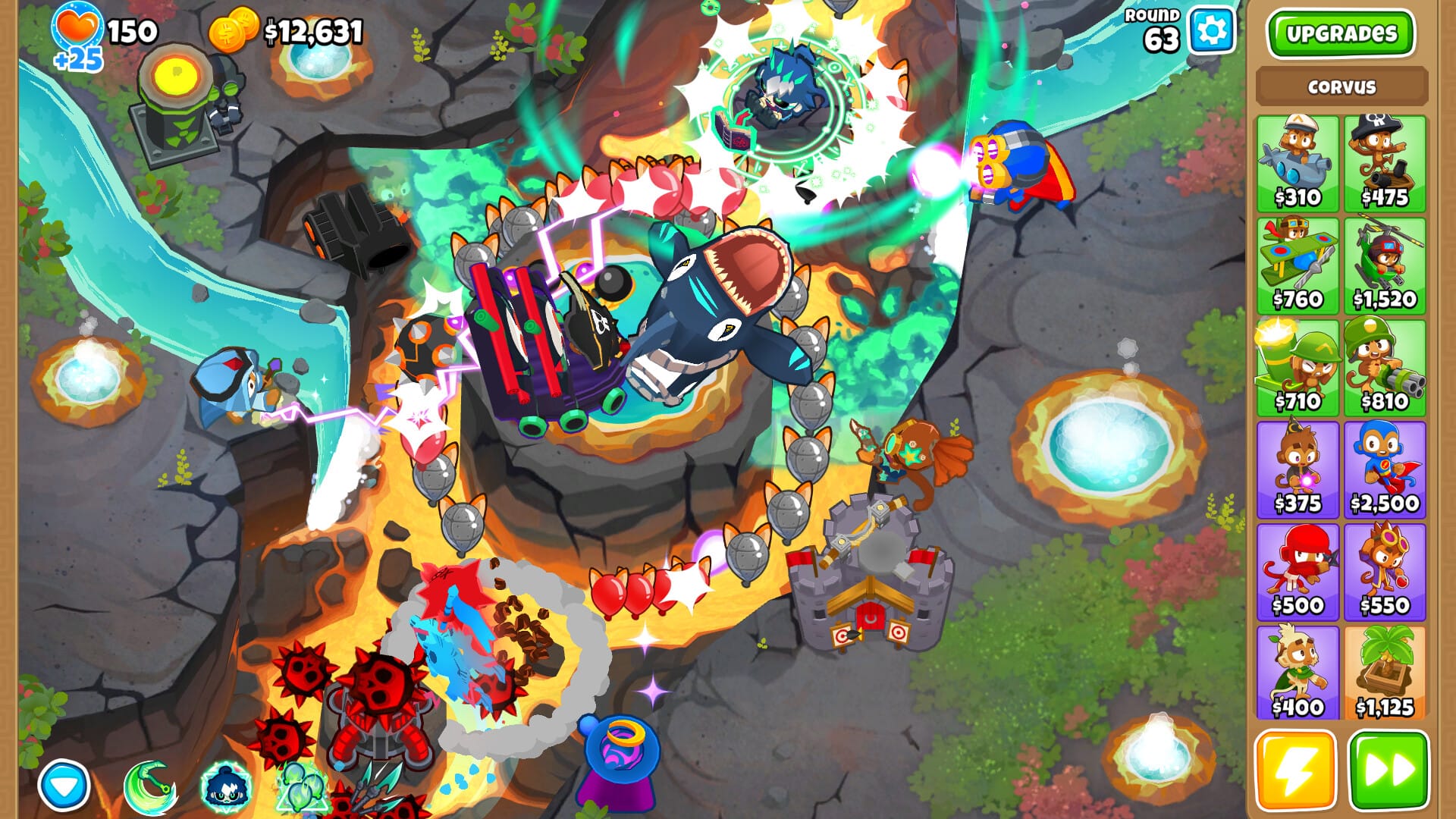
Damage types come second. Most TDs gate which towers work on which enemies. A flying enemy ignores melee towers. An armored enemy soaks physical damage but melts to magic. A camo enemy is invisible to standard towers until a detector reveals it. The depth of a TD’s combat system lives in how cleanly the damage matrix forces you to diversify. Bloons TD 6 makes this explicit with damage categories like Sharp, Explosive, and Glacier. Kingdom Rush hides it inside enemy resistances. Either way, you can’t win by spamming one tower type.
Economy decisions come third. You earn money from kills, and every upgrade competes against every other upgrade. Build a new tower or upgrade an existing one? Cash in a power for one wave or save for two waves? Sell a tower mid-round and rebuild? The tower defense games that age best are the ones where these spending choices stay live across a 30-minute match, not just the first five rounds.
Tower Defense Strategy in One Lesson
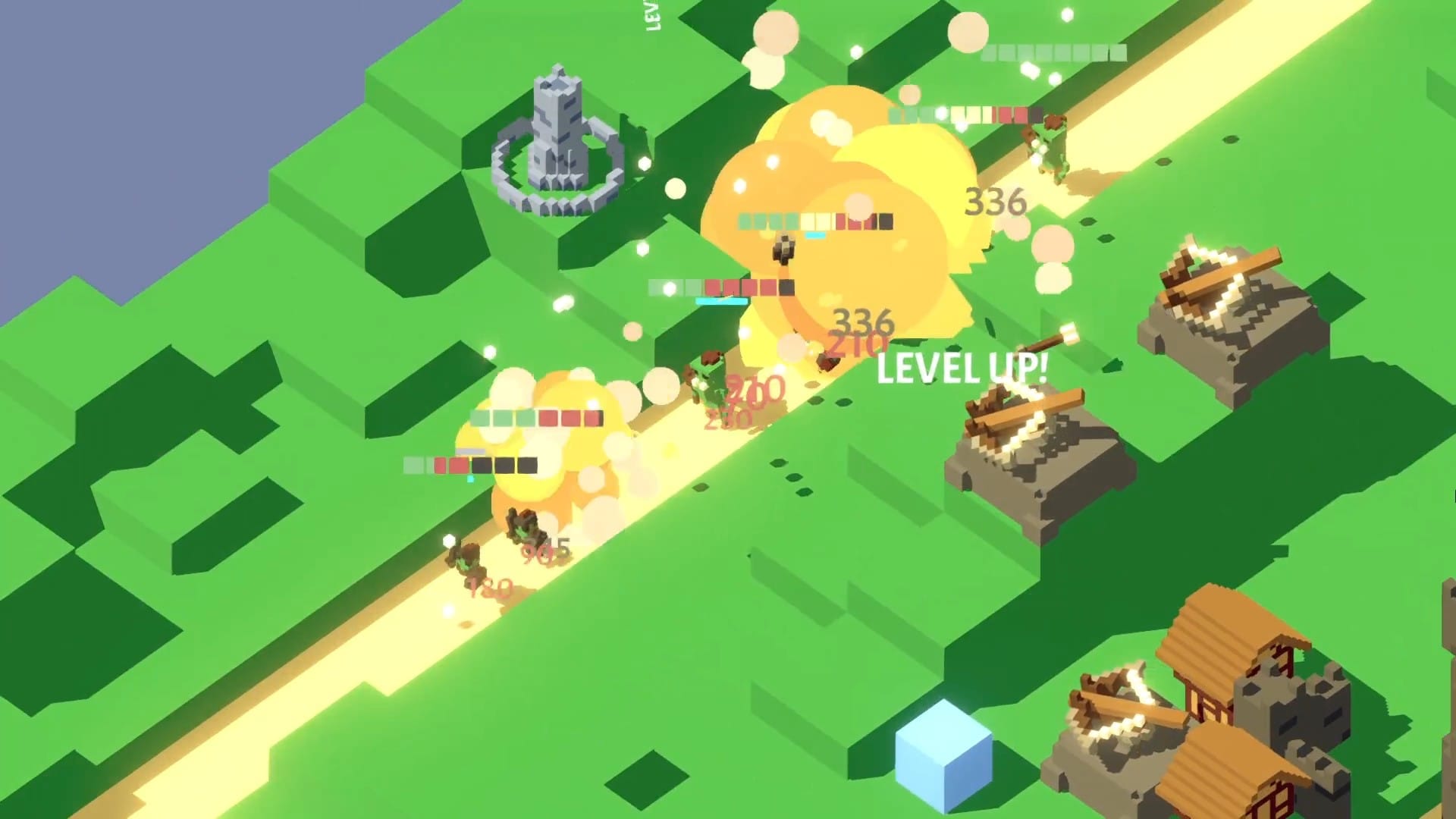
The single most useful tower defense strategy principle is “kill enemies where their path overlaps itself.” On a curved or maze-shaped path, an enemy will spend much longer inside a single tower’s range if that range covers two or three legs of the route. Players who place towers at the longest straight stretches lose to players who place towers at corners and crossings.
The second principle is “diversify before you concentrate.” A first-time TD player almost always picks one tower they like and builds five of them. The wave system is specifically designed to punish that. Build one tower of each damage type before doubling up. The third principle is “save for late-wave power, don’t spend on early-wave clearance.” Wave 1 enemies die to whatever you place. Wave 30 enemies do not. Almost every tower defense match is decided by whether you had enough money on hand at the inflection point where wave damage outpaced your build rate. Watch a few Bloons TD 6 Chimps mode runs on YouTube and you’ll see the same three principles applied with surgical precision.
How these habits carry across other strategy genres is something our strategies that transfer pillar goes into at length.
What Counts as a Tower Defense Game in 2026
The strict definition of a TD has loosened. They Are Billions is mostly an RTS with TD bones. Mindustry is a factory game with TD waves. Roguelike TDs like Rogue Tower add card draws between rounds. Idle TDs like The Tower from Tech Tree Games strip the genre down to a single upgraded tower and an exponential math curve. The genre’s still recognizable through all of these, and the family resemblance is what holds it together.
If you want a curated entry point across all the current variants, the StrategyGame Tower Defense guides hub collects the relevant rankings as the cluster fills out. For TD-adjacent picks where strategy meets mobile, our mobile strategy roundup covers the touchscreen side. For free picks worth installing without spending, see our free strategy games roundup. And for how the format sits next to RTS, deckbuilders, and 4X, see our cross-subgenre ranking.
If you skipped the genre because the Roblox layer was the only version you’d seen, the answer to what is a tower defense game in its real form is hopefully a lot more interesting than that. Find one that matches the platform you actually play on and start there. The genre has 35 years of design refinement waiting for you to install something.
Frequently Asked Questions
What is a tower defense game?
A tower defense game is a strategy subgenre where waves of enemies travel along a path toward your base and you stop them by placing stationary defenses. You don’t control units in the field; you decide where damage comes from, what type it deals, and when to spend money upgrading it.
What was the first tower defense game?
Atari’s Rampart (1990) is the proto-ancestor, pairing build phases with defense phases. The modern form emerged from StarCraft and Warcraft III custom maps around 2000 to 2003, and browser hits like Desktop Tower Defense (2007) pushed it into the mainstream.
What are the core mechanics of a tower defense game?
Three things define almost every TD: path control (fixed routes or maze-building), damage types (which towers counter which enemies), and economy decisions (spending kill income on new towers, upgrades, or abilities). The best games keep those spending choices meaningful for the whole match.
What is the best tower defense strategy?
Place towers where the path overlaps itself, like corners and crossings, so enemies stay in range longer. Diversify damage types before doubling up on a favorite tower, and save money for the late-wave spike where most runs are actually decided rather than spending it all clearing early waves.
Are tower defense games still popular?
Yes. The genre is 35 years old and healthier than most people realize, spanning PC, mobile, browser, and console. Modern variants like roguelike, idle, and factory-defense hybrids keep expanding what counts as a tower defense game while the classic fixed-path formula still thrives.
