
Quick Rundown
Living card games (Arkham Horror LCG, Marvel Champions) offer deep co-op strategy without random pack-buying. Trick-takers like Tichu and Sticheln reward partnership reads and hand management over lucky draws. Two-player classics like Lost Cities and Schotten Totten compress serious decisions into short sessions. Pure deckbuilders are a separate format and covered elsewhere.
The strategy card game category is broader than most people give it credit for. It is not just poker variants and Magic: The Gathering spin-offs. The best strategy card games reward pattern recognition, hand management, and reading opponents under pressure. They are also the most portable serious games you can own. Strategygame.org covers strategy across every format, and card games deserve the same treatment as any hex-map campaign.
This roundup covers three distinct types: living card games built for ongoing cooperative play, trick-takers with real competitive depth, and tight two-player titles where every card decision carries weight. If you already follow our coverage of strategy board games, most of these will feel immediately comfortable. Pure deckbuilders like Dominion and Star Realms are a different enough format to warrant their own piece.
Living Card Games With Staying Power
Fantasy Flight Games developed the living card game format as a direct answer to collectible card games. Expansions sell at fixed contents with no randomized packs. You know exactly what you are buying. The strategic depth lives in how you build and play your deck, not in what you happened to open.
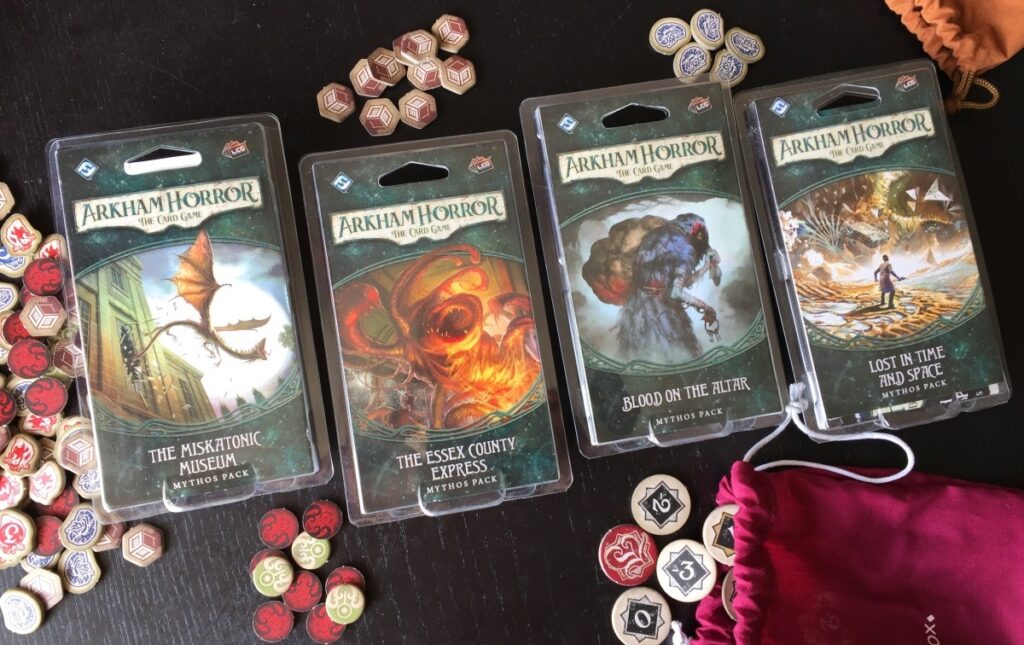
Arkham Horror: The Card Game is the strongest cooperative LCG on the market right now. Campaigns run 10 to 20 hours across linked scenarios, and your deck-building choices directly shape your investigator’s capabilities across the full arc. Mismanage your resources in scenario three and you will feel it in scenario five. The Arkham Horror LCG core set supports one to four players and works as a complete experience before any expansions are added. The strategic loop — build between sessions, adapt to campaign outcomes, live with every decision — is what keeps groups coming back campaign after campaign.
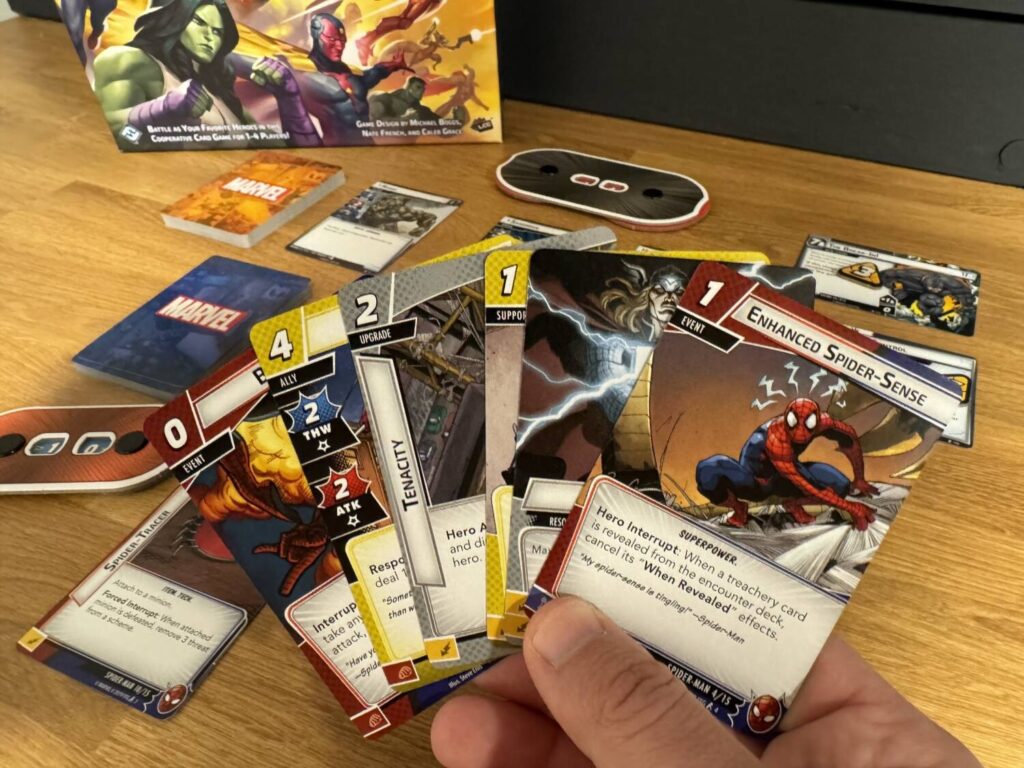
Marvel Champions: The Card Game is more accessible. There is no persistent campaign at the base level. Each session is a standalone scenario with one to four heroes taking on a villain, and a new player can learn any hero in under 10 minutes. The Marvel Champions hero packs are each self-contained, and every hero plays mechanically different from the others. It is lighter than Arkham Horror, but the deck optimization ceiling is higher than it looks from the outside. For a broader look at strategy game systems with deep progression, our strategy guides cover the full landscape.
Trick-Taking Games That Actually Reward Skill
The trick-taking genre gets dismissed by people who have only played Hearts or Go Fish. That is a mistake. At the top of the format, trick-taking becomes a cooperative strategy problem or a sharp competitive knife fight, depending on what you choose.
Tichu is a four-player partnership game that looks like a trick-taker but plays like a hand management and signaling game. Players pass cards to teammates before each round, announce bids for bonus points, and use bomb combinations to interrupt tricks at critical moments. The partnership layer is where the real strategy lives: misreading your partner costs as much as playing bad cards. Tichu’s BoardGameGeek community has stayed active since the game was published in 1991. There is nothing random about a well-executed Tichu bid. The bids are the strategy.
Sticheln is the meaner option. One suit in your hand becomes your “pain suit,” and cards of that suit score negative when you win them. The goal is winning tricks in other suits while forcing painful cards onto opponents. The turn-based thinking Sticheln demands (tracking what has been played, predicting opponent leads, controlling what gets led next) mirrors the mental overhead of a good tactics game. It plays three to six and rewards aggressive, read-dependent play over passive hands.
Tight Two-Player Strategy Card Games
Some of the strongest strategy card games are designed for exactly two players. No alliances, no diplomacy, just two opponents and a constrained decision space where the better player consistently wins.
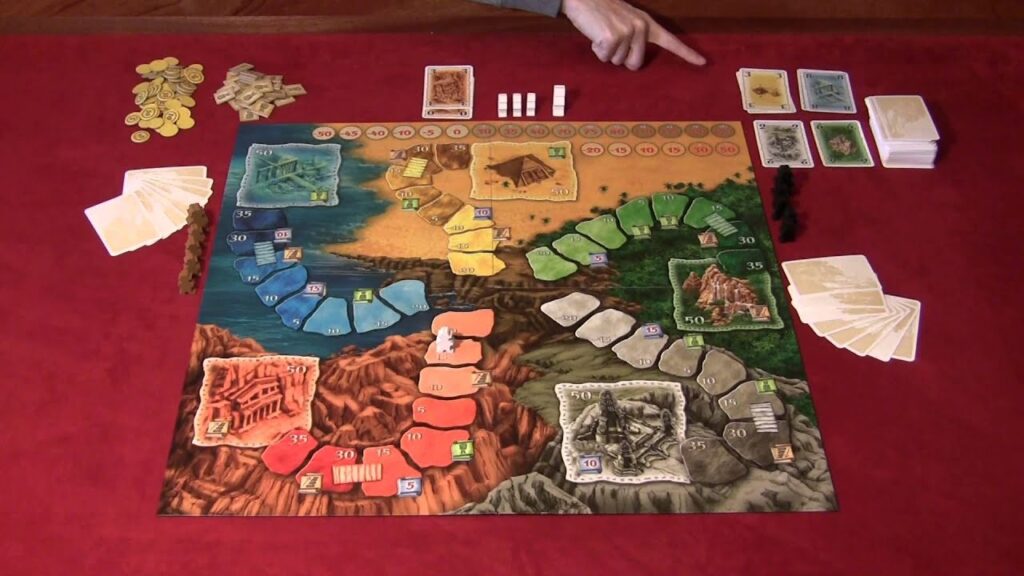
Lost Cities is a 1999 Reiner Knizia design that still has no real successor. Each player builds color-coded expedition columns by playing cards in ascending order. The central tension: starting an expedition costs 20 points, so committing too early means going negative. The key decisions (when to start a column, when to pass a card to the discard for your opponent to grab, when to let a column die entirely) are all yours and none of them are obvious. Lost Cities on BoardGameGeek regularly appears on lists of the best gateway games ever designed. That reputation is earned. Skilled play beats lucky draws consistently once you know what you are doing.
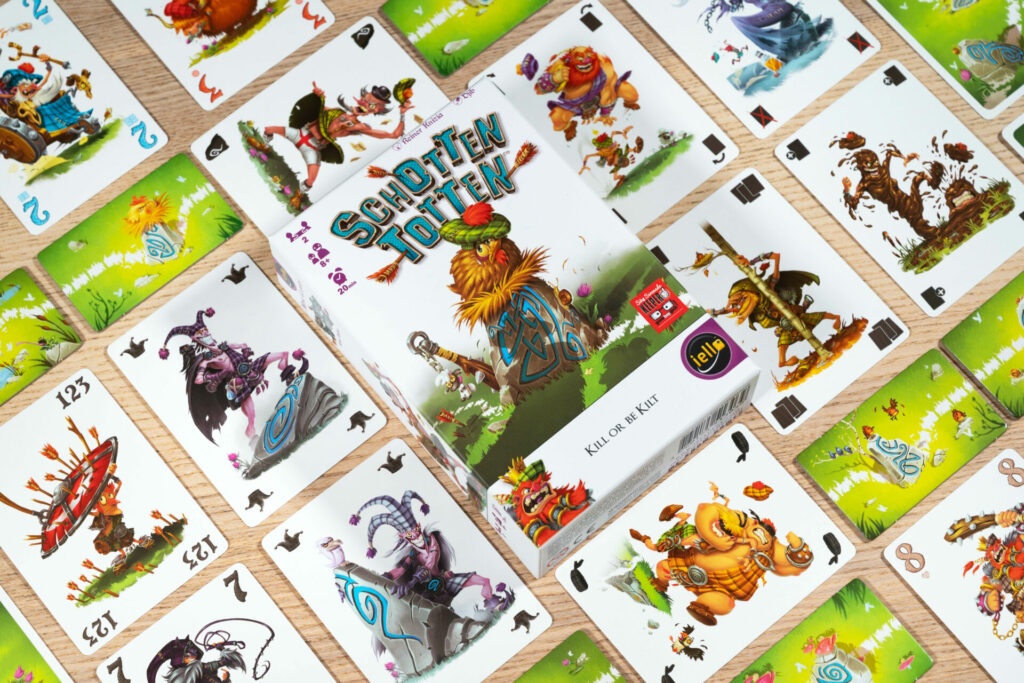
Schotten Totten, also by Knizia, is harder. Knizia has a talent for games that look simple on the box and quietly dismantle your confidence on the table. This one builds three-card poker combinations on either side of nine border stones, and the sharpest rule is that once your opponent mathematically cannot win a stone, you can claim it before all cards are played. That single mechanic turns the game from card-playing into live logical deduction. Players who enjoy mobile strategy games that require tracking multiple threat vectors at once will find Schotten Totten hits the same note at the table.
What Separates a Strategy Card Game From a Luck Game
The right question before any purchase: does the outcome track with how you played, or how you drew? Every game on this list passes that test. Arkham Horror and Marvel Champions give full deck visibility after setup. Tichu’s bidding system rewards knowing what to do with a weak hand. Lost Cities and Schotten Totten both have enough decision points that the same opening draw wins or loses depending on execution.
That is the same standard that defines a good real-time strategy game. Different format, same analytical demand: your choices determine the outcome. Players who come from grand strategy but have never explored card games will find the same depth, compressed into a much smaller box.
Where to Start
Lost Cities or Marvel Champions are the right entry points. Both are fast to learn and immediately rewarding. Tichu requires four players and a couple of sessions before the partnership dynamics click, but most groups keep playing it for years once it does. Arkham Horror LCG is a long-term investment that rewards full campaign commitment. Schotten Totten is best picked up once Lost Cities feels solved and you want something that demands harder calculation.
The strategy game rankings on this site cover the full genre. Card games are one corner of it. If you want to keep exploring, our 4X strategy guide is a solid next read.