
Quick Rundown
Deck-building strategy games occupy a space that doesn’t quite fit anywhere else in the genre. They’re not collectible card games: no secondary market, no pull-to-win mechanics. They’re not tabletop adaptations. They’re digital-first strategy games where you construct and refine a deck over the course of a run, with roguelike structure giving each session a fresh starting hand. The best deck builders make every card choice feel deliberate, and the best runs feel improvised in the best possible way. Here are the deck building strategy games worth your time.
What Makes a Deckbuilder a Strategy Game
The label gets applied loosely. What separates deck-building strategy games from card games proper is the depth of decision-making at the system level: synergies between cards, tempo management, resource conversion, and reactive adaptation to randomness. You’re not just playing cards. You’re engineering a system under pressure and adjusting that system in real time as conditions change. The games on this list demand that kind of thinking throughout a run, not just at the deck-building screen.
The Best Deck-Building Strategy Games
Slay the Spire

Slay the Spire created the modern single-player roguelike deckbuilder. That’s not a claim: it’s the record. Four playable characters, each with distinct card pools and playstyle philosophies. Three floors of increasingly dangerous enemies and elite encounters. A map structure that forces route decisions before you can see what’s coming. An Ascension system with 20 levels of escalating difficulty for players who want to keep pushing long after the base game is cleared.
The genius is in how fast synergies emerge and collapse. A run built around poison can dominate the first two floors and get shredded by Act 3 enemies with immunity. That unpredictability forces constant adaptation without making the game feel random. Slay the Spire delivers more hours per dollar than almost anything else in the genre. It’s available on Steam, console, and mobile. The mobile port is genuinely good, covered in detail in the best mobile strategy games guide. Slay the Spire on Steam.
Inscryption
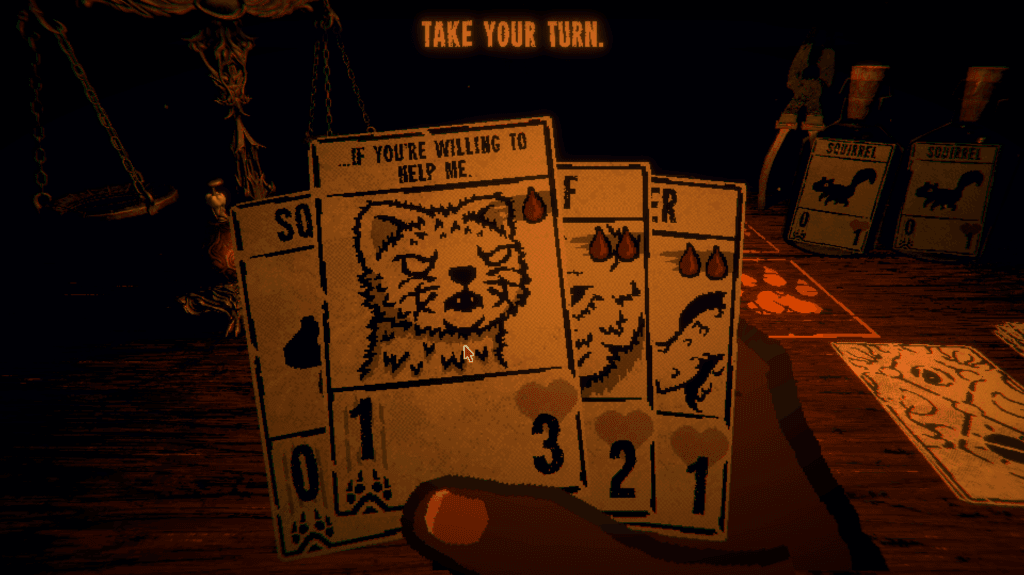
Inscryption is harder to describe without spoiling it, which is half the point. It opens as a cabin deckbuilder with a horror aesthetic: you play cards against an opponent across a table in a dark room, and between rounds you can move around the cabin to solve puzzles and gather resources. Then Act 1 ends and the game changes. Then it changes again.
Developer Daniel Mullins treats the deckbuilder format as a substrate for a larger design experiment. The first act alone, which functions as a complete deckbuilder with a distinctive sacrifice mechanic, would justify the price. What comes after is for players who want their expectations dismantled. It’s one of the stranger and more interesting things released in the genre in recent years. Inscryption on Steam.
Monster Train and Monster Train 2

Monster Train is built around defending a train from waves of enemies across three compartments simultaneously. You’re not just building a deck; you’re deciding unit placement, spell timing, and compartment priority turn by turn. The faction system lets you combine two monster factions per run, which generates enough strategic variation to keep dozens of runs feeling distinct even before the sequel.
Monster Train 2 expanded the system with additional factions, deeper cross-faction mechanics, and a more developed narrative layer. If you’re new to either: start with Monster Train 2. It’s the more complete game. If you already know the first: the sequel is strictly better in every dimension that matters. The Monster Train series on Steam.
Wildfrost

Wildfrost is the most demanding game on this list. Shiny Shoe built a deckbuilder where timing is the primary resource: every unit and card has a countdown before it acts, and managing those countdowns while keeping your companion cards alive is the central challenge. Rush the pace and your companions die before they can contribute. Play too conservatively and enemy countdowns outpace your damage output.
The difficulty is real and legitimate, not artificial. Even experienced deckbuilder players report significant loss streaks before the system clicks. The art direction is genuinely charming, which creates an interesting contrast with how relentlessly punishing the game actually is. Worth it for players who’ve exhausted Slay the Spire at high Ascension and want a new problem to solve.
Cobalt Core

Cobalt Core puts the deckbuilder on a tactical grid. You pilot a spaceship through combat encounters where lane positioning matters as much as the cards you play. Missiles travel specific lanes, shields block targeted positions, and some cards are useless if you’re in the wrong spot when you play them. It’s a deckbuilder with a spatial dimension, which shifts the game’s decision weight in ways that reward different thinking than Slay the Spire.
Runs are shorter than most others on this list, which makes experimentation easier and lowers the cost of a failed build. It’s a tight, smart design that holds its own without trying to compete on scope. More picks like these, including deck-adjacent strategy games, appear in the best strategy games across every subgenre, which covers the full strategy landscape.
Where Deckbuilders Fit the Strategy Genre
Deckbuilders overlap with several other strategy categories. Tabletop strategy games provided the original model for deck construction; digital deckbuilders took that model and rebuilt it around roguelike structure. The result is one of the fastest-moving corners of the strategy genre, with new releases arriving consistently every year.
Strategygame.org tracks strategy games across all platforms, including the growing number of deckbuilders on mobile. The strategy game rankings section covers tier lists across all subgenres, updated regularly. For a broader look at what’s worth buying in 2026, the best strategy games on Steam includes deck-building picks alongside 4X, RTS, and grand strategy titles.
