The first MOBA game wasn’t League of Legends. It wasn’t Dota 2. It wasn’t even Defense of the Ancients, the Warcraft III mod that most credits-roll histories try to start with. The first MOBA game was Aeon of Strife, a StarCraft: Brood War custom map a mapmaker called Gunner_4_ever published in 2002, with three lanes, AI-controlled creep waves, and eight hero units that didn’t have special abilities yet. Almost nobody played it relative to what came next. Roughly two decades later, its descendants run the world’s largest esports leagues, the highest-grossing mobile game ever made, and a Steam beta that hit 125,000 concurrents without a release date. This is how that custom map became the genre that ate competitive gaming, told in five honest steps.
Aeon of Strife: The Real First MOBA Game
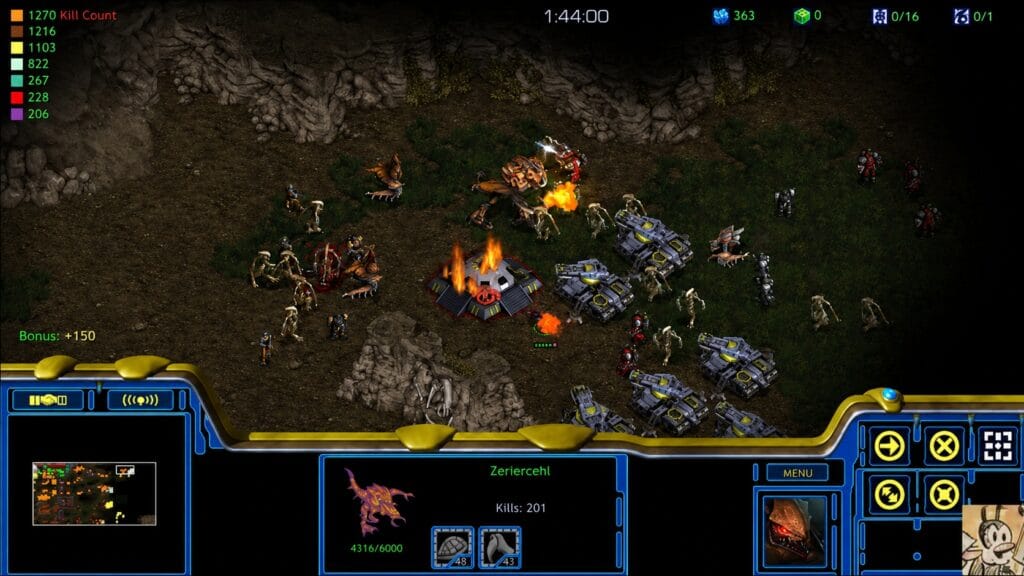
Aeon of Strife (often shortened to AoS) sat inside the StarCraft: Brood War custom map scene around 2002, and most of the genre’s core ideas were already there in rough form. Three lanes feeding into a central battlefield. Computer-controlled minions pushing those lanes. A single hero unit controlled by each player. Currency dropped by enemies that you used to upgrade your character. It was missing the obvious things: no real item system, no special abilities, no meta worth balancing. But the architecture was the architecture, and that architecture was new.
What it didn’t do was reach the audience that would have made it the genre’s official starting point. AoS lived inside a small niche of Brood War map makers. The breakout came when the same template got rebuilt on Warcraft III a year later. The first MOBA game was AoS. The first MOBA most people heard of was DotA. An honest history needs both names.
DotA Allstars and the Warcraft III Era
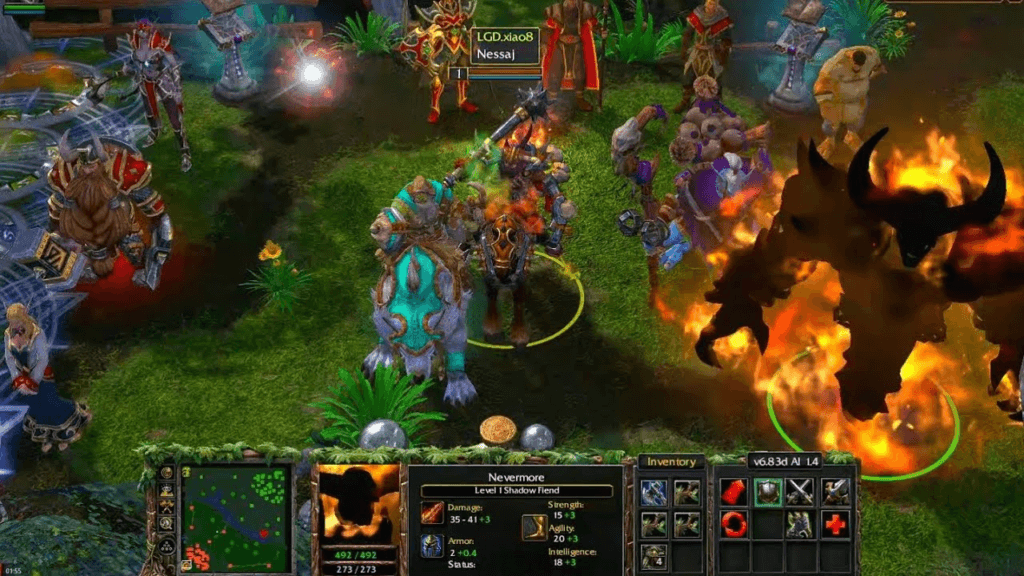
The Defense of the Ancients lineage is messy on purpose, because the map passed through three sets of hands inside two years. A modder going by Eul released the original DotA in 2003 for Warcraft III: Reign of Chaos, then made the code open-source after Frozen Throne shipped instead of updating it. Other map-makers (Meian and Ragn0r) compiled the most popular heroes into a single map called DotA Allstars. In March 2004, Steve “Guinsoo” Feak took over Allstars, added recipe items, refined leveling, and introduced Roshan as the genre’s first real neutral boss.
Guinsoo eventually left for World of Warcraft and later co-founded Riot Games. The map passed briefly to Neichus, then in 2005 to a pseudonymous designer called IceFrog, who would still be running Dota 2’s gameplay direction nearly two decades later. By the late 2000s, DotA Allstars was the most-played custom map in PC gaming history. Most players who tried it had no idea its first ancestor was a Brood War map almost nobody played.
The Duopoly Years: League of Legends and Dota 2
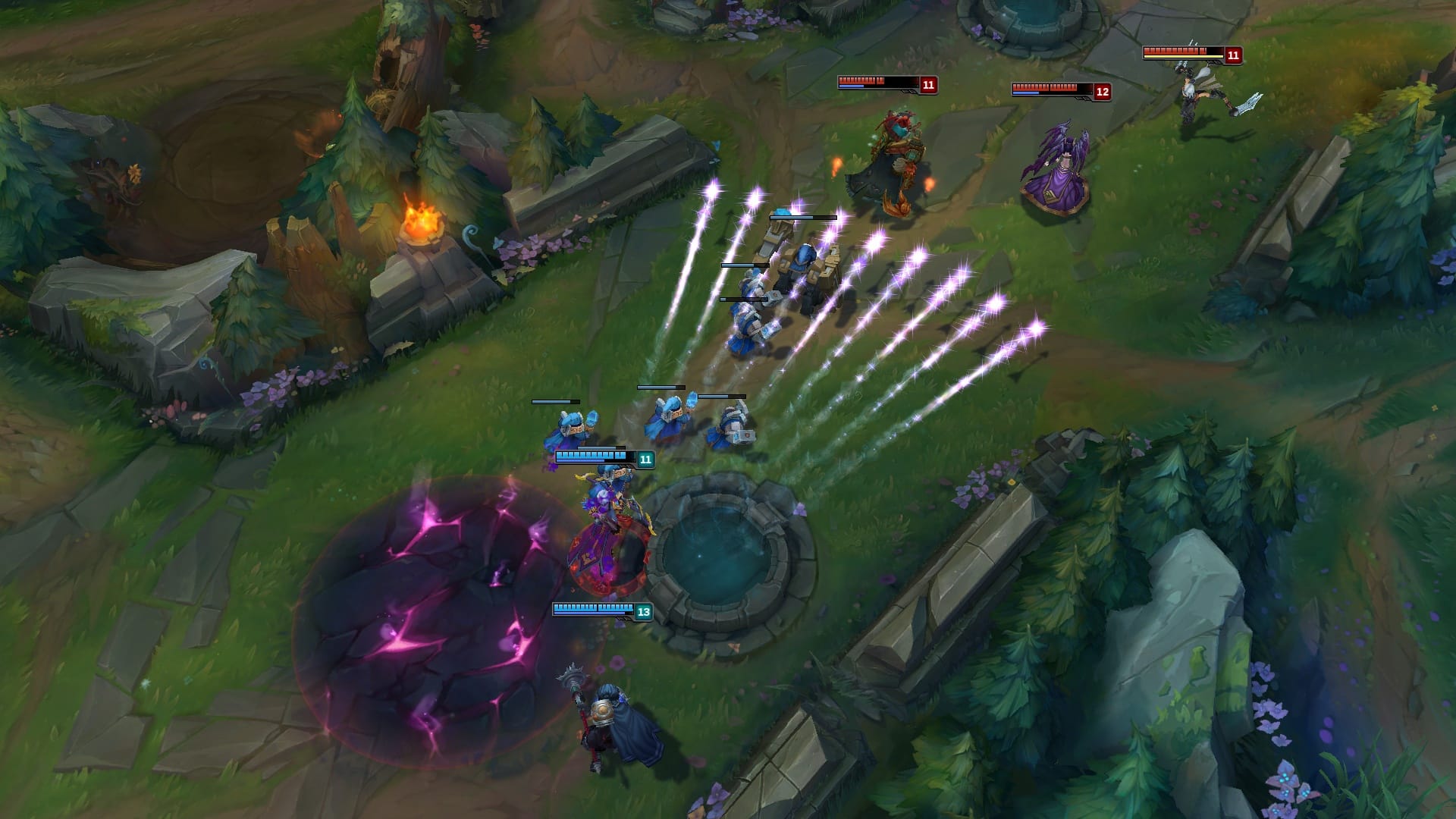
League of Legends launched in 2009 with a deliberately different bet from DotA. Guinsoo and former DotA community manager Steve “Pendragon” Mescon co-founded Riot Games to make a standalone MOBA with a free-to-play model, simpler new-player onboarding, and a champion roster behind a soft paywall. The community-mod era ended the moment Riot proved you could ship one of these as a finished product instead of a mod inside someone else’s game.
Valve answered by hiring IceFrog. Dota 2 launched in 2013, kept every sharp edge League had filed off (denying, couriers, day-night cycles), and made every hero free from match one. The two games then split the global PC MOBA audience for the next decade. Esports followed almost immediately. The International’s prize pool crossed $40 million by 2021. LoL Worlds filled arenas across three continents. If you played a MOBA between 2010 and 2018, you played one of these two, or you were lying. Our best MOBA games ranking covers where that duopoly stands now.
Mobile Eats the Genre: Honor of Kings and the Global Shift
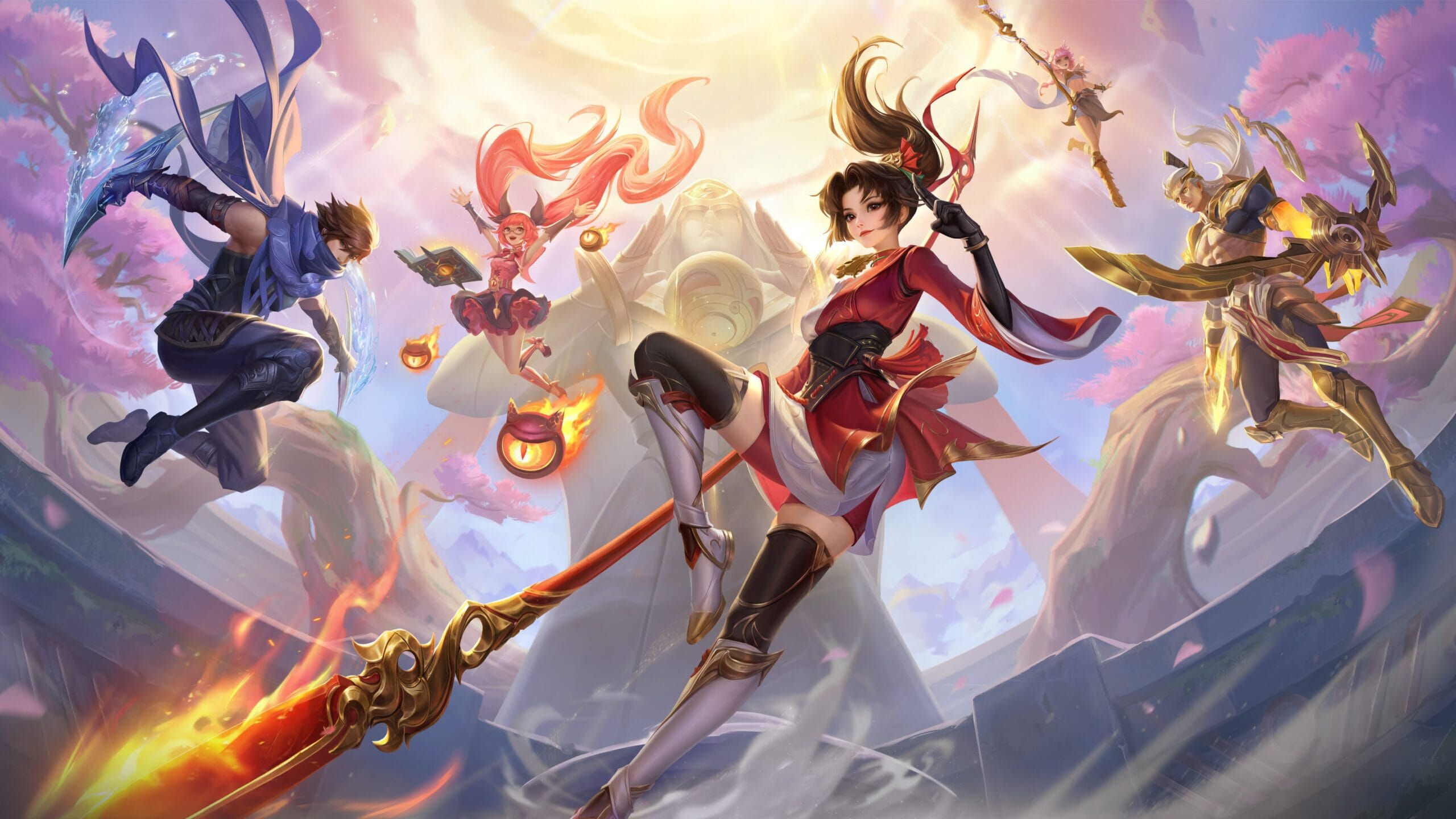
The next chapter wasn’t on PC at all. After Tencent fully acquired Riot in 2015, it asked Riot to port League to mobile. Riot declined, arguing the genre couldn’t survive on touchscreens. TiMi Studio Group, Tencent’s own studio, did it anyway and released Honor of Kings in mainland China on October 25, 2015. By November 2020 it had 100 million daily active players, more than League and Dota 2 combined. It became the highest-grossing mobile game ever made and crossed $15 billion in revenue before its global launch in June 2024.
Mobile Legends: Bang Bang did the same trick for Southeast Asia in 2016. Wild Rift, the mobile League that Riot finally agreed to build, arrived in 2020. For most of the world, the MOBA game genre is now a mobile-first genre, even if the Western trade press still writes about it as if it lives on PC. Our mobile MOBA roundup goes deeper on what’s worth installing.
Why So Few New MOBAs Survive
Twenty-plus years in, the competitive ladder is calcified. League and Dota run PC. Honor of Kings and Mobile Legends run mobile. The pattern with every new entrant in the last decade is the same: launch spike, six-month decline, quiet maintenance mode or shutdown. Heroes of Newerth shut down. Heroes of the Storm went to a skeleton crew. Battlerite died. Paragon was canceled (and revived years later by community devs as Predecessor).
The reason isn’t that new MOBAs are bad. The reason is that the existing giants own the social graphs. Friends play League with friends because friends play League with friends. The history of MOBA games keeps repeating that lesson, and breaking it requires either a genre-bender (Deadlock’s shooter angle is the current candidate) or a regional shift (Honor of Kings finally cracking Western audiences).
If you’re new to the form, our primer on what makes a MOBA tick is the right next read. If the duopoly already exhausted you, MOBA games like League covers where to land softly. The MOBA guides hub on Strategygame.org keeps the rest current as the genre’s next chapter actually starts to write itself.
Frequently Asked Questions
What was the first MOBA game?
The first MOBA was Aeon of Strife, a StarCraft: Brood War custom map published around 2002. It already had three lanes, AI-controlled creep waves, and a single hero per player, but no item system or special abilities. The genre’s architecture was there, even if almost nobody played it.
Was DotA the first MOBA?
Not quite, but it was the first MOBA most people actually heard of. Defense of the Ancients rebuilt the Aeon of Strife template on Warcraft III in 2003 and added hero progression, recipe items, and a neutral boss. An honest history credits Aeon of Strife as the origin and DotA as the breakout.
Who created DotA?
DotA passed through several hands. A modder called Eul made the original on Warcraft III in 2003, Steve “Guinsoo” Feak shaped DotA Allstars in 2004 with recipe items and Roshan, and a designer known as IceFrog took over in 2005 and later led Dota 2. Guinsoo went on to co-found Riot Games.
How did MOBAs become so popular?
Riot turned the mod formula into a standalone free-to-play game with League of Legends in 2009, and Valve followed with Dota 2 in 2013. The two split the PC audience for a decade, then mobile entries like Honor of Kings and Mobile Legends pushed the genre’s center of gravity to phones worldwide.
What does MOBA stand for?
MOBA stands for Multiplayer Online Battle Arena. It describes a team game where each player controls one hero on a lane-based map, working to destroy the enemy base. The label arrived well after the genre itself, which grew out of StarCraft and Warcraft III custom maps.
