Quick Rundown
The Middle-Earth Strategy Battle Game (MESBG) is Games Workshop’s miniatures wargame set in Tolkien’s world, and in 2026 it’s in better shape than it’s been in years. After a period of minimal support following the Peter Jackson films, GW revived the line under the current branding, invested in new plastic kits, and established an active release cadence. If you’ve been curious about getting into a Lord of the Rings tabletop game but weren’t sure whether the product line was still alive, the short answer is yes — and this guide covers everything you need to decide whether it’s worth your time and money.
What Middle-Earth Strategy Battle Game Actually Is
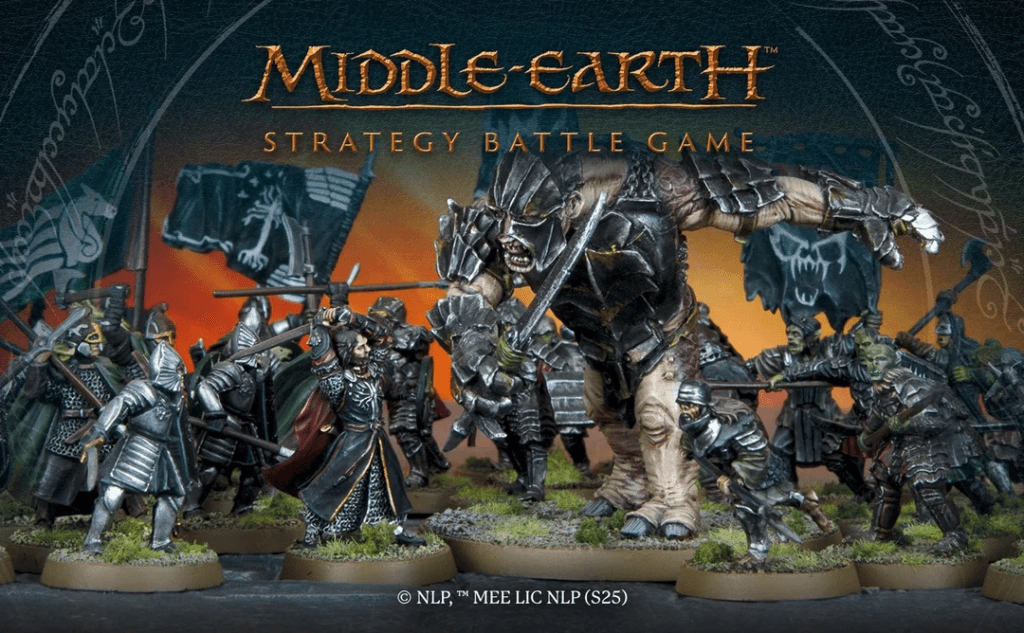
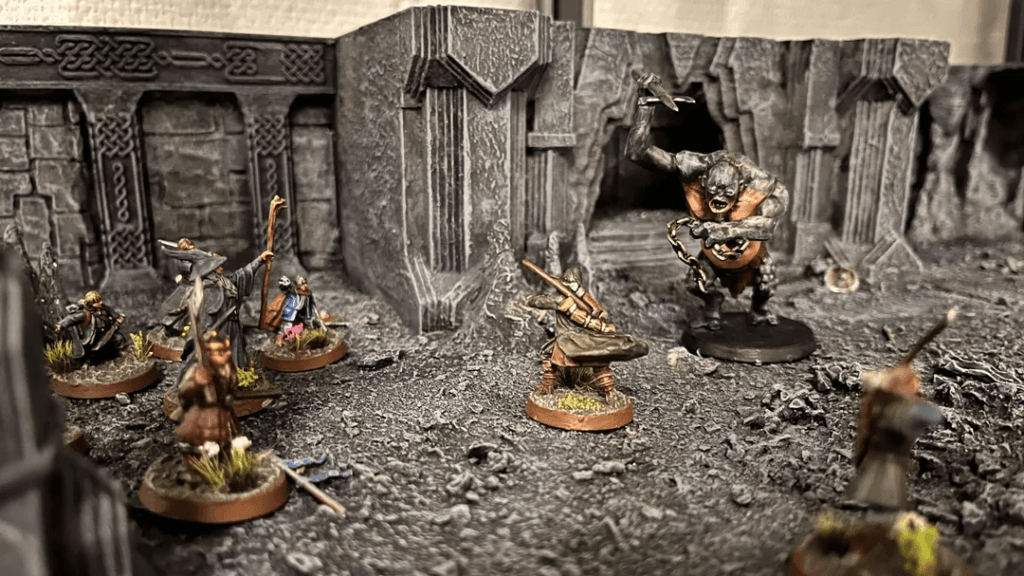
MESBG is a two-player miniatures wargame. You build a force from one of the game’s many factions, assemble and typically paint the models, then fight over objective-based missions on a terrain-covered table. The official game page gives a broad overview, but the mechanical core comes down to this: a priority roll at the start of each turn determines who activates first, models move individually and fight in close combat or shoot at range, and heroes use special abilities called Heroic Actions to shift momentum in critical moments.
The scale is smaller and more character-driven than Games Workshop’s other wargames. A standard 500-point army runs roughly 20 to 50 models depending on the faction, compared to the hundreds you’d field in a full Warhammer 40K game. Hero characters from the films — Aragorn, Legolas, Gandalf, Sauron — are the tactical engines of most armies. Among tabletop strategy games currently in print, MESBG sits in the mid-weight category: deeper than a board game, less demanding than a full-scale army hobby like Age of Sigmar.
The Faction Landscape
MESBG divides into Good and Evil factions, each containing dozens of distinct army lists representing every corner of the setting. The four most accessible entry points each have dedicated starter boxes:
Gondor is the high-quality all-around force. Access to elite heroes (Aragorn as King Elessar, Boromir), solid infantry, cavalry, and specialized units like Black Root Vale Archers. Strong in hero-heavy competitive formats. The faction depth across the full roster goes well beyond what the starter box suggests.
Rohan is the cavalry army. Nearly every hero and warrior has a mounted option, including archers. If you want to play an aggressive mobile force that can redeploy across the board quickly, Rohan is the answer. The army rewards active positioning and punishes players who park their forces and wait.
Mordor is the large-formation Evil faction. Lots of Orcs with cheap stats, supported by powerful heroes like the Witch-King and Gothmog. You win through numbers and attrition rather than elite units. Good starting army for players who want to learn the game through volume of activations.
Isengard centers on Uruk-hai, the heavy-infantry Evil faction. Higher cost per model than Mordor, but more durable. Berserkers, pike blocks, and siege equipment. Isengard armies are harder to build competitively than Gondor or Rohan, but the visual identity is among the strongest in the game.
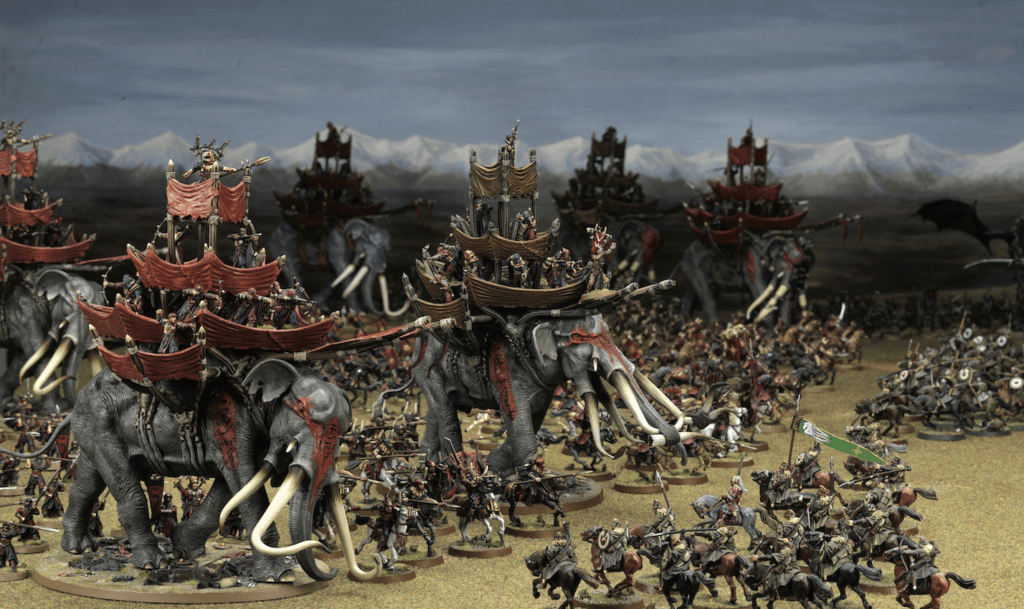
Beyond these four, the faction asymmetry gets more pronounced. Moria Goblin hordes, the Dead of Dunharrow, Haradrim with Mumakil, High Elf spear walls, Dwarf ranger lists, Saruman-led warbands — each plays differently enough that the game rewards learning faction matchups as its own skill set.
Where to Start in 2026
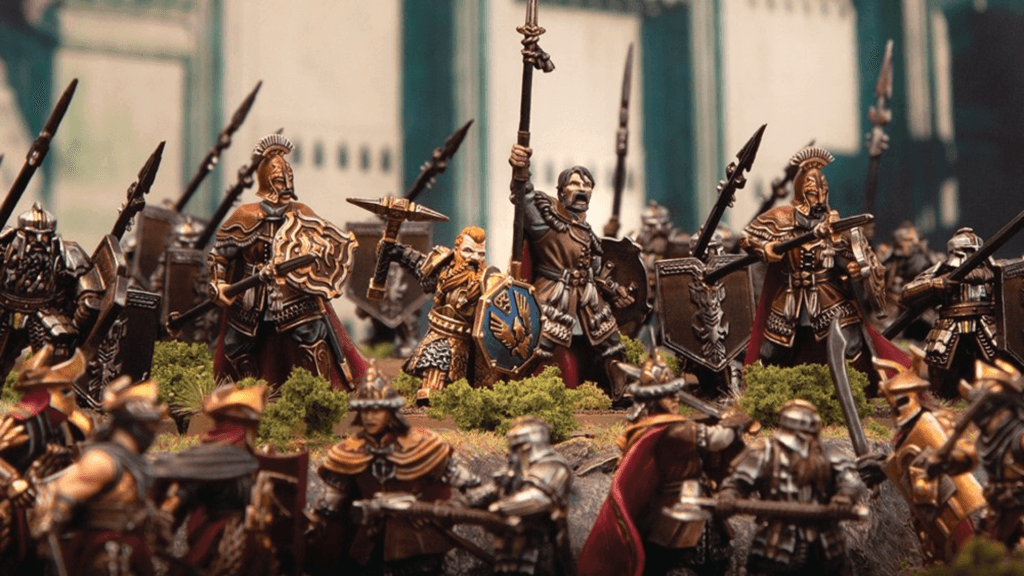
GW’s Battlehost boxes are the current entry point. Each Battlehost contains a playable army for one faction, the Quickstart rules PDF, and a simplified army rules PDF — everything you need to play your first games without buying additional books. The four available Battlhosts cover Gondor, Mordor, Rohan, and Isengard, which neatly maps to the faction overview above. Goonhammer’s starting guide covers what to add after your first Battlehost if you want to expand toward competitive play.
The full rulebook (Armies of Middle-Earth) is the next purchase. It contains all army lists and the complete rules. It runs around $50 and covers every faction in the game. Unlike some GW products, you don’t need a faction-specific codex on top of the main book. One book covers everything, which keeps ongoing costs more manageable. For players used to 2-player strategy games at the board game level, the hobby component — assembly, priming, painting — is the main new commitment. Battlehosts include push-fit plastic models that don’t require glue, which lowers the entry barrier for players who haven’t assembled miniatures before.
Games Workshop’s definition of “affordable” and most people’s differ by about $150, but MESBG is genuinely cheaper to start than 40K or Age of Sigmar. A full 500-point list can come from one or two boxes rather than five or six.
Current State of Releases in 2026
The game received a new edition in recent years, and GW has maintained a steady release schedule since. A February 2026 FAQ update addressed several competitive edge cases and rebalanced a handful of army special rules. The tournament scene — run primarily through the Warlords of Middle-Earth format — is active in the UK and Europe, with a growing North American presence.
New plastic kit releases have focused on filling gaps in older resin-heavy factions. The Dwarves and Elves have benefited most from recent updates, with plastic options now covering the core units that previously required expensive Forge World resin. The war strategy games hobby community has noted MESBG’s model quality as consistently among the best GW produces — the film likenesses on character models hold up exceptionally well compared to generic fantasy sculpts.
How MESBG Compares to Other Lord of the Rings Games
The LotR-themed game landscape is narrower than the Warhammer one. For digital options, Lord of the Rings Online remains the only active large-scale LotR game with any strategic layer, and it’s an MMO rather than a strategy title. The LEGO adaptations are family-friendly action games with no tactical depth. On the tabletop side, War of the Ring (Ares Games) is a grand strategy board game covering the entire War of the Ring at a campaign level — armies, political influence, the Fellowship’s journey — and sits in a completely different category from MESBG’s skirmish focus.
If you want a narrative, character-driven tactical game where Aragorn leading five Gondor warriors against a dozen Mordor Orcs plays out in satisfying detail, MESBG has no direct competition. If you want grand-scale sweeping strategy over Middle-Earth’s entire geography, War of the Ring is the better fit. The two games complement each other more than they compete. The military strategy game category covers a wide spectrum, and MESBG’s squad-level scope sits at a different point on that spectrum than most digital options.
Where to Go Next
For new players: start with a Battlehost, download the Quickstart rules, find a local game store with a MESBG night. The learning curve is gentler than most GW games because the model count per army is lower and the rules interactions are less dense.
Strategygame.org covers the full range of strategy games from tabletop to PC. Our strategy game guides section covers more of the tabletop and digital strategy game landscape in depth. For tactical options at a lower hobby commitment, tactical turn-based strategy games on PC cover similar strategic territory without the painting involved. If MESBG clicks for you, the tabletop side of the strategy game hobby runs very deep.
