A good turn-based roguelike does not kill you at random. It kills you because you drank an unidentified potion on the wrong floor, or walked into a corridor without checking what was around the corner, and both of those are decisions you can stop making. The genre earns its reputation for cruelty by being legible about it.
These four sit at different points on the punishment scale, from one that lets you turn permadeath off entirely to one that strips your inventory the second you die. What they share is that a loss hands you information you can use on the next attempt, which is the only reason anyone tolerates starting over. If you are new to how initiative and action economy work in this format, our combat systems primer is the faster way in.
1. Caves of Qud
Freehold Games spent fifteen years in early access before hitting 1.0 on December 5, 2024, and the result is the most densely simulated game in the category. Every creature has organs you can target, every faction tracks how it feels about you, and the mutation system lets you grow extra limbs, psychic powers or photosynthetic skin that changes how you play a run entirely.

The lesson each run teaches is usually about information. You died because you did not scan the thing before engaging it, or because you never learned what a particular liquid does. Roleplay mode adds checkpoints for players who want the world without the permadeath, and Classic mode keeps runs final. The barrier is the interface, which is dense even after the 1.0 tutorial, so budget an evening on the Steam page demo material before committing.
2. Jupiter Hell
ChaosForge built this as the spiritual successor to its own Doom roguelike, and it keeps the roguelike turn-based rhythm while swapping ASCII for chunky 3D. Every shot, reload and step costs time on a shared clock, so backing out of a room to reload is a real tactical choice rather than a free action.

It is the friendliest hardcore pick here. Runs last two to three hours, the trait system is small enough to hold in your head, and death teaches an obvious lesson about positioning rather than an obscure one about item identification. The knock is variety. After twenty runs the level generator starts showing its seams, and the mid-game corridors blur together. Players who want the same tension in a squad format should look at tactical turn-based strategy instead.
3. Shiren the Wanderer: The Mystery Dungeon of Serpentcoil Island
Spike Chunsoft’s Mystery Dungeon line is where the turn-based dungeon crawler gets genuinely mean. Serpentcoil Island reached PC on December 11, 2024, and it holds the old rule that dying sends you home stripped of everything you carried, back to level one, with only what you stored in a warehouse beforehand.

That sounds punitive until you notice how much the design gives back. Item synergies are the entire game, and a good run is one where you recognized that two junk scrolls combine into an escape plan. Rescue mechanics let another player bail you out, which softens the worst losses. Take the base game first, since the Plus Pack dungeons assume you already know the item list cold.
4. Tangledeep
Impact Gameworks dressed a traditional roguelike in 16-bit SNES clothes and built a job system on top of it. Twelve classes, swappable skills that carry between jobs, and a soundtrack that sounds like a lost Square release. It has been out since February 2018 and still gets recommended as the softest landing in the genre.
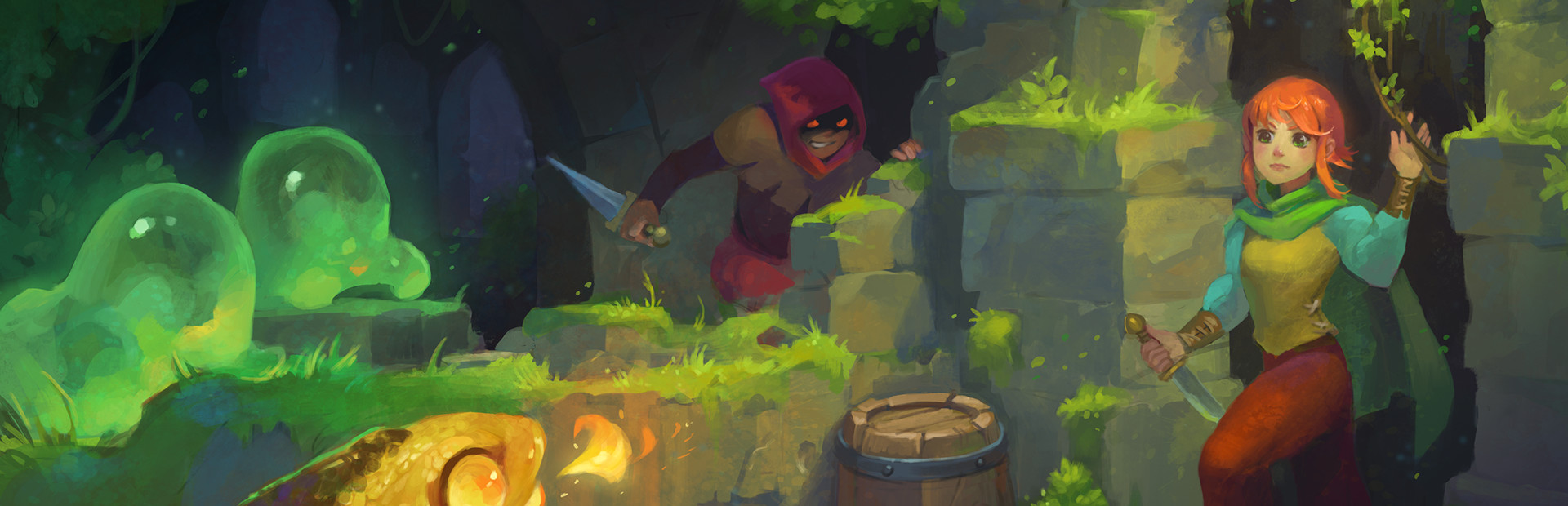
Adventure mode removes permadeath outright, which purists will call a cop-out and everyone else will call Tuesday. Even in that mode the job system keeps teaching, because respeccing into a new class while carrying old skills changes what a floor asks of you. The trade is that the difficulty ceiling sits lower than the others here, and a competent player runs out of things to learn well before the hundred-hour mark. It is the right recommendation for someone who bounced off the genre once and wants a second try, and its Steam page discounts heavily and often.
Which Turn-Based Roguelike Should You Start With?
Pick by how much you want a death to cost. Tangledeep if the answer is almost nothing. Jupiter Hell if you want real stakes inside a run you can finish in an evening. Caves of Qud if you want a world worth losing to. Shiren if you want the version where losing everything is the point and the recovery is the story.
Worth adding for anyone on a phone: Shattered Pixel Dungeon is a proper roguelike, actively updated, and genuinely free on Android through F-Droid and GitHub, with the Steam and iOS builds paid as a way to support the developer. Our roundup of mobile turn-based picks covers more of that shelf, and if you want the formula inverted, the roguelike tower defense hybrids do something stranger with it. The rest of the turn-based guides live on Strategygame.org.
Frequently Asked Questions
What is the best turn-based roguelike right now?
Caves of Qud is the deepest and the most rewarding over hundreds of hours, especially since its 1.0 release finished the main questline. If you want something you can learn in a weekend rather than a season, Jupiter Hell is the better first pick.
Are there any free turn-based roguelikes worth playing?
Yes. Shattered Pixel Dungeon is free on Android through F-Droid and GitHub and gets regular updates, and it is a complete roguelike rather than a demo. The Steam and iOS versions cost money, which is how the developer funds the work.
What is the difference between a roguelike and a roguelite?
A roguelike keeps runs self-contained, so dying resets your progress and only your knowledge carries forward. A roguelite hands you permanent upgrades between runs, which makes each attempt easier than the last. All four games here sit on the roguelike side.
How do I stop dying so early in Caves of Qud?
Stop drinking unidentified liquids and start using the look command on everything before you approach it. Most early deaths come from engaging something you never inspected. Take the Roleplay mode checkpoints for your first character so you can learn the world without restarting.
What games are like Shiren the Wanderer?
The rest of the Mystery Dungeon line is the closest match, including the Pokemon Mystery Dungeon entries for a gentler version. Outside that series, Shattered Pixel Dungeon carries the same item-identification tension in a smaller package.
