
Quick Rundown
Most strategy games are designed by people who spent their formative years losing campaigns on Ironman mode and consider that a good time. The result is a genre full of titles that punish experimentation, bury tutorials under walls of tooltips, and greet new players with the warmth of a DMV queue. Fun strategy games — ones that deliver the tactical satisfaction without the constant boot to the face — actually exist. You just have to know where to find them.
This list focuses on approachable strategy games that treat the player as someone who wants to engage, not someone who needs to prove themselves. All five picks here have real strategic depth. None of them make you feel stupid for making a decision.
Into the Breach — Full Information, No Excuses
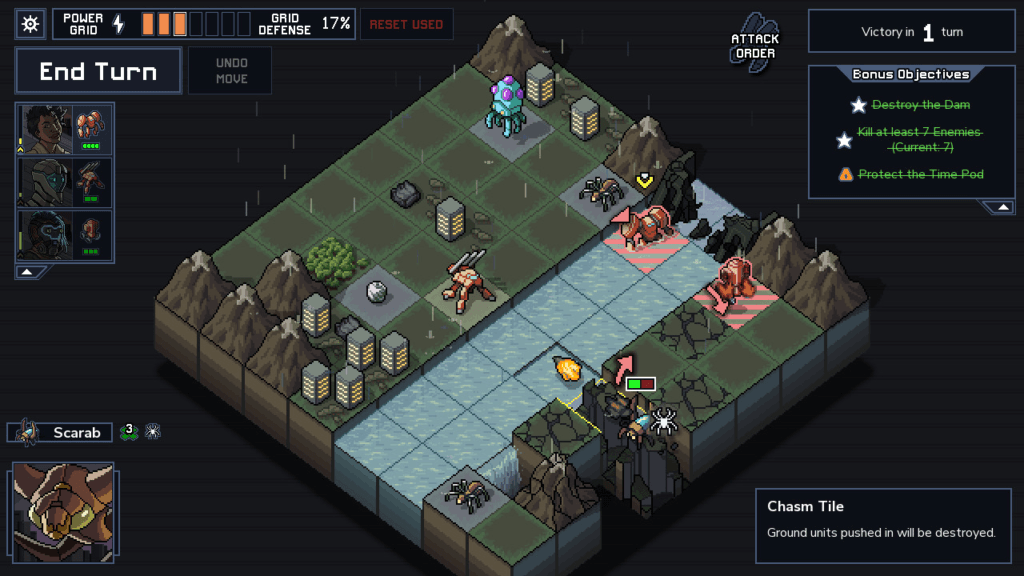
Into the Breach does something almost no other fun strategy game manages: it gives you complete information and still finds ways to make decisions hard. Every enemy shows its next attack before you move. You know exactly what’s coming. The challenge is figuring out how to minimize the damage given the tools you have that turn, and accepting that sometimes the best move still hurts.
Sessions run 20 to 45 minutes. You pick from distinct mech squads with different tactical identities, fight through procedurally varied scenarios, and either succeed or reset with new knowledge about where your approach broke down. The feedback loop is tight and the stakes feel real without the game ever becoming punishing in a way that feels unfair.
It’s one of the tactical turn-based strategy games most often recommended to players who bounced off the genre before, and for good reason. The design is honest about what it’s asking of you. GameSpot’s best turn-based strategy roundup consistently includes it, which reflects how well it’s held its reputation in the genre.
The Battle of Polytopia — 4X in the Time You Have
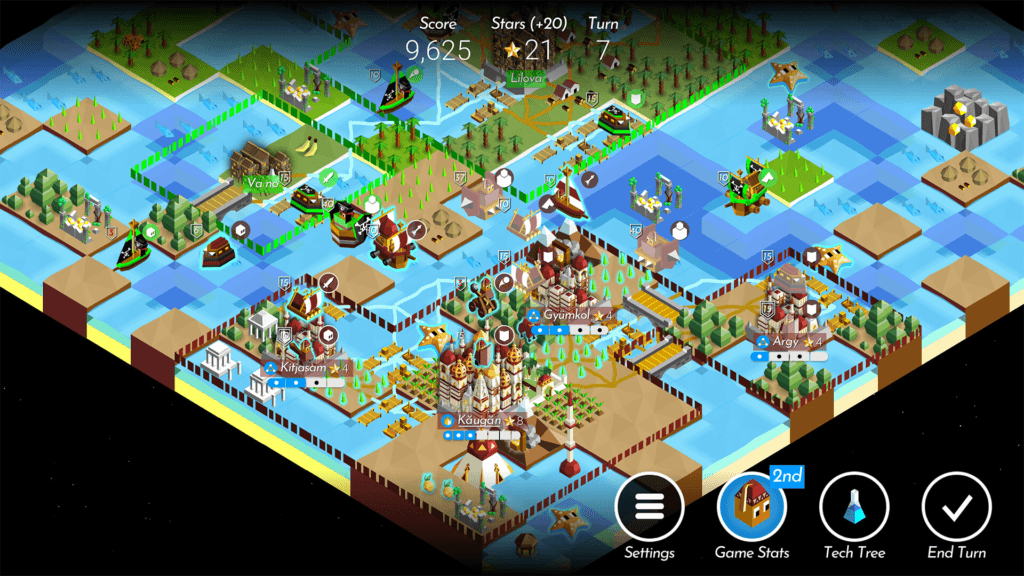
Polytopia takes the 4X structure — explore, expand, exploit, exterminate — and compresses it into something playable on a lunch break. Maps are small, turns are fast, and the tech tree is tight enough that every decision you make actually matters at the scale you’re playing. The game started as a mobile title and the design reflects that: it’s built around short sessions and direct decisions rather than grand five-hour campaigns.
Fifteen tribes are available, each with a distinct starting tech and playstyle that subtly reshapes how you approach the early game. The multiplayer is asynchronous, which means you can run multiple games simultaneously against different opponents and check in when you have a few minutes. It’s one of the better mobile strategy games available and the PC version carries the same quality. The Battle of Polytopia’s official page covers the full tribe roster and platform availability.
Polytopia doesn’t try to be Civilization. It’s doing something different at a different scale, and it’s excellent at what it’s doing. Players who want to explore the broader 4X space afterward will find the transition much smoother than jumping straight into a full Civ or Endless Space campaign.
Bad North — Small Islands, Real Consequences
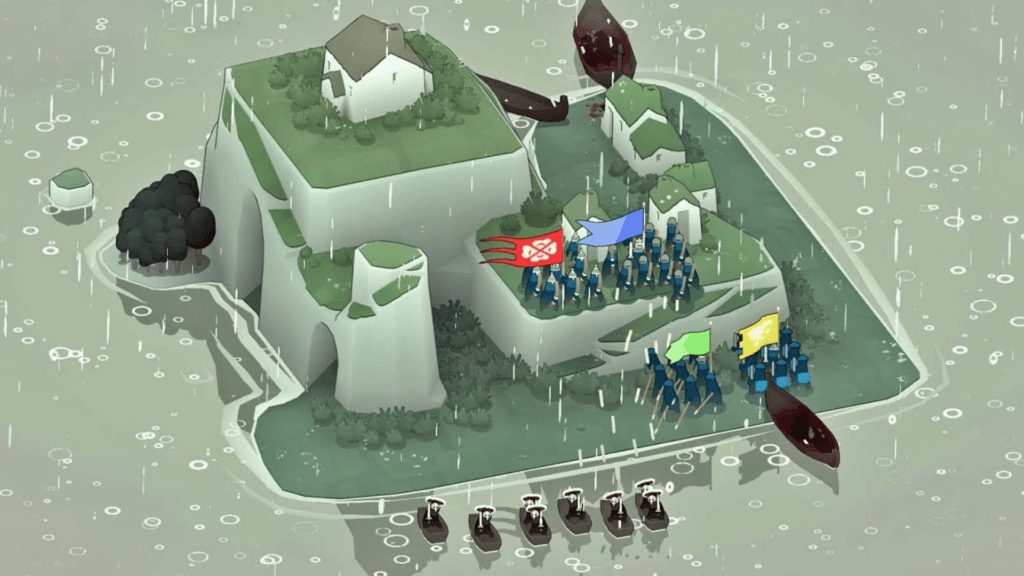
Bad North gives you a series of procedurally generated islands to defend against Viking raiders. You command small squads of fighters positioned on terrain features, and the visual design — bright colors, geometric landscapes, tiny detailed soldiers — makes every fight feel clean and readable. The tactical layer is simple: unit types counter specific threats, terrain shapes engagement angles, and knowing when to retreat is as important as knowing when to hold.
The roguelike structure means permanent losses accumulate across your run. You can lose units, which matters more in this game than most because the squad you’ve kept alive long enough to promote has actual value. The emotional weight from losing a veteran commander you’ve had since the early islands is genuine, which is an odd thing to say about such a minimalist game. GamesNGuide’s list of beginner-friendly strategy games includes Bad North for exactly this reason — the mechanics are transparent but the decisions carry weight.
It’s also one of the few approachable strategy games with a visual presentation so clean it passes as art. The game works as a surface-level experience and as a tactics game with actual depth. Both audiences find something worth returning to.
Slay the Spire — Deck-Building That Doesn’t Condescend
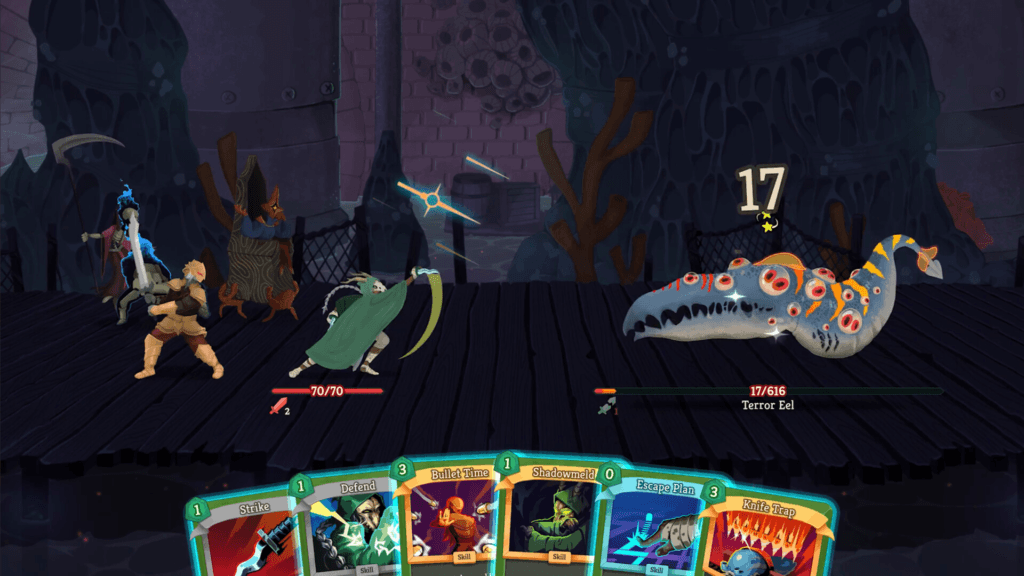
Slay the Spire is a deck-building roguelike where you construct a card hand from scratch each run and use it to fight through procedurally generated encounters on the way to the boss. The design asks you to make tradeoffs between short-term power and long-term coherence. A card that’s strong in isolation can break the synergy you’ve been building. Picking correctly means thinking several decisions ahead.
The four base characters each have distinct mechanics that reward different approaches to deck construction. The Ironclad blocks and attacks. The Silent poisons and evades. The Defect manipulates orbs. The Watcher enters stances that multiply damage at calculated risk. Each one teaches you something different about how the system works. The deck-building strategy games space has grown substantially since Slay the Spire launched, but most of what came after it is building on the foundation this game established.
Slay the Spire 2 launched in early access in 2026 and has already hit a monthly peak of over 362,000 concurrent players on Steam, which tells you something about how the player base feels about the franchise. The original remains the cleaner entry point for newcomers to the genre.
Mini Metro — Strategy Disguised as Calm
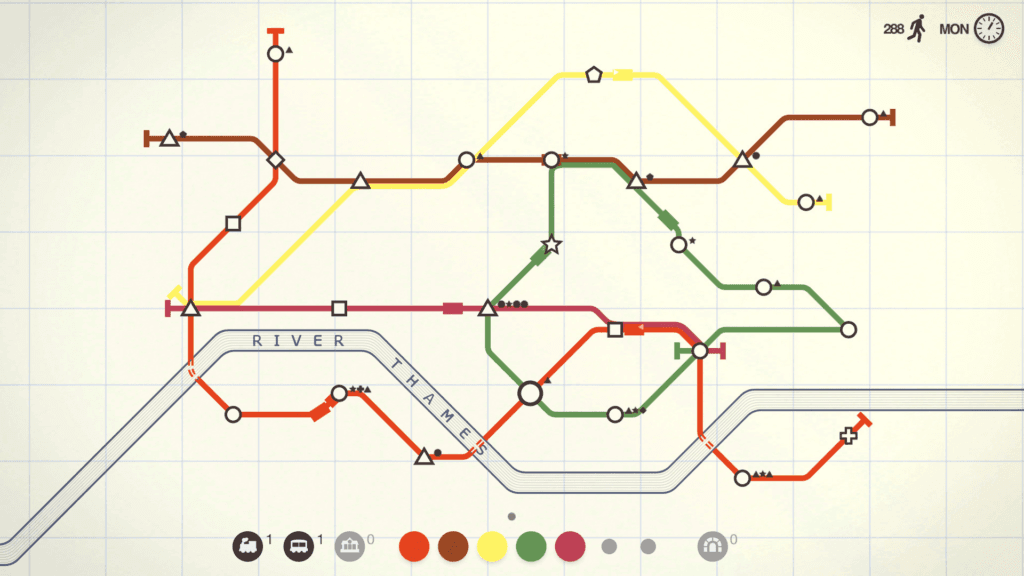
Mini Metro looks like a relaxation app. You draw subway lines between stations, manage passenger flow, and try to keep the system from overloading as new stations appear and demand increases. It has the visual language of a design portfolio piece. It will quietly destroy you if you let it.
The strategy is resource allocation under time pressure: limited lines, limited carriages, limited tunnel capacity, and a city that never stops adding problems for you to solve. The relaxing strategy games label fits in the sense that it doesn’t yell at you, but the underlying decisions are genuinely demanding once you’re past the early stages. The mobile version is one of the strongest strategy games that work across age groups — the concept is simple enough to explain in thirty seconds and deep enough to hold adult attention across multiple playthroughs.
What These Games Have in Common
Each of these games shares a design quality that distinguishes them from the genre’s more punishing entries: they communicate clearly. You know what the rules are. You know what went wrong when something goes wrong. You have enough information to make a real decision, and when you lose, the game isn’t hiding the reason from you behind opacity or randomness.
That’s the actual definition of a fun strategy game — not one that’s easy, but one that’s fair. Android Police’s strategy game coverage surfaces more titles in this mold for mobile players specifically. The shared characteristic across their picks, and the ones on this list, is that the design respects your time and intelligence.
Where to Go After These
Once you’ve put serious time into any of these five, the jump to more demanding strategy games is easier. Into the Breach leads naturally into turn-based strategy games with larger tactical systems. Polytopia points toward full 4X titles. Slay the Spire connects to the top strategy games to play in 2026 that reward the same kind of systemic thinking.
The strategy game rankings on Strategygame.org cover the broader landscape once you’re ready to move beyond the approachable tier. The turn-based strategy guides are a solid next stop for players who found their footing with Into the Breach or Polytopia and want to understand the genre at a deeper level.
None of these entry points require an apology. If you like strategy games, these are strategy games. They just don’t waste your time getting there.