
If you want nation building games that simulate a country rather than a capital, Victoria 3 is the one to start with. Civilization VII is the better pick if you would rather grow an empire from a single settler and see the whole arc of history.
Civilization building games usually start you with one town and let the map do the rest. The five here work at a scale above that. You are setting tax policy, moving populations between industries, and watching laws you passed forty years ago decide whether your economy survives a recession.
Most empire building games treat the economy as a number that goes up. These treat it as the actual game. If you came here from the city builder side of the genre, this is the step up, and Strategygame.org ranks them by how much of the country the simulation actually models.
1. Victoria 3
Victoria 3 is the deepest nation simulator you can buy, and the only one on this list where you can win without fighting anyone. Paradox models your population as pops with jobs, wealth, and political opinions, and every law you pass shifts who gets rich and who gets angry about it.

The construction queue is the real strategy layer. You decide whether to spend a decade on railways or textile mills, and the wrong call shows up two generations later as unemployment and a radical movement you cannot bargain with.
War is the weak half and Paradox knows it. Front lines resolve semi-automatically and rarely feel like decisions you made. At $49.99 on its Steam page, with Windows, Mac, and Linux builds, it is also one of the hardest interfaces in strategy gaming, which our Steam Deck readability list covers in detail.
2. Sid Meier’s Civilization VII
Civilization VII is a much better game now than the one that shipped in February 2025. The Test of Time update landed free on May 19, 2026, and it fixed the thing people actually complained about.
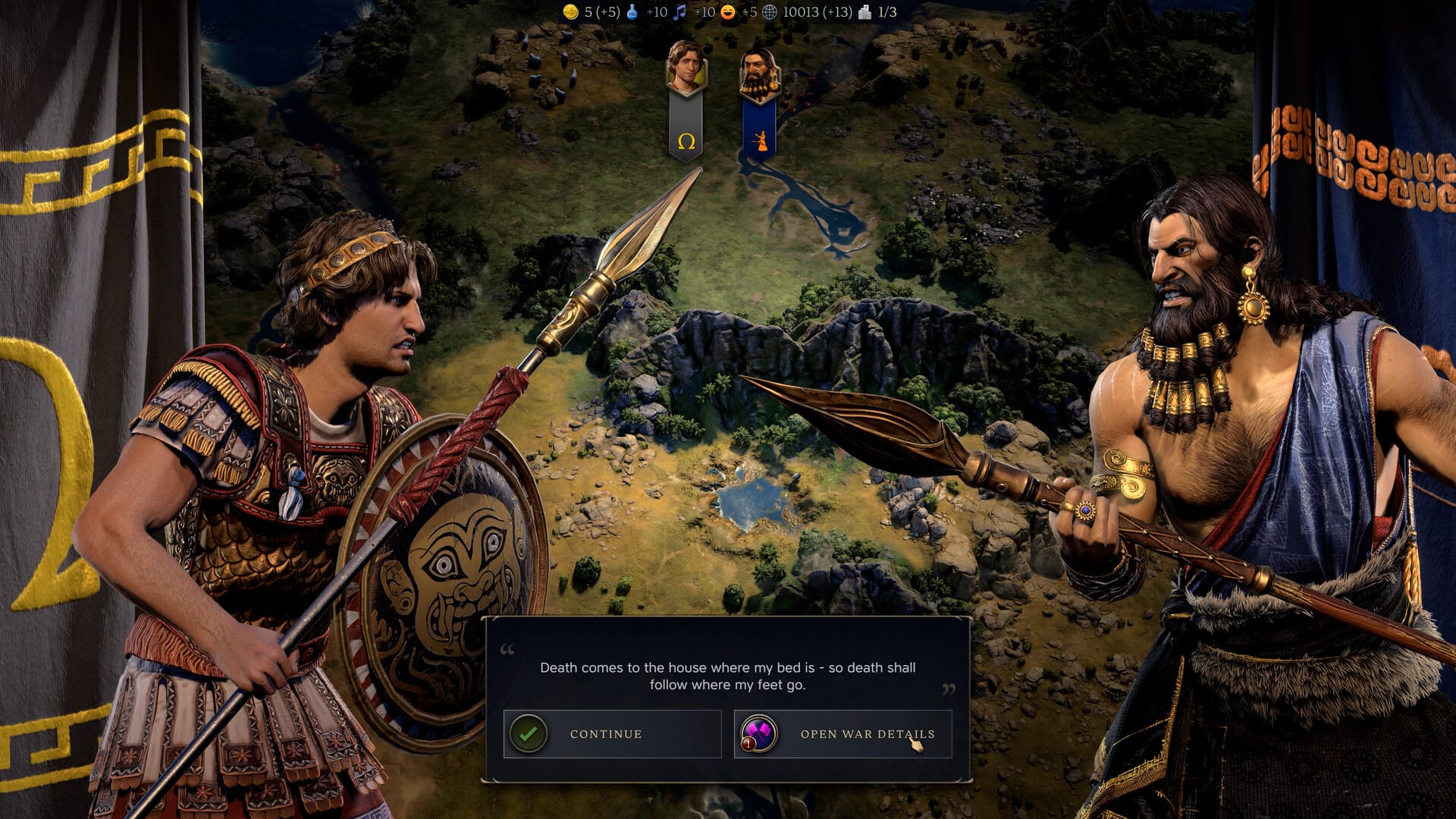
The original design forced you to swap civilizations at each of the three Age boundaries, which broke the sense that you were building one nation across history. Test of Time added Time-Tested civs, so you can now carry a single civilization through all three Ages with its own Civic Tree. It also replaced Legacy Paths with a system called Triumphs and reworked how victories resolve.
Two criticisms still stick. The Age structure resets your momentum three times a campaign, and Test of Time softens that rather than removing it. And Steam currently lists the game at $49.99 against a $99.99 headline, which tells you how the launch went. If you prefer this scope without turn limits, our 4X games that run in real time cover the faster version.
3. Humankind
Buy Humankind when it is under ten dollars, which is most months. Amplitude’s idea was to let you build a nation out of 60 cultures, swapping which one you are at every era boundary, and the first three eras of that idea are genuinely great.
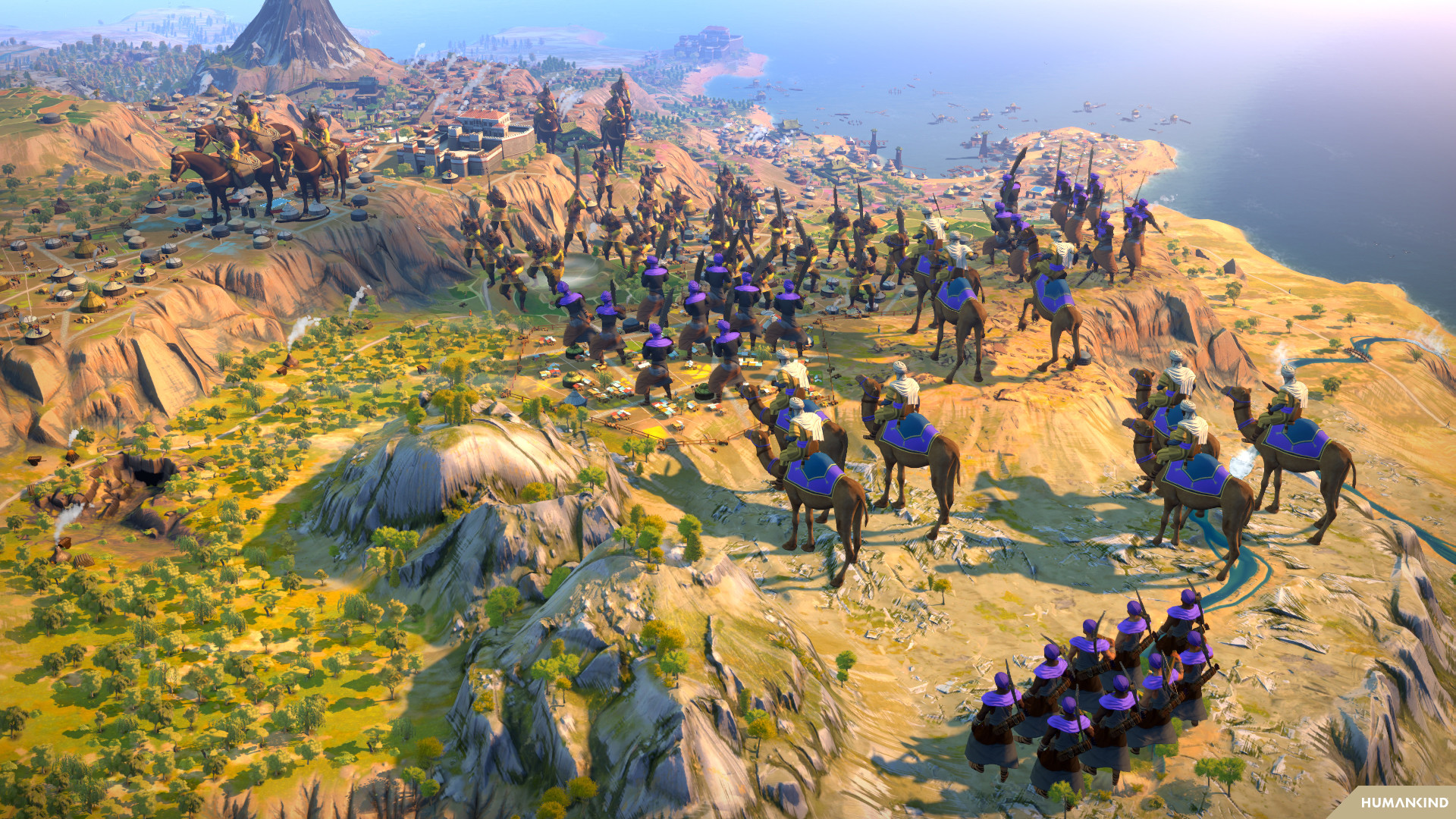
Cities grow as districts you place by hand, so territory looks like it was settled rather than painted. The Fame score rewards being good at several things instead of racing one victory condition, which suits players who like building more than winning.
Then the late game flattens out. Steam reviews sit at 69 percent positive across more than 12,000 players, and the complaints cluster in the industrial era onward, where the culture swap stops meaning much. It is still the most interesting failure in this genre.
4. Old World
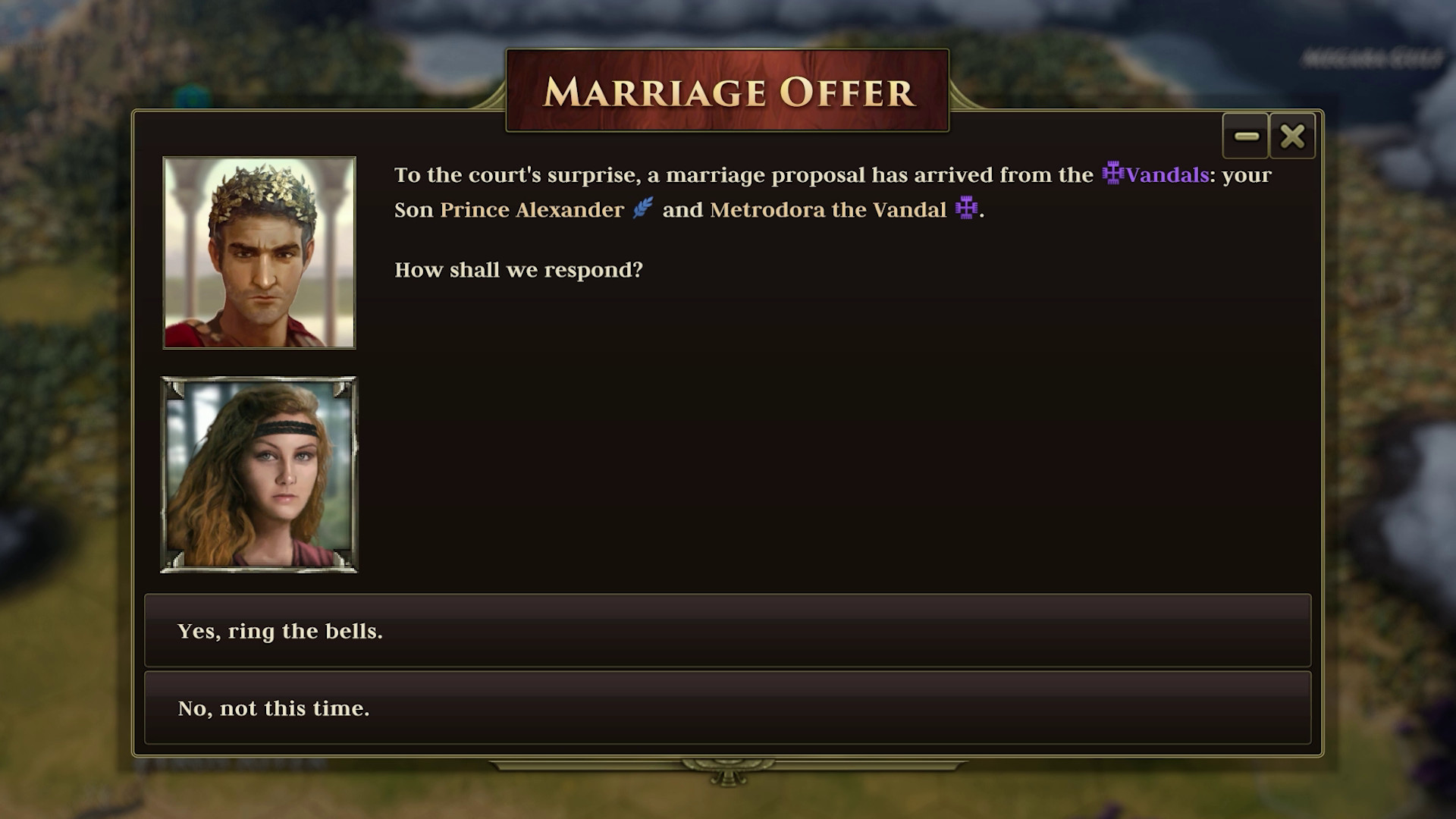
Old World is the pick if you want a nation with a family attached to it. Your ruler ages, marries, has children who turn out badly, and dies, and the succession that follows can undo a century of careful work in one bad heir.
The orders system is what makes it tense. Each turn gives you a limited pool of actions across the whole empire, so scouting, building, and moving armies compete directly. You never get a turn where everything you wanted to do fits.
The scope is the limit. It stops at the classical Mediterranean, so there is no industrial arc and no modern era. At $39.99 list it is priced like a broader game than it is, though it goes on deep sale constantly.
5. Terra Invicta
Terra Invicta left early access on January 5, 2026, and it is the only game here where nation building means taking over countries that already exist. Aliens arrive, humanity splits into seven ideological factions, and you spend the campaign winning governments over rather than founding them.

The national layer is unusually detailed for a sci-fi game. You merge countries into federations, redirect their budgets toward research or space programs, and deal with the unrest that causes. Then it turns into an orbital logistics game, and the ships you designed have to actually reach Jupiter.
It is also the least forgiving interface on this page, and it is Windows-only on Steam at $39.99. For the same nation-scale politics in a recognizable present day, our modern-day grand strategy ranking is the softer landing.
Which Nation Building Games Fit How You Play
Take Victoria 3 if the economy is the point and you are willing to lose two campaigns to the tutorial’s silence. Take Civilization VII if you want the full sweep of history and a game that has been fixed rather than abandoned.
Humankind is the cheap experiment worth running once. Old World is the one to buy if you want every turn to hurt a little. Terra Invicta is for the player who finished the other four and wants a harder problem.
None of these are quick. The shortest of these still eats a full evening, and Victoria 3 will happily take forty hours. Budget the time before the money, and browse the rankings archive if you want something smaller first.
Frequently Asked Questions
What is the best nation building game for beginners?
Civilization VII, because it teaches expansion, economy, and diplomacy one system at a time. Old World is the next easiest despite its harsher turns. Save Victoria 3 and Terra Invicta until you are comfortable reading a dense interface without a guide open.
Are nation building games the same as grand strategy games?
Not quite. Grand strategy usually hands you an existing country and asks what you do with it, while nation building leans on growth, economy, and internal politics. Victoria 3 and Terra Invicta sit in both camps, which is why they anchor this list.
Do any of these run on Mac?
Victoria 3, Civilization VII, Humankind, and Old World all ship macOS builds according to their Steam listings. Terra Invicta is Windows-only. Mac players lose the hardest game on the list and keep the other four.
Which one has the deepest economy?
Victoria 3, without much competition. It models individual population groups moving between jobs, wages responding to supply, and trade routes that fail when a war closes a strait. Terra Invicta is second, though its economy serves a space program rather than a society.
What games are like Civilization but longer?
Victoria 3 runs a century of one country instead of six thousand years of many, so campaigns last longer per hour of history. Terra Invicta is longer still. If you want the Civilization shape with more texture, Old World is the closest match at a smaller scale.
