
EXIT strategy games from Kosmos land somewhere between puzzle book and escape room: open the box, work through a connected series of challenges, and try to get out before time runs out. The concept sounds simple until you’re standing in the board game aisle debating whether to grab the Beginner box or the Advanced one, and whether $18 makes sense for something you might only play once. This guide covers the full EXIT: The Game series — what each difficulty tier actually means, which boxes stand out at each level, and how EXIT compares to Unlock! and Deckscape — so you can skip the trial-and-error phase entirely.
How EXIT Strategy Games Actually Work
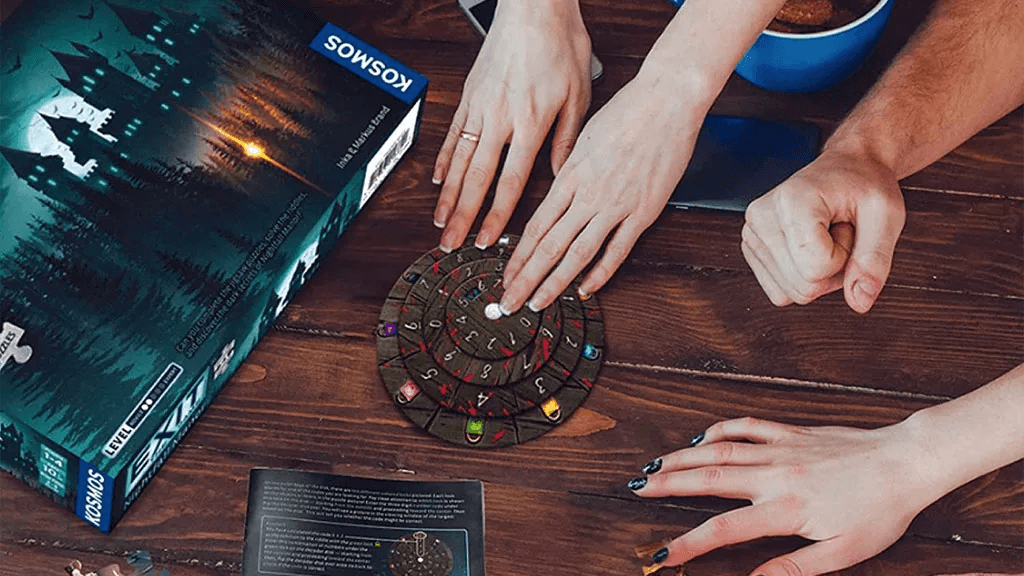
Each EXIT box ships with a decoder disk, a game book, and three card stacks: riddle cards, answer cards, and help cards. You work through puzzles in sequence, enter your solution on the decoder disk, and know immediately whether you got it right. Wrong answers send you to the help cards — each one you pull adds time to your total. The game tracks performance through completion time rather than blocking progress, which keeps things moving.
What separates EXIT from other escape room box formats is physical interaction. These games expect you to write on components, fold pages, and sometimes cut the rulebook. Puzzles use physical materials in ways most card-based puzzle games avoid. The experience is tactile and genuinely immersive — and because of that, most EXIT boxes are single-use by design. Understanding this upfront prevents a lot of buyer’s remorse.
The game supports 1–4 players and typically runs 45–90 minutes depending on difficulty and how many help cards your group burns. Two to four is the sweet spot for collaborative puzzle solving. For groups who want co-op puzzle experiences with full replayability alongside EXIT, the co-op strategy board games guide covers formats that reset cleanly and scale well across sessions.
The Four Difficulty Tiers
Kosmos labels EXIT boxes across four levels. The distinctions are real.
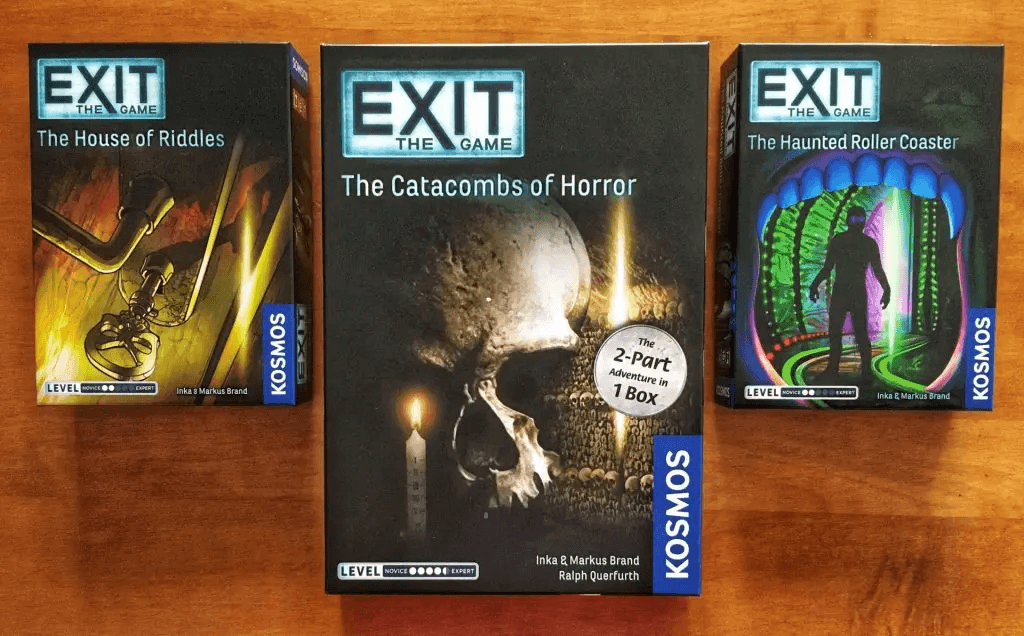
Kids: Designed for ages 8 and up. Simpler puzzle chains, gentler logic jumps, themes aimed at younger players. Not a watered-down adult box — these are purpose-built for families and shorter attention spans. A legitimate choice for mixed-age game nights.
Beginner: The right entry point for most adult groups. Puzzles connect logically without requiring EXIT-specific puzzle intuition. The decoder disk clicks into place within the first 15 minutes, and you won’t spend 40 minutes staring at a card trying to figure out what information you’re even supposed to be using. Expect 60–75 minutes for a first-time group.
Advanced: Where the series earns its reputation. Lateral thinking required. Multi-step puzzle chains. At least one puzzle per box will stop your entire group cold before someone breaks through. Strongly recommended once you’ve cleared two Beginner titles.
Pro: Hard. Designed for groups who’ve worked through multiple Advanced boxes and want to feel genuinely stuck. Not a first-time purchase under any circumstances — and yes, people ignore this and regret it.
Best Boxes for Beginners
For a first-time group, stay in the Beginner tier. Three titles stand out consistently.
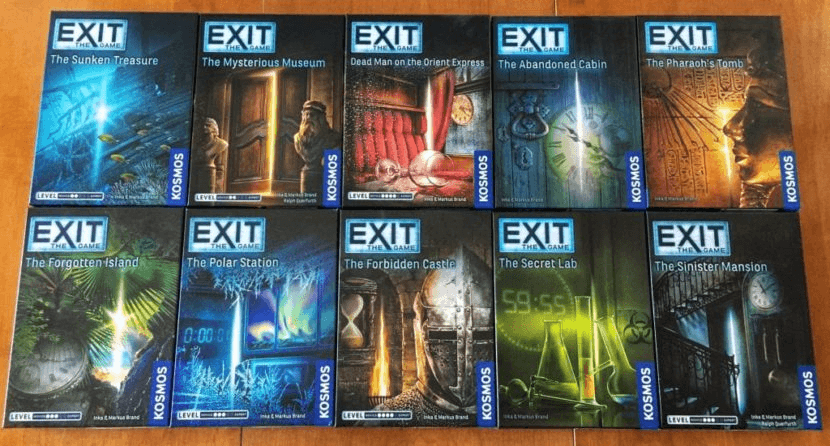
EXIT: The Abandoned Cabin is the series original and still one of the best introductions. Puzzle logic is fair, pacing is well-structured for players still learning the system, and the setting creates enough atmosphere to make each puzzle feel purposeful. Around 60 minutes for a new group.
EXIT: The Sunken Treasure runs lighter in tone, which makes it the better pick if your group wants less ambient tension. Strong puzzle variety. Often included in the Thames & Kosmos EXIT collection beginner bundles alongside The Mysterious Museum and The House of Riddles for groups who want to start with multiple boxes.
EXIT: The Mysterious Museum works well when the group includes players in the 12–15 age range. The museum setting has more visual variety, and the puzzle flow is forgiving enough for first-timers who’ve never touched a puzzle box format before.
One thing worth knowing: escape room experience doesn’t automatically transfer. EXIT uses specific puzzle structures — the decoder disk, the layered help system — that live escape rooms don’t replicate. A first-time EXIT player who has never done a real escape room can keep pace with a veteran on their first box.
Best Boxes for Advanced Players
Once you’ve finished two or three Beginner boxes, Advanced tier stops holding your hand. Puzzles use physical components in ways Beginner boxes avoid, and the challenge is calibrated for groups who already know how EXIT wants you to think.
EXIT: The Sinister Fur gets consistent praise for creative puzzle design. Component use is more inventive than anything in the Beginner range, and the setting supports the puzzle logic rather than just decorating it.
EXIT: The Pharaoh’s Tomb offers strong thematic cohesion alongside puzzles that require working across multiple component types simultaneously. Pacing is tighter than most Advanced titles.
EXIT: The Cursed Labyrinth is the pick for groups who want more collaborative solving — puzzles structured so multiple players contribute at the same time rather than watching one person work. Zatu’s comprehensive EXIT series guide covers the full Advanced catalog with difficulty notes per title if you want a deeper breakdown before committing.
For a broader look at what belongs on the shelf alongside EXIT, the adult strategy board games for groups guide covers tabletop options at a similar engagement level. On nights when only two people are available, the 2-player strategy board games list has EXIT-compatible formats alongside competitive titles worth knowing.
Replay Value: The Honest Answer
Most EXIT boxes are single-use. Writing on cards, cutting components, and marking up the game book during normal play makes resetting impossible without buying a second copy. Some newer titles — primarily in the Kids range — include separate answer cards designed to keep main components intact, but these are exceptions worth checking per listing.
The framing that works: treat an EXIT box like a movie ticket. One box for 2–4 players at $15–20 is competitive pricing for a 90-minute experience that generates real engagement. If you need something you’ll play eight times, EXIT isn’t the right purchase. But that’s not what EXIT is trying to be.
EXIT vs. Unlock! vs. Deckscape
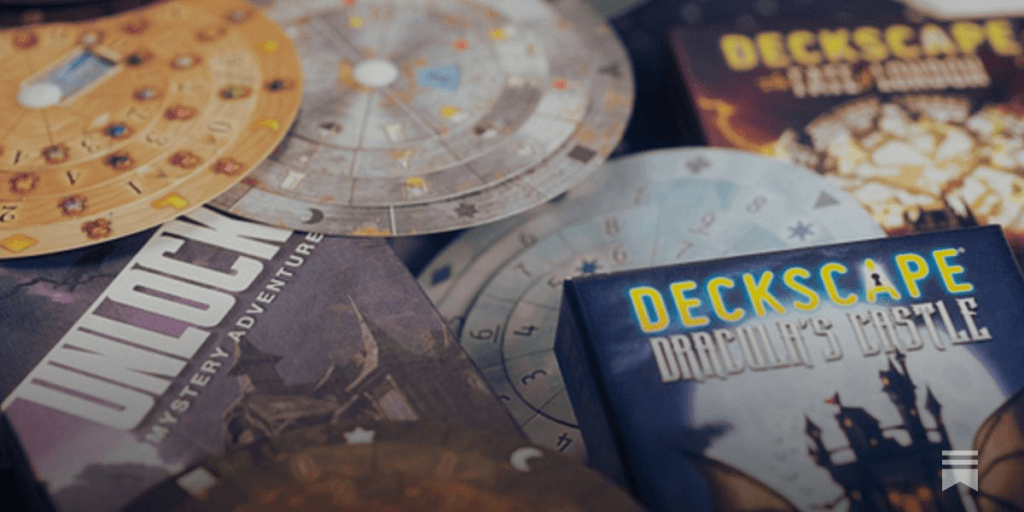
Three series dominate the escape room box category, and they approach the format differently enough that the right pick depends on what your group actually needs.
EXIT is the most physically immersive. Highest creative ceiling for puzzle design. No replayability by design.
Unlock! from Space Cowboys runs through a smartphone app. All components stay intact, making every box replayable in theory. Quality varies more by title than EXIT does, and the app requirement is a real obstacle for groups who want an unplugged experience. Boardgame.tips’ EXIT variant breakdown covers Unlock! and Deckscape alongside EXIT with ratings per title if you want a side-by-side comparison.
Deckscape strips the format down to cards only: no app, no writing, no cutting. You finish a box in 45 minutes or less, and components can be reset with care. Puzzle complexity tops out lower than EXIT’s Advanced tier, but the accessibility and reusability make it the right call for groups that want multiple plays from one purchase.
Short version: EXIT for the best single-session experience, Unlock! if replayability matters more than physical immersion, Deckscape if you want something faster and lighter.
Which EXIT Box to Buy First
First-time group: EXIT: The Abandoned Cabin or EXIT: The Sunken Treasure, both Beginner tier. Pick whichever theme sounds more interesting — puzzle quality at this level is close enough that preference matters more than head-to-head rankings.
Group that’s done other escape room box games before: Go straight to Advanced. EXIT: The Sinister Fur is the consistent recommendation for players making that jump.
Buying for families with younger players: EXIT: The Mysterious Museum at Beginner, or any Kids tier title for ages 8–12. The strategy games for kids guide covers additional puzzle and strategy formats that work well for mixed-age groups. The full EXIT line is available on Amazon across all difficulty tiers with customer reviews organized by difficulty level.
Buying as a gift: Beginner tier, pick a theme the recipient will enjoy, and include a note that the box is single-use. Gifts with context get played more often than surprises.
The tabletop strategy games guide covers both competitive and co-op formats for groups who want to explore beyond EXIT once the puzzle box interest takes hold.
Strategygame.org covers the full strategy game landscape, from escape room boxes to deep war games and everything in between.
The strategy board games worth your shelf in 2026 guide has specific recommendations organized by format and player count, including EXIT alongside the competition.
The rankings section has the complete breakdown by format and play count. Browse the strategy guides for deeper coverage of specific games and mechanics once you know what you’re playing next.
