Quick Rundown
The Star Wars franchise has produced more bad games than good ones. That’s not a hot take — it’s just the historical record. But the strategy layer of the catalog has a better hit rate than most other genres, and a few titles in it are genuinely excellent. If you’re hunting for the right star wars strategy game to spend time with, the options are narrower than the IP deserves, but the best ones hold up well in 2026.
This list covers the strongest picks across real-time strategy, tactical turn-based, and tabletop formats, with honest notes on what each game asks of you before you commit to it.
Star Wars: Empire at War — Still the Benchmark
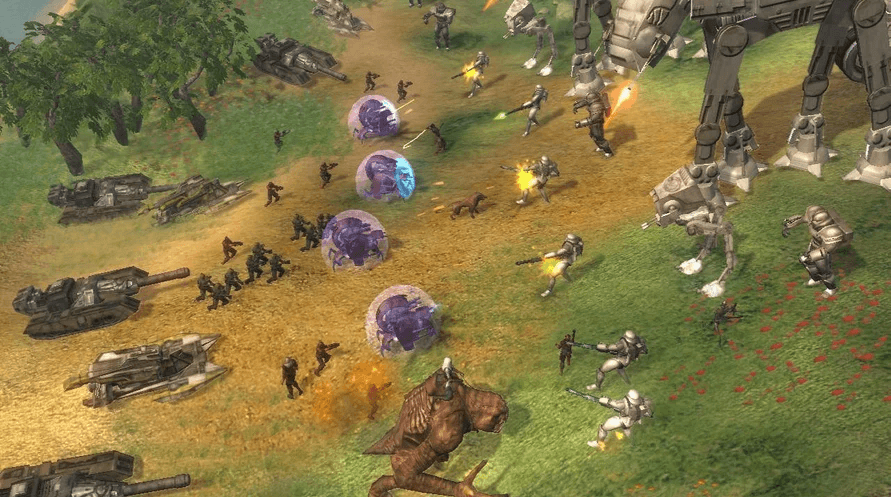
Empire at War launched in 2006 and remains the closest thing to a definitive star wars strategy game. The design splits across two layers: a galactic campaign where you manage territory control, production, and fleet deployment across the Star Wars map, and real-time combat when engagements trigger in space or on the ground. Both modes hold up. The campaign stays engaging across long sessions, and the combat translates the franchise’s visual language — AT-AT walkers, Star Destroyer engagements, TIE fighter swarms — better than anything else in the genre has managed.
The Forces of Corruption expansion added the Zann Consortium as a third faction with corruption mechanics that change how you interact with neutral planets. It’s the version worth playing. Empire at War is available on Steam with modern compatibility patches and runs reliably on current hardware. PCGamesN consistently ranks it as the franchise’s best strategy title, and that read still holds in 2026.
The AI is dated and that limits the difficulty ceiling in campaign play, but the sandbox of the galactic map carries the experience regardless. The modding community has shipped AI overhaul mods if you want more resistance. The base game plus Forces of Corruption costs less than a movie ticket at current pricing, which makes the barrier to entry essentially nonexistent.
Star Wars: Galactic Battlegrounds — The Age of Empires Clone You Forgot
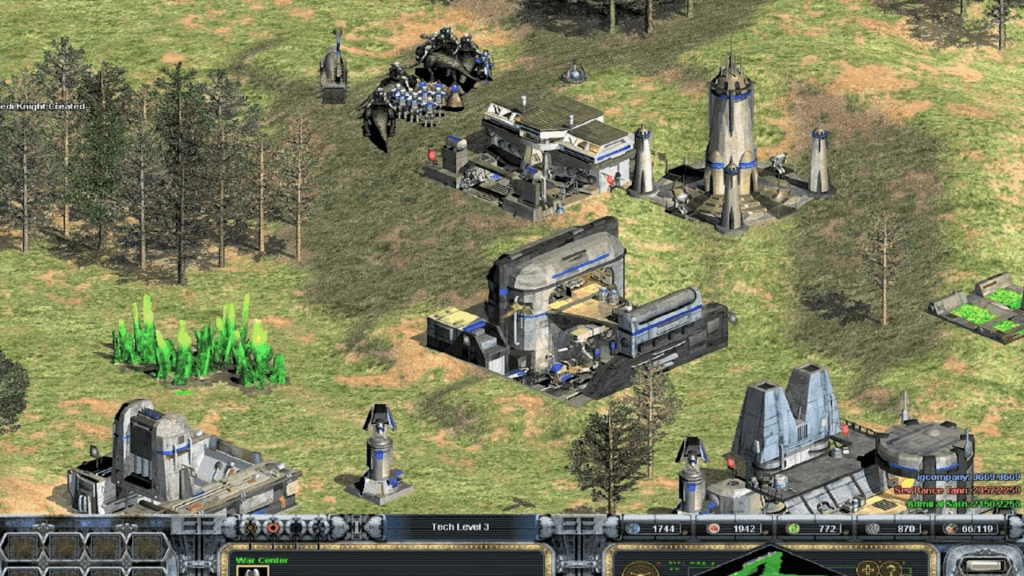
Galactic Battlegrounds is a direct Age of Empires II clone built on the Genie Engine, released by LucasArts in 2001. That’s not a criticism. If you’ve put time into AoE II and want a Star Wars version of that experience, this game delivers it cleanly. Six civilizations — Galactic Empire, Rebel Alliance, Naboo, Gungans, Wookiees, Trade Federation — each with distinct units and asymmetric tech trees. The Clone Campaigns expansion adds the Republic and the Confederacy.
The game is out of print but available through GOG. Fan patches have maintained compatibility with current operating systems. It requires more setup than a standard Steam install, but players who enjoy real-time strategy games built around civilization asymmetry will find it surprisingly playable. The scenario editor functions as well, which extends content significantly beyond the base campaigns for anyone willing to explore the modding side.
Star Wars: Zero Company — The Best Current Release
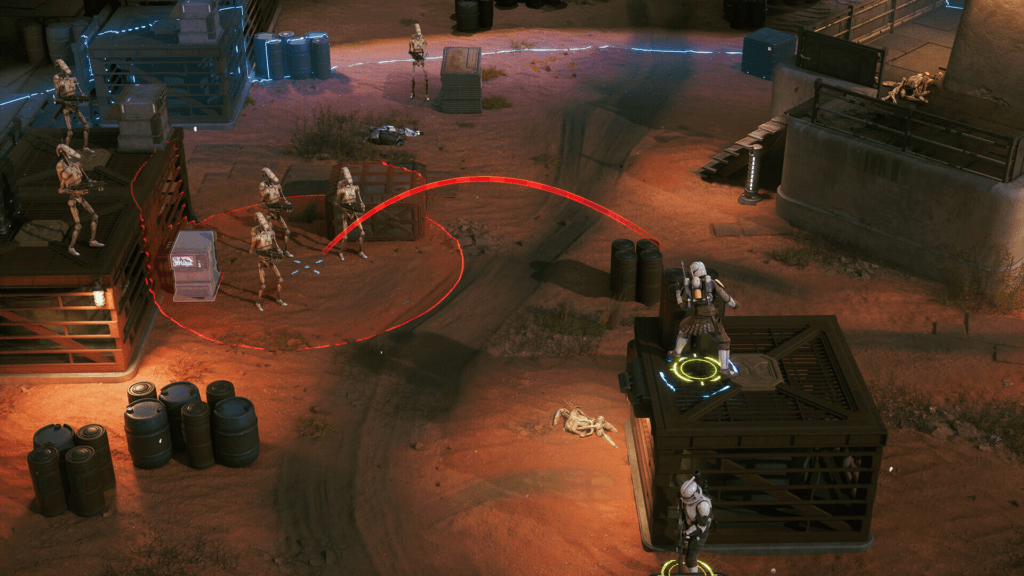
Zero Company is the first genuinely exciting Star Wars strategy release in years. Set during the final years of the Clone Wars, it puts you in command of a small strike unit led by a customizable character named Hawks. The tactical design is XCOM at its core: build and manage your squad between missions, treat roster losses as real consequences, learn enemy patterns, and prepare properly before you deploy into the field.
The writing takes the Clone Wars setting seriously in a way that feels earned. Zero Company uses the faction dynamics and war-era politics as actual story material rather than painting a generic tactics game with a Star Wars skin. The new characters hold up, the mission pacing avoids the second-act drag that kills most tactics games, and the post-launch patches have cleared up the rough edges that were present at launch.
If you’ve spent time with military strategy games and wanted a Star Wars version of XCOM, this is exactly that. It’s the single best reason to revisit the franchise’s strategy catalog right now. GameSpot’s roundup of upcoming Star Wars games covers what’s in the development pipeline after Zero Company, for anyone tracking what comes next from the franchise strategy side.
Star Wars: Squadrons — Fleet Battles That Actually Require Thinking
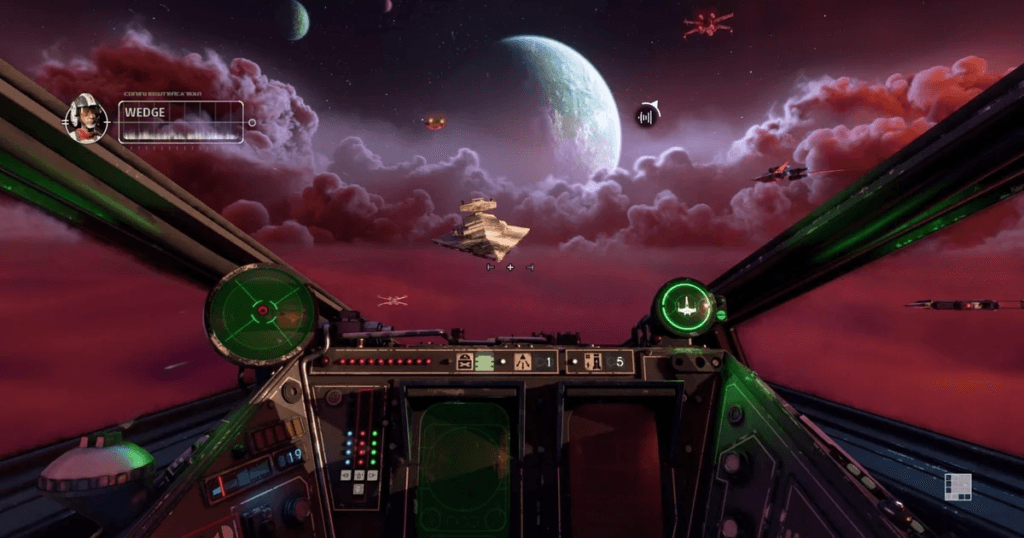
Squadrons is first-person space combat, not a traditional real-time strategy game. But the fleet battle mode — where coordinated fighters, bombers, and support ships work together to destroy the enemy capital ship — carries enough tactical depth to earn a place in any serious Star Wars strategy ranking. Knowing when to push, when to screen, and how to exploit your team’s composition against the enemy roster is what separates winning and losing at higher levels of play.
It’s also one of the stronger entries in the broader catalog of space strategy games for players who want an embodied feel rather than a top-down view. EA has stopped active development, but the multiplayer base remains active enough to find matches. Current sale pricing makes the entry cost easy to justify for the fleet battle mode alone.
Star Wars: Legion — Cardboard Stormtroopers, Real Decisions
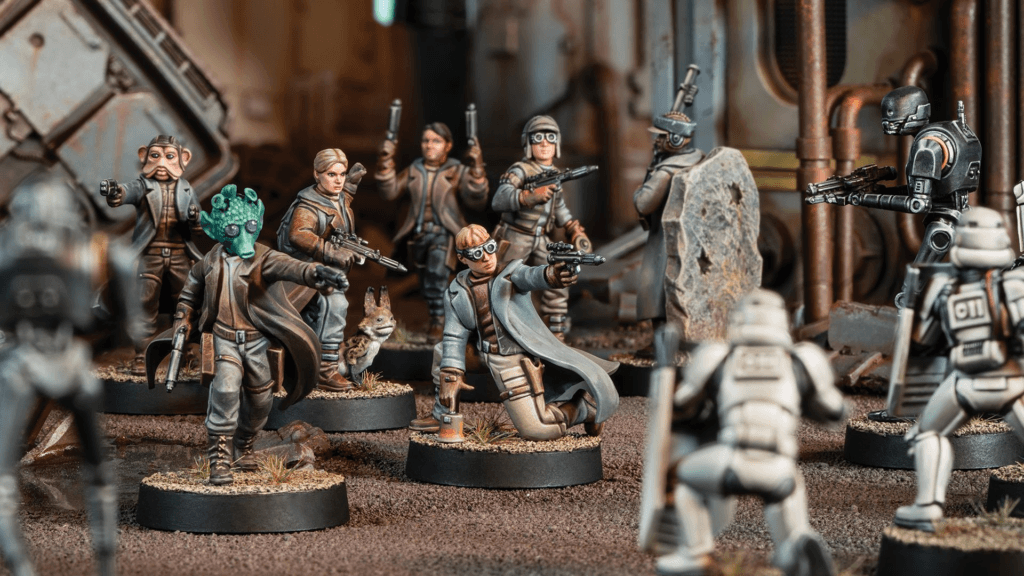
Legion is Fantasy Flight’s miniature wargame set in the Galactic Civil War era. Two-player, alternating activation, covering infantry skirmishes and vehicle engagements at a platoon scale. Among the broader landscape of tabletop strategy games, Legion sits at the mid-weight tier — complex enough to have a real competitive meta, accessible enough that you don’t need a month to absorb the core rules.
Clone Wars expansion content has broadened the faction roster considerably. The downside is the standard miniature wargame cost structure: ongoing expansion investment plus painting time if you want the table to look presentable. Wargamer’s Star Wars board game coverage covers the broader tabletop ecosystem for anyone deciding between Legion and other formats in the franchise.
Star Wars: Rebellion — The Legacy Pick
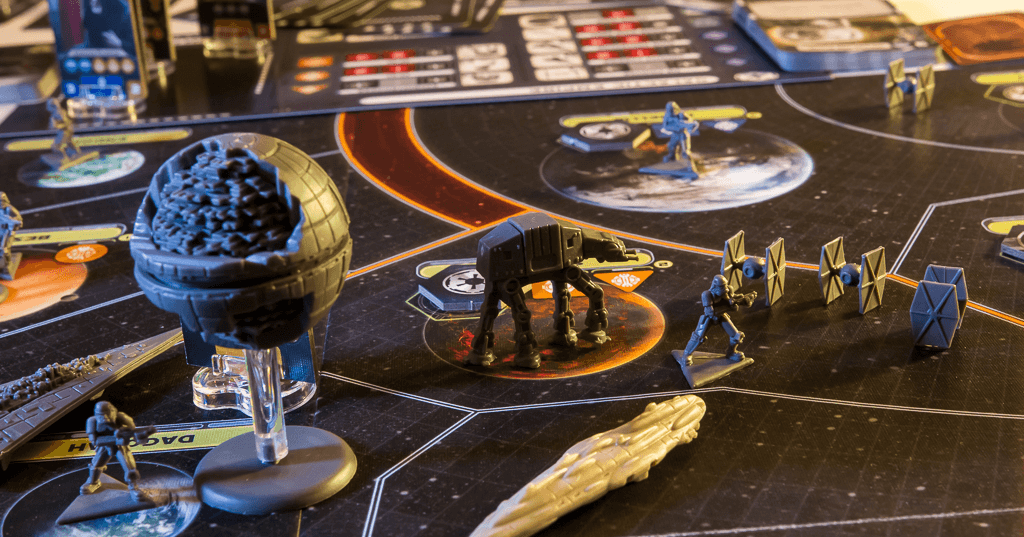
Rebellion came out in 1998 and remains the closest the franchise has gotten to a proper 4X structure. You manage planets, fleets, missions, and characters across the galaxy while fighting a prolonged strategic war against the opposing faction. The design is dated and the pacing is uneven, but the bones of what the franchise could do in a genuine galactic-scale strategy game are visible throughout.
Playing it today requires patience. But it’s worth knowing exists, and Metacritic’s all-time Star Wars rankings remind you that the franchise has occasionally swung for ambitious strategy designs before retreating back to action games. The top strategy games to play in 2026 show what the genre looks like at its current ceiling — and the gap between those and what Star Wars has built is obvious once you see it.
The Missing Genre
The franchise has never produced a proper 4X game. The setting is an almost perfect fit for one: millennia of lore, dozens of distinct factions, a galaxy-spanning sandbox that maps cleanly onto a Stellaris-style structure. Rebellion gestured at it without fully committing. Empire at War got halfway there. Zero Company is excellent but tactical in scope. The best strategy games of all time demonstrate what a well-executed space 4X looks like. Someone just has to build one with a lightsaber aesthetic. This seems so obvious it’s probably already in development under an NDA. Probably.
How to Choose
Start with Empire at War for the classic real-time strategy experience. Play Zero Company for the best current release in the franchise. Pick up Squadrons if you have any interest in the space combat angle. Galactic Battlegrounds is for players who want the AoE II formula with Star Wars assets. Legion is for tabletop players who are already in the hobby or willing to invest in it.
For broader coverage of the strategy genre beyond franchise releases, Strategygame.org tracks the full landscape. The strategy game rankings cover the best-of landscape across platforms and subgenres. Players stepping into the genre after Zero Company will find the real-time strategy guides a useful next stop for broader context on where franchise titles sit in the genre they belong to.
