Quick Rundown
If you’re searching for grand strategy games, you probably already own three or four. You’ve watched the clock hit 2 a.m. managing a diplomatic crisis in medieval France, or spent a weekend rewriting the Eastern Front for fun. This list doesn’t explain what grand strategy is — for that foundation, our grand strategy beginner’s guide has you covered. What this does is argue for which games deserve your next 100 hours, matched to where you are in the genre and what kind of complexity you want to manage right now.
The range here spans the Paradox catalog, Total War, and two titles that live outside both — Distant Worlds 2 and Old World. Each earns its place for a different reason.
The Paradox Core: Where Most Veterans Live
Paradox Interactive built the genre’s current vocabulary. If you haven’t gone deep on at least two of these, start here. If you’ve played all of them into the ground, skip ahead.
Crusader Kings III
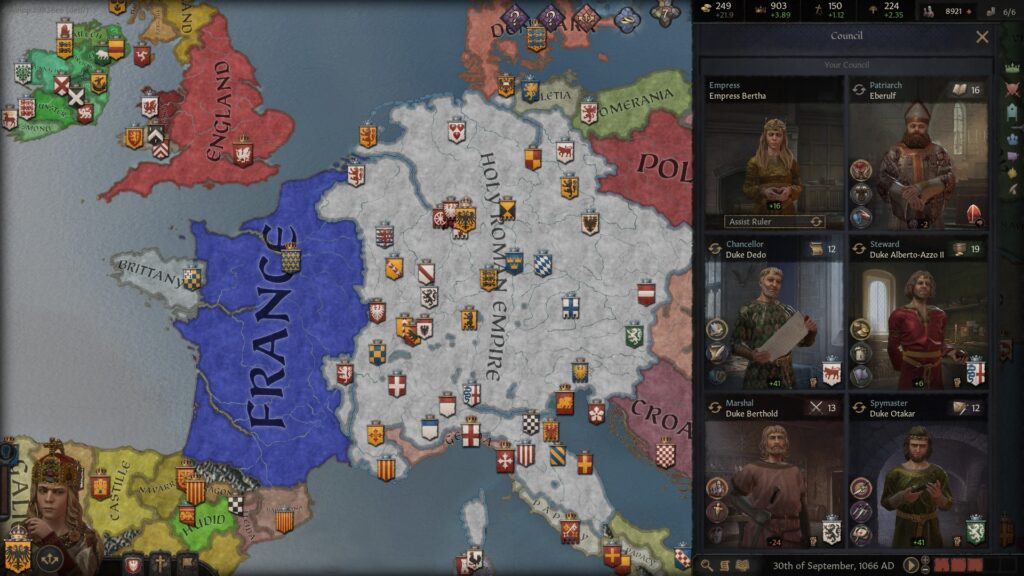
CK3 is the strongest entry point into the Paradox catalog and the easiest to recommend to strategy veterans who are new to grand strategy specifically. The systems are dense but the feedback is immediate — your ruler’s ambitions, feuds, marriages, and succession crises play out in ways that feel personal. It covers medieval dynastic politics from 867 to 1453, and the emergent stories it generates are genuinely unmatched. Crusader Kings III on Steam is where most players should start if they’re new to the Paradox ecosystem.
Europa Universalis IV
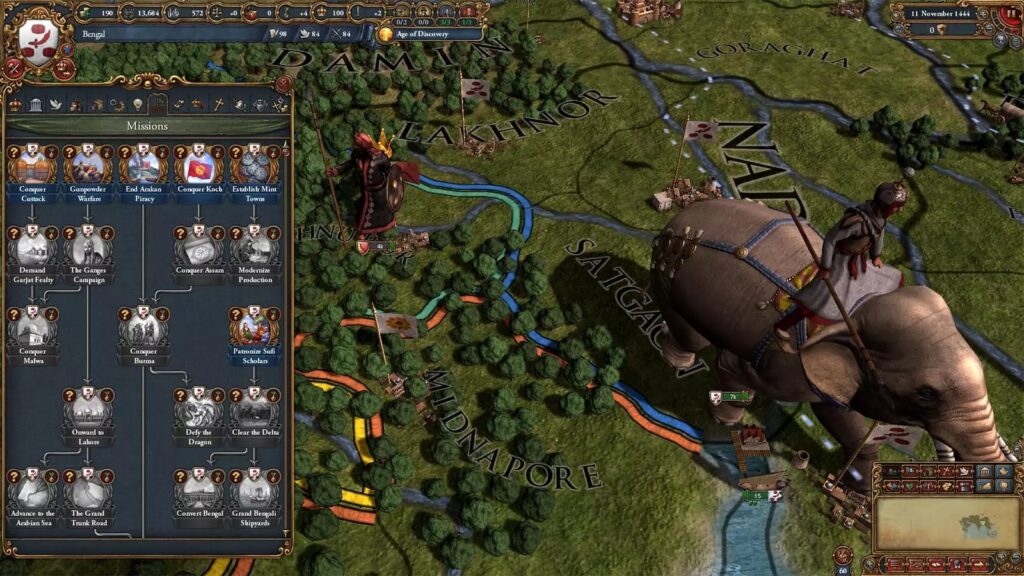
EU4 covers 1444 to 1821 and lets you guide nearly any historical nation through colonization, trade networks, religious conflict, and extended wars of attrition. The trade network mechanics alone carry enough depth that players who enjoy economic simulation games will find this familiar territory. After a decade of DLC, it’s one of the most mechanically complex strategy games ever shipped. Europa Universalis IV rewards patience more than anything else on this list. Budget for at least one major expansion; the base game deliberately withholds significant mechanics.
Hearts of Iron IV and the HOI5 Question
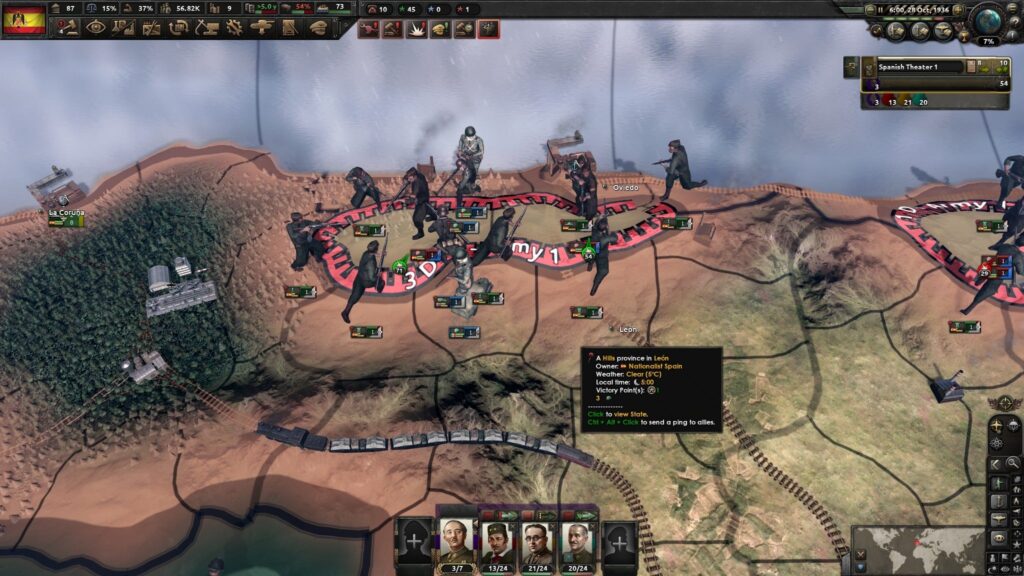
HOI4 remains the strongest pure wargame in the Paradox lineup. It runs World War II at the operational level: division templates, supply chain management, battle plans, and front coordination across multiple theaters simultaneously. It’s excellent for players who want warfare as the primary focus and politics as background noise. The depth here is in execution — learning to build efficient divisions, manage supply lines in hostile terrain, and coordinate simultaneous offensives across different theaters is genuinely difficult and genuinely rewarding.
Hearts of Iron V is now available and addresses most of HOI4’s abstraction complaints. It models industrial output, political pressure, and manpower alongside military operations, making it a more complete picture of how the war actually worked. Veterans should understand HOI4’s framework first, then decide whether HOI5’s redesigned systems are the direction they want to go.
Stellaris
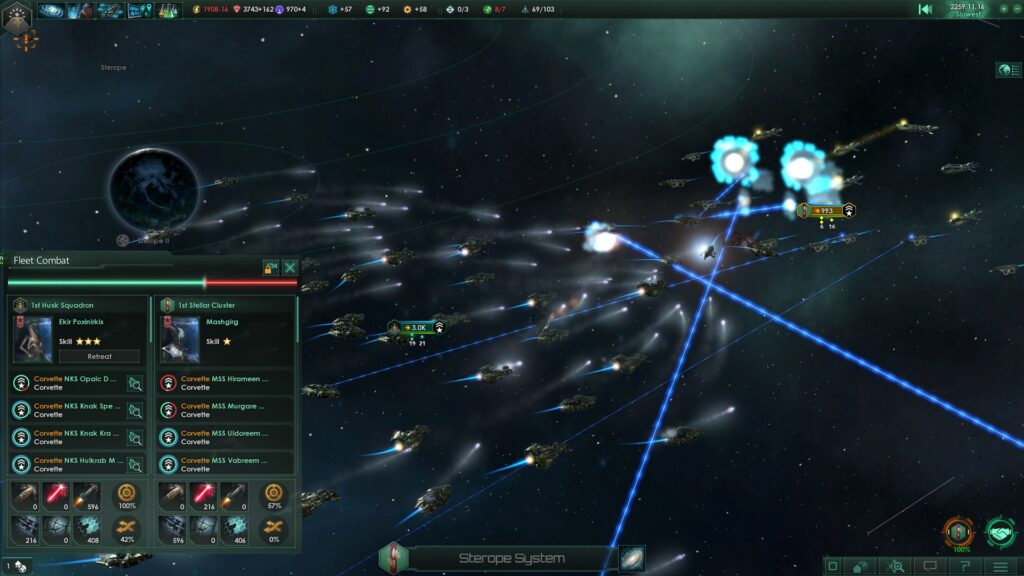
Stellaris is Paradox’s sci-fi entry and the most approachable in the catalog despite its scope. You build an interstellar empire from first contact to galactic domination, choosing an ascension path that reshapes how your civilization functions at a fundamental level. Synthetic consciousness, biological evolution, and psionic transcendence each change the late game in ways that make repeat playthroughs feel meaningfully different. Players who want diplomacy and empire management without the weight of historical accuracy will find Stellaris comfortable. Players who want deep military simulation will find it light. Know going in which camp you’re in.
Beyond Paradox: Where the Real Depth Hides
The grand strategy genre extends well past the Paradox catalog. These three titles live outside that ecosystem entirely and bring mechanics you won’t find anywhere in the Paradox lineup.
Total War: Three Kingdoms
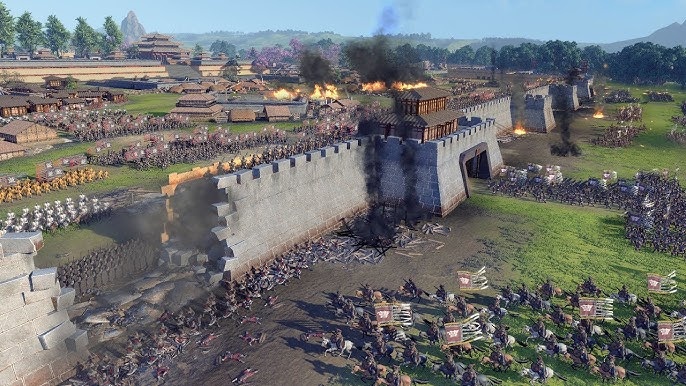
Total War splits its design between a turn-based campaign layer and real-time battles, which technically makes it a hybrid rather than a pure turn-based strategy game. Three Kingdoms has the best campaign layer in the series’ history by a meaningful margin. Romance mode adds spy networks and diplomatic complexity that rival CK3 in depth. Your generals carry long-term rivalries, loyalties, and personal relationships that shape the campaign map as much as any military victory does. Three Kingdoms on Steam is the argument for reconsidering Total War if you wrote it off as “the RTS one.”
OldWorld
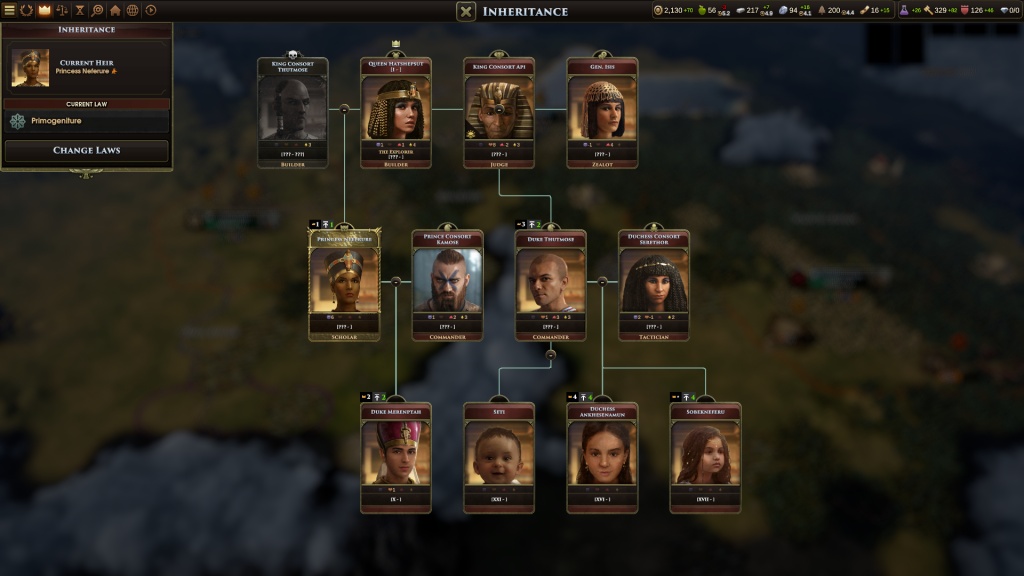
OldWorld, developed by Mohawk Games, covers the ancient Mediterranean and borrows deliberately from both grand strategy and 4X games. It’s turn-based, character-driven, and places unusual weight on city development — the resource chain and infrastructure systems go deep enough that players familiar with city-building strategy games will recognize the design thinking, even though the stakes here are military and political rather than optimization-focused.
The Orders mechanic limits how many actions you can take per turn across your entire civilization, forcing prioritization that most grand strategy games let you sidestep entirely. Old World sits squarely within our turn-based strategy guides because the per-turn pacing is central to how it plays. It’s the most underplayed game on this list, and unlike most of its peers, it has a clean interface that doesn’t require a week of acclimation before the game actually starts.
Distant Worlds 2
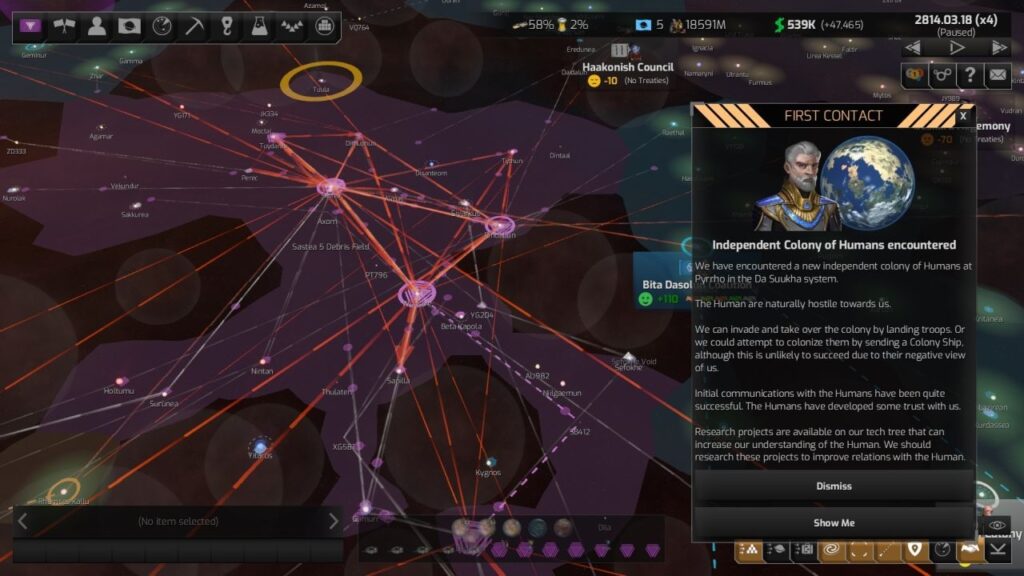
Distant Worlds 2 is a real-time space empire sim with full automation options that let you delegate as much or as little of the empire management as you want. The scale is staggering: hundreds of planets, a live private sector economy, alien species with independent politics, and ship design running simultaneously in real time. Distant Worlds 2 via Matrix Games has the steepest learning curve on this list and the highest ceiling for players who want genuine complexity over approachable systems. It also has almost no visibility outside dedicated strategy communities — which is exactly why it keeps getting overlooked. If you want the one game on this list that will genuinely surprise you, this is it.
Which One to Pick
The right choice depends less on skill level and more on what kind of complexity you want to manage. Here’s a framework that actually works:
- Character-driven narrative, accessible entry: CK3 or Total War: Three Kingdoms
- Historical economies and long-arc campaigns: EU4 or Old World
- Pure military simulation across multiple fronts: HOI4 or HOI5
- Sci-fi empire building with adjustable automation: Stellaris or Distant Worlds 2
One genre distinction worth flagging: grand strategy and real-time strategy games get conflated constantly, but they’re genuinely different formats. Grand strategy runs on months or years of in-game time per session and rewards deliberate thinking over long arcs. RTS runs on minutes and rewards fast execution under pressure. If you’re moving between both genres, the mental adjustment is real and worth accounting for.
Before You Start
Community modding extends the shelf life of every game on this list significantly. CK3 has conversion mods that let you import your save into EU4 and continue the same dynasty forward in time — playing from a medieval dynasty through the early modern period across two separate games. EU4’s historical overhaul mods rival the base game in scope and depth. Check the Steam Workshop before deciding any of these titles has run dry.
For Paradox DLC specifically: the base games are intentionally incomplete. The base versions are functional but limited in ways that matter for long-term play. Budget accordingly, and look at which expansions reviewers consider essential for the specific title you’re starting with — most Paradox titles have one or two must-have packs that unlock core systems.
For everything else across the genre, Strategygame.org covers grand strategy alongside the full spectrum of strategy gaming — rankings, guides, and news across every format and platform. The genre is wider than any single developer’s catalog, and there’s always a next game worth picking up.