Most multiplayer grand strategy campaigns die at session three. Someone cannot make Thursday, someone else got snowballed in the first hour and stopped caring, and the save file quietly rots. Picking the best multiplayer grand strategy games is less about which has the deepest systems and more about which survives contact with four adults and their calendars. This list ranks by that standard, and it ends with the house rules that keep a campaign alive.
Two formats matter here. Live sessions, where everyone plays at once and scheduling is the enemy, and asynchronous play, where turns happen whenever people log in. Match the format to your group before you match the game. Our guide to the skills that transfer between strategy games covers the fundamentals underneath all of them.
1. Europa Universalis IV

Europa Universalis IV remains the default, and the reason is player count. It handles large groups better than anything else in the genre, the map has enough viable starts that everyone gets a real country, and a decade of patches means the multiplayer code is stable. Sessions run on a shared clock everyone can pause, so a group can talk through a war declaration instead of discovering it an hour later.
Two honest problems. Desyncs still happen on long sessions, and the DLC situation means everyone needs roughly matching expansions or the host has to disable content. The newer Europa Universalis V is the sequel, but EU4’s multiplayer community and mod support are far more mature right now. You can check the current state on the Europa Universalis IV store page.
2. Hearts of Iron IV

Hearts of Iron IV has the best co-op structure in the genre because multiple people can run the same country. One player takes production and research, another commands a theater, a third handles the navy, and suddenly the game’s overwhelming interface becomes a division of labor. That single feature saves more campaigns than any balance patch, since a player who falls behind is not alone with their mistakes.
The catch is that the war ends. Once the outcome is decided around 1943, late sessions can drag while one side mops up. Plan for a campaign that concludes rather than one that runs forever, and grab Hearts of Iron IV when the collection is discounted, since expansion parity matters here too.
3. Old World
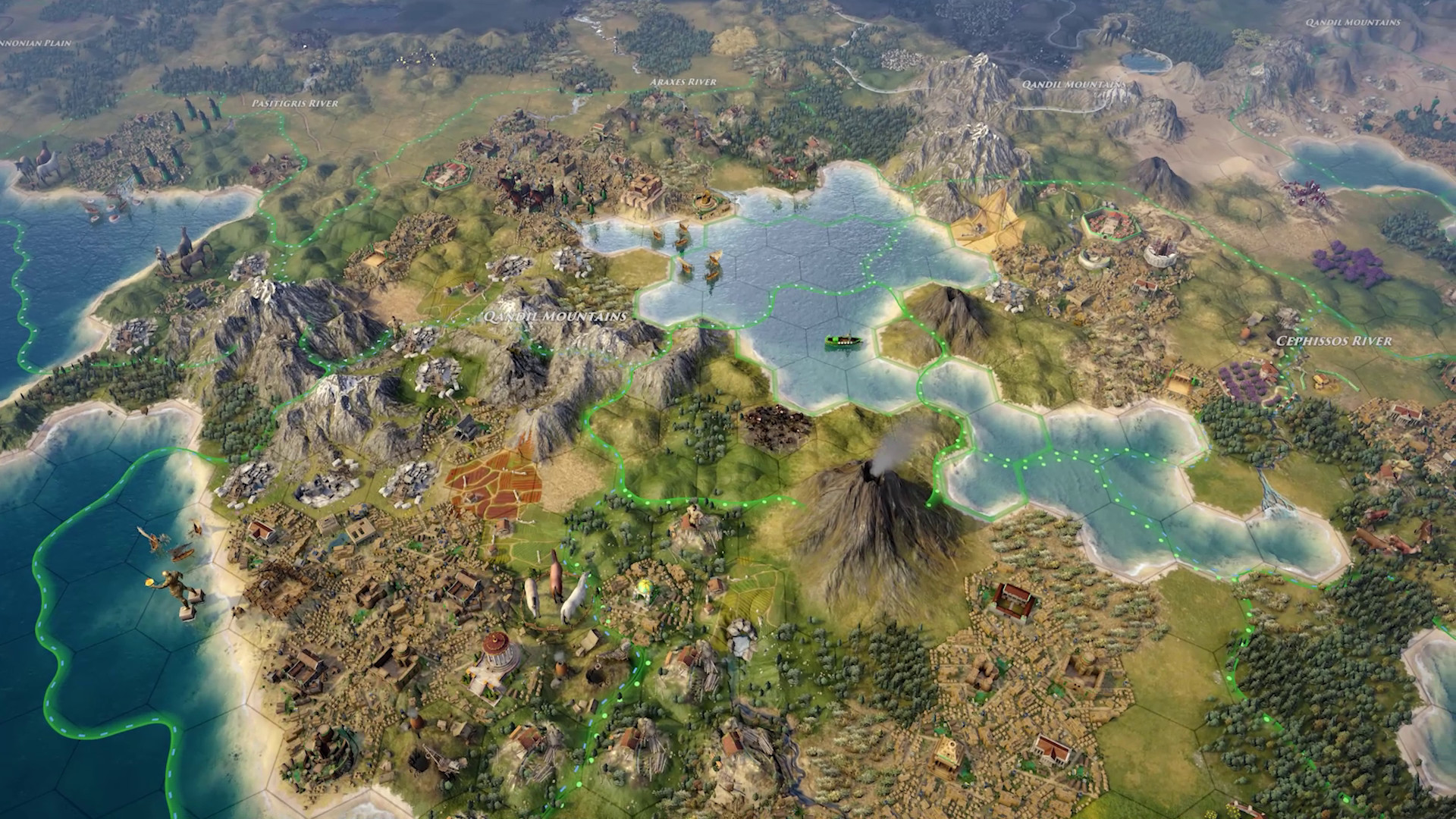
Old World solves the calendar problem instead of fighting it. Its asynchronous multiplayer lets each player take a turn whenever they open the game, with the campaign advancing over weeks through email-style notifications. Nobody has to be free on Thursday, which is why these campaigns actually finish. The underlying game is a strong classical-era 4X with a dynasty layer, so the turns are worth taking.
Async has its own failure mode. One slow player stalls everybody, and a campaign can lose momentum when a turn takes three days. Agree on a turn deadline up front. The player base is also smaller than Paradox’s, so bring your own group rather than expecting open lobbies.
4. Conflict of Nations: World War 3

Conflict of Nations is the one that needs no scheduling at all. Matches run in real time over days and weeks with dozens of players, so orders resolve while you are at work and you check in twice a day. That structure makes it the most reliable grand strategy multiplayer option for adults, because it never asks for a four-hour block. It is also free, which lowers the barrier for a group.
The trade-offs are real. Premium currency skips research and build timers, so paying opponents carry more tempo, and the diplomacy with strangers can get ugly. Run a private match with friends and both problems mostly evaporate.
House Rules That Keep a Campaign Alive
The game matters less than the agreement. Set a hard session length before session one, three hours rather than open-ended, and stop on time even mid-war. Agree on a no-dogpile rule so the strongest player is not eliminated by a four-way alliance in hour two, since that is what kills interest fastest. Ban the most degenerate exploit your group knows about, whatever it is, in writing.
Two more that work. Appoint one person as host and save-keeper so nobody argues about whose file is current, and decide in advance what happens when a player misses a session, whether the AI takes over or the group pauses. Campaigns die from unresolved logistics far more often than from bad play.
Which Multiplayer Grand Strategy Game Suits Your Group?
Match the format to the people. If your group can reliably block out an evening, Europa Universalis IV handles the largest crowd. If you want to share a country rather than fight over the map, Hearts of Iron IV co-op is the friendliest to newcomers. If scheduling is the actual obstacle, Old World and Conflict of Nations remove it entirely, one by turn and one in real time.
Whatever you pick, the multiplayer grand strategy games that last are the ones where everyone still has something to do in hour four. For solo campaigns between sessions, our PC strategy rankings cover the single-player side, our grand strategy picks for mobile handle the commute, StrategyGame keeps our rankings current, and StrategyGame tracks the wider genre.
Frequently Asked Questions
What is the best multiplayer grand strategy game?
Europa Universalis IV is the default for live sessions because it handles large groups and has the most mature multiplayer community. If scheduling is your problem, Old World’s asynchronous play or Conflict of Nations’ real-time weeks-long matches are more reliable choices.
Can you play Hearts of Iron IV co-op?
Yes, and it is the standout co-op feature in the genre. Multiple players can control the same country, splitting production, research, and separate military theaters between them, which makes the interface far less overwhelming for newcomers.
Is there an asynchronous grand strategy game?
Old World is the clearest example, letting each player take turns whenever they log in rather than requiring everyone online at once. Conflict of Nations achieves something similar in real time, with orders resolving over hours while players check in twice a day.
Do all players need the same DLC for multiplayer?
In Paradox games, effectively yes. Europa Universalis IV and Hearts of Iron IV work best when everyone owns matching expansions, otherwise the host has to disable content so the group shares the same ruleset. Buy during a sale so the whole group can level up together.
How do you stop a multiplayer campaign from falling apart?
Agree on rules before the first session. Set a fixed session length, adopt a no-dogpile rule so the leader is not ganged up on early, name one host as save-keeper, and decide in advance what happens when someone misses a night. Most campaigns die from logistics rather than from the game itself.
